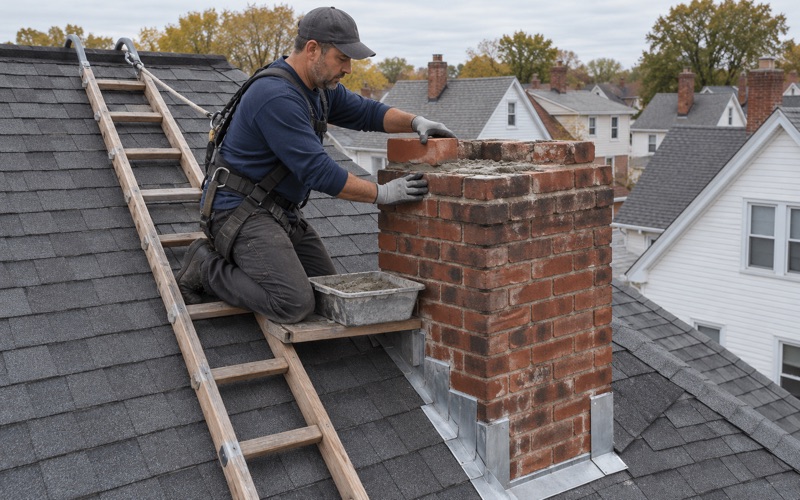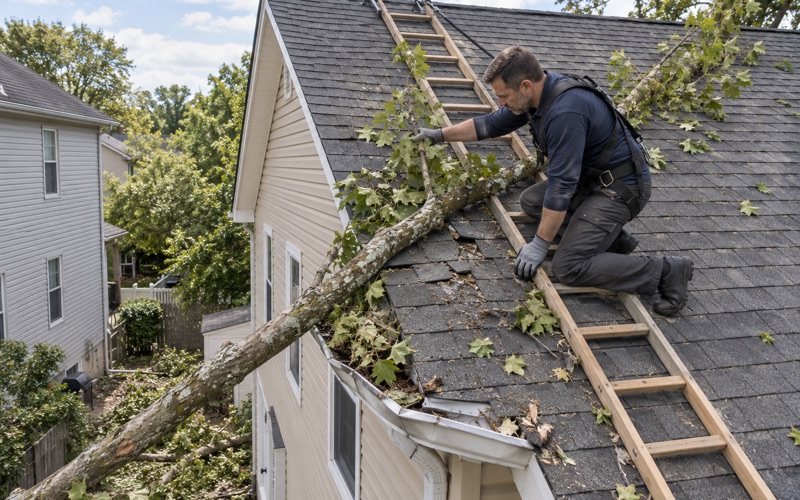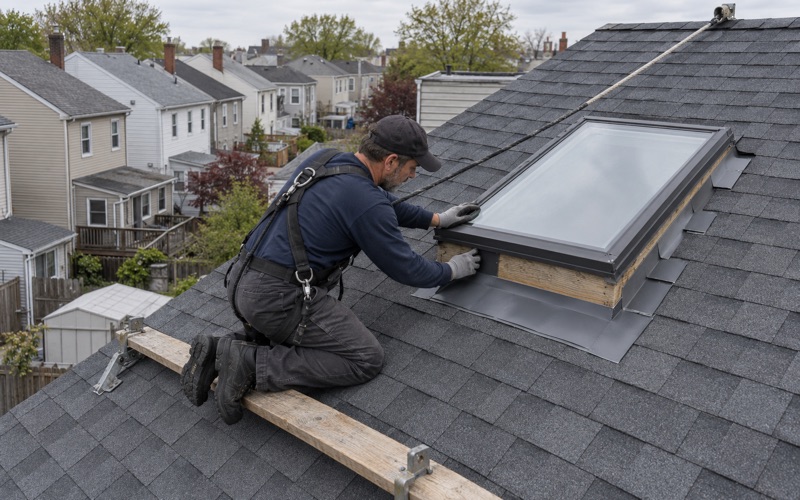
Bayonne Superior Roofing has spent more than 20 years on roofing in East Rutherford and the surrounding part of North Jersey, and one question comes up here more often than it does in a town of single-family houses: what is underneath the roof we are about to remove? On an apartment building, that question has a federal answer before it has a roofing answer.
When a building holds five or more units, the federal asbestos rules treat it as a regulated facility rather than a house. That changes the order of the job. Before a tear-off is scheduled, the owner arranges for the old roof layers, felts and flashing cement to be inspected and sampled by a qualified asbestos professional, and the results decide how the rest of the work proceeds.
We do not inspect for asbestos or remove it ourselves. What we do is plan the roofing around that step: we show an owner where the older materials sit, which layers the sampling has to reach, and how the schedule shifts once results come back. The sections below walk through how that plays out on the kinds of buildings that make up most of the borough.
Five Units or More: Where the Federal Asbestos Rules Begin
The asbestos NESHAP, the federal standard in 40 CFR Part 61, describes the buildings it covers as facilities. That definition includes residential structures, but it expressly leaves out residential buildings having four or fewer dwelling units. A building with five or more units falls inside the rule, and a re-roof on it counts as a renovation, because the rule defines renovation as altering a facility or any of its components in any way.
What the rule asks of an owner first
Under 40 CFR 61.145(a), before a demolition or renovation begins, the owner or operator must thoroughly inspect the affected facility, or the part of it being worked on, for the presence of asbestos. That inspection covers nonfriable material as well as the crumbly kind people usually picture. On a roof, it means the layers coming off are examined before anyone commits to a tear-off date.
Why this matters more in East Rutherford
The borough’s housing mix puts a lot of residents under roofs this rule reaches. Census figures from the ACS 2024 five-year estimates show 18.9 percent of housing units in buildings of 50 or more units and another 7.8 percent in buildings of 20 to 49 units, which together is 26.7 percent of the local housing stock. Those buildings are typically run by owners, managers or associations, and the inspection obligation sits with them rather than with individual tenants.
The same estimates put 22.4 percent of the borough’s housing units in buildings from 1939 or earlier. An older apartment building can carry more than one generation of roofing, each laid when different products were on the market. Nothing in that figure says any particular roof contains asbestos; it says the question is worth answering before the dumpster is ordered.
Two-family houses and the four-unit line
A third of the borough’s homes, 33.3 percent, sit in two-unit buildings, and the federal rule treats those very differently. A two-family, three-family or four-family house falls on the excluded side of the line, so the NESHAP inspection requirement does not attach to a re-roof there. New Jersey also treats replacing the roof covering on a detached one- or two-family dwelling as ordinary maintenance under N.J.A.C. 5:23-2.7, so that work needs no construction permit.
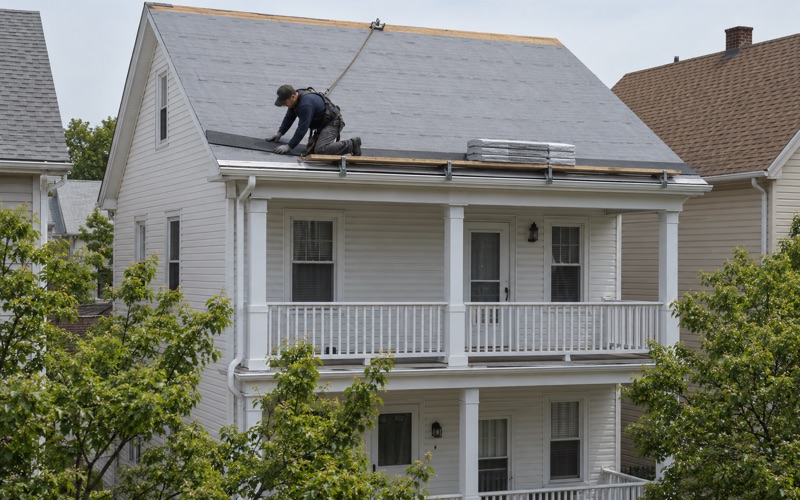
That does not mean old material on a smaller house gets handled carelessly. When we open up an older two-family roof and find layers that look like decades-old felt or mastic, we stop and talk it through with the owner instead of guessing. On those houses we also schedule around both households, so the upstairs tenant knows the day the crew arrives and where we will need access.
Looking for roofing closer to Rutherford? See Roofing Services in Rutherford.
Old Felts, Mastics and Flashing Cement in the Layers
The federal rule sorts asbestos-containing materials by how they behave. Category I nonfriable material includes asphalt roofing products containing more than 1 percent asbestos. Nonfriable means the material does not crumble under hand pressure while it is intact, which is exactly why it can sit quietly on a roof for decades without anyone thinking about it.
Where the older products tend to sit
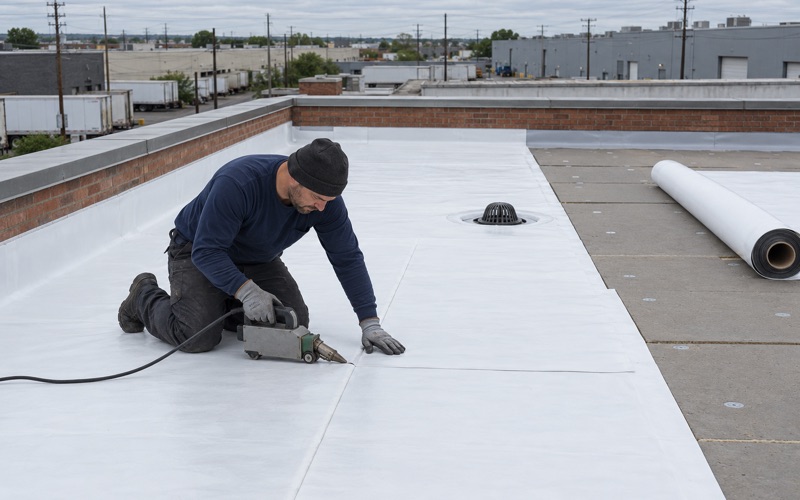
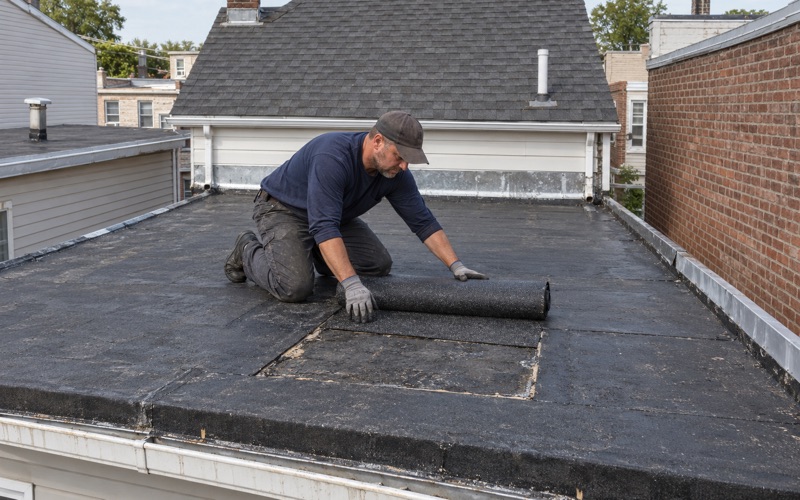
On a flat or low-slope apartment roof, the materials worth asking about are rarely on top. The surface may be a newer EPDM membrane, a modified bitumen cap sheet or a roof coating, with older built-up felts, asphalt and roof cement underneath. The edges tell a similar story: base flashing at the parapet walls, mastic around roof drains and scuppers, and cement packed around vent stacks and equipment curbs are often older than the field of the roof.
That is why sampling only the surface can miss the point. A roof that has been recovered once or twice may hide its oldest layer two or three plies down, and the flashing at a parapet may have been patched over rather than replaced each time the field was redone.
Why the tear-off is the moment that counts
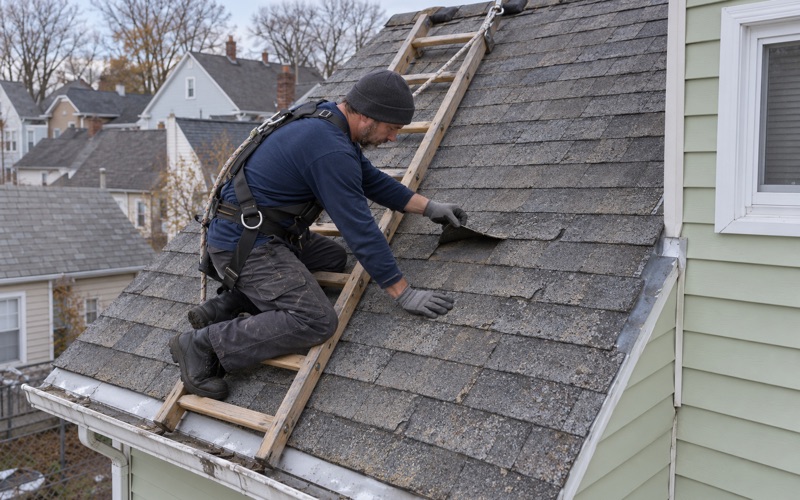
A material that is stable in place behaves differently once it is cut, scraped or pried up with a roofing spade. Tear-off is the point where the old roof stops being a covering and becomes debris, which is why the federal inspection is tied to the renovation itself rather than to simply owning the building.
What we put in front of the inspector
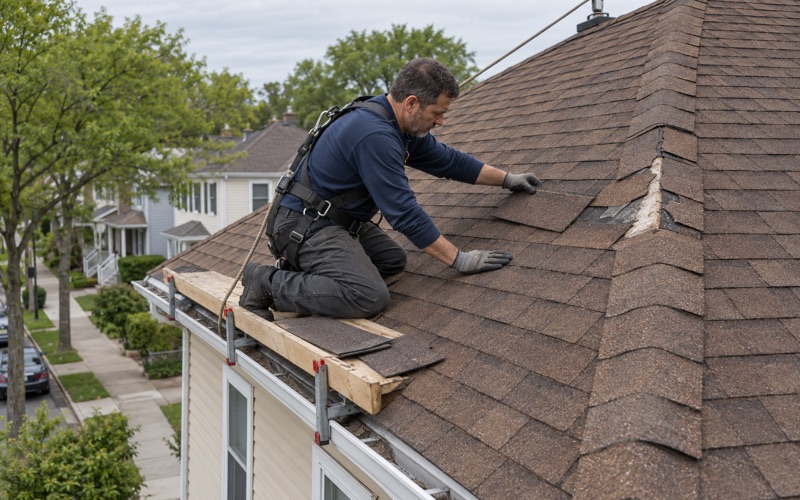
Before sampling, we can give the owner’s consultant a plain account of the roof as we understand it: how many layers appear at the edges and existing openings, where patches and re-flashings were added over the years, and which areas a tear-off would disturb. Our written scopes already break out tear-off, decking, underlayment, flashing and drainage as separate lines, and that same breakdown helps an inspector see which components are in play and where samples should come from.
Sampling Before the Tear-Off Is Scheduled
On a building of five or more units, the sensible order is inspection, then results, then a roofing schedule. Running it the other way, with a crew booked and a container on the street before anyone knows what the layers contain, is how jobs stall halfway and tenants end up living under a partly opened roof.
Building the inspection into the timeline
When an owner or association calls us about replacing an older apartment roof, we raise the asbestos question at the first walk-through, not after the contract is signed. We explain which layers and flashing areas the tear-off will reach so the owner’s asbestos consultant knows what to sample. Then we keep the start date flexible until the results are in hand.
For occupied buildings, that pause also gives the manager time to notify residents about roof access, parking for the material delivery and any rooftop equipment that will need to be shut down while we work.
When results come back
If the sampled roofing materials come back without asbestos above the 1 percent line, the job proceeds as an ordinary tear-off and our schedule firms up. If they show regulated material, the owner’s abatement contractor handles that part of the work under whatever federal and state requirements apply, and our scope begins after theirs is complete. We do not perform that work, and we do not price it as ours.
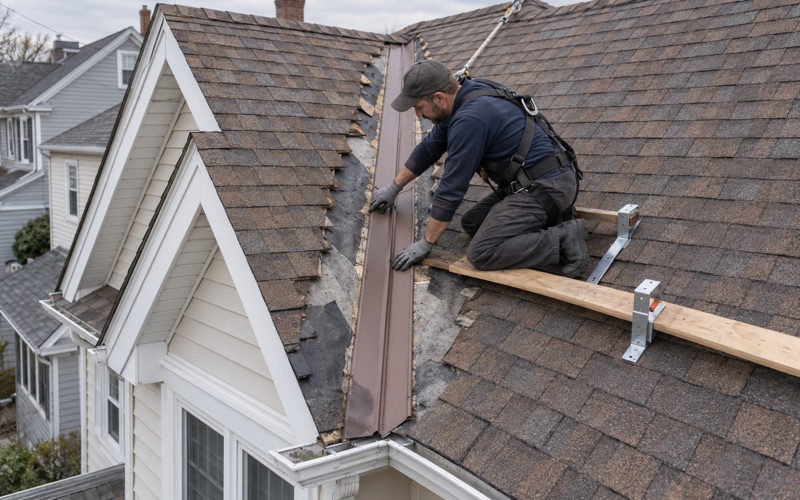
Once the old roof is off, any damaged decking we find is photographed and shown to the owner before it is replaced, at the per-sheet price written into the contract. Step, counter and chimney flashing go in new with the roof rather than being reused under the new material.
Repair before replacement
Not every leak on an older apartment roof calls for a tear-off. We give a straight answer on whether a roof can be repaired before replacement ever comes up, and every leak call includes a look at the top-floor ceiling as well as the roof surface, so the water is traced to where it actually enters. A targeted repair at a seam, a coping joint or a drain disturbs far less of the old roof than a full replacement, though the owner should still confirm with their consultant what a repair of that size requires.
When the 160-Square-Foot Threshold Comes Into Play
The inspection under 61.145(a) applies before any renovation of a covered building. Further requirements, including advance notification, apply once the regulated asbestos-containing material involved reaches certain amounts: at least 260 linear feet on pipes, 160 square feet on other facility components, or 35 cubic feet off facility components.
Why 160 square feet is a small number on a roof
A roof is a facility component, and 160 square feet is a modest patch compared with the full field of most apartment roofs. A complete tear-off on a mid-size building covers far more than that. If sampling finds regulated material in a layer that runs across the whole roof, an owner should expect the further requirements to apply rather than hoping the job stays under the line.
Phased work and the threshold
Owners sometimes ask whether splitting a re-roof into sections would keep each phase below 160 square feet. That is a regulatory question for their asbestos consultant, not something a roofing contractor should answer on a walk-through. What we can do is lay out a phasing plan in plain terms, section by section, so the consultant has an accurate picture of how much material each stage disturbs.
Local questions alongside the federal rule
Construction permit questions for an apartment building’s roof go to the Borough of East Rutherford Building Department at 312 Grove Street, where Keith Matino serves as Construction Official and Building Subcode Official. The office is open Monday through Friday from 9 a.m. to 4 p.m. We line up our paperwork with that office so the asbestos step, the permit step and the roofing schedule do not run into each other.
How we close out the job
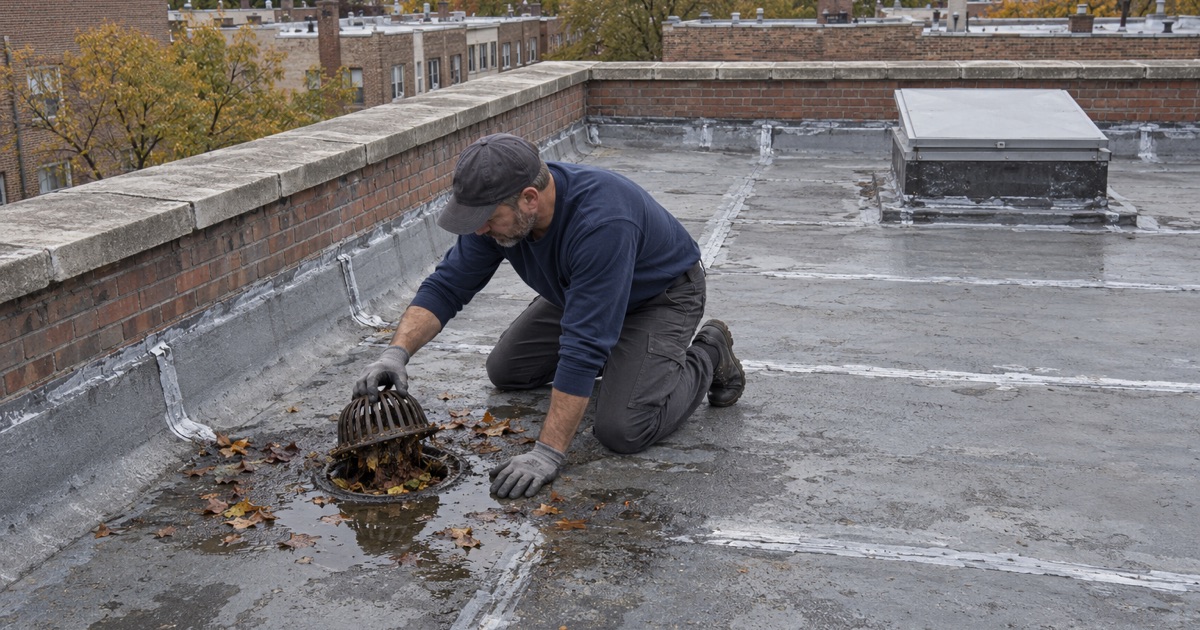
On a low-slope roof, the work is not finished until the box gutters, scuppers and leaders are cleared and tested with water. Seams, parapet coping and drains get checked, not just the area we worked on. At the end of every work day the sidewalk, yard and gutters are cleaned, including a magnet sweep for nails, which matters on a building where many residents walk past the same entrance each morning.
- 20+ Years in Roofing
- Line-Item Written Estimates
- Daily Nail-Magnet Cleanup