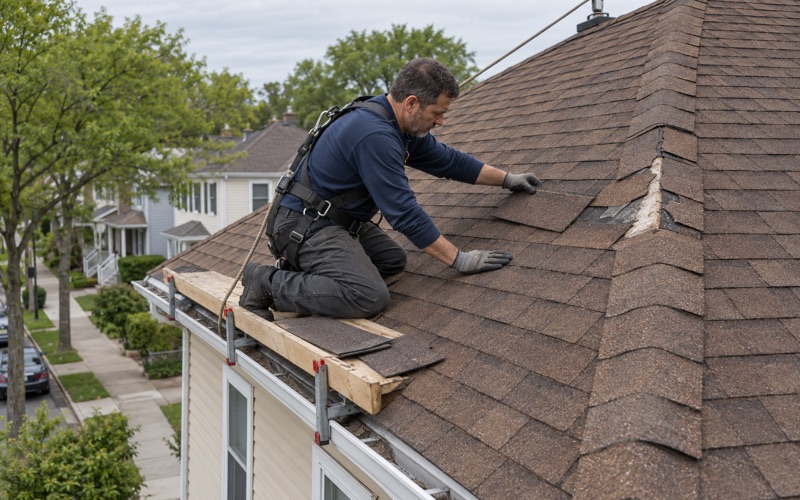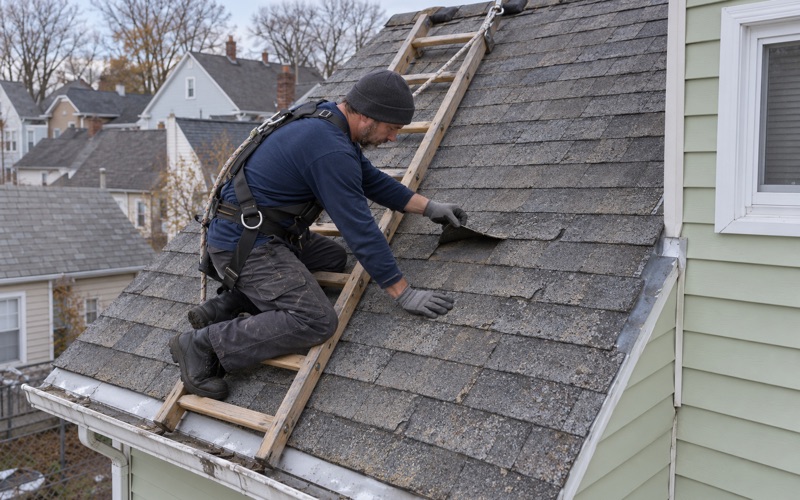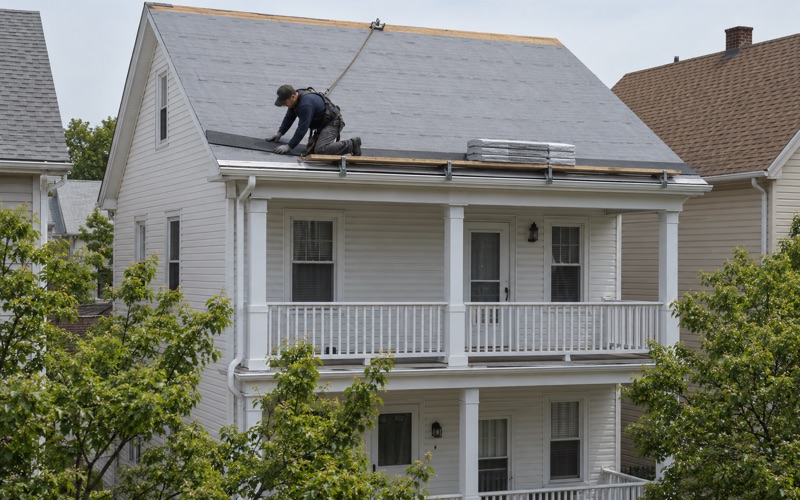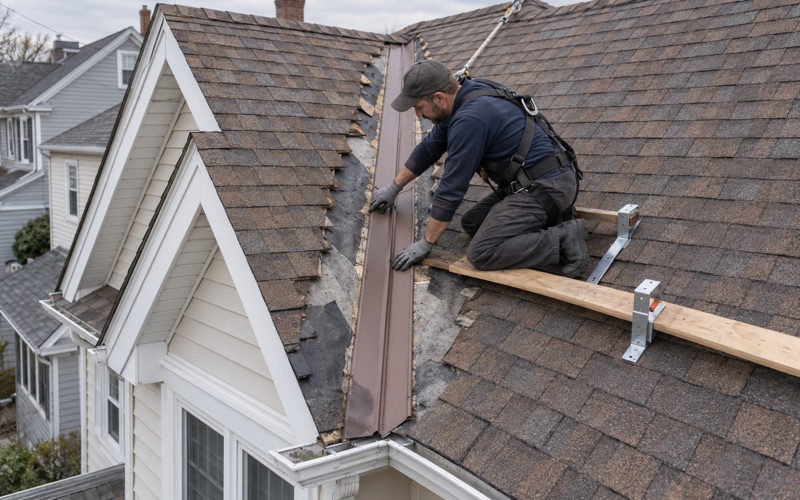
Bayonne Superior Roofing has spent more than 20 years on roofing in Edgewater, and the work we take on here is often less about shingles than about the metal and masonry around them. On an older house, the flashing at the chimney, the valley where two slopes meet and the gutter at the eave decide whether a new roof stays dry. We look at all three before we price anything.
Every leak call starts inside as well as on top. We check the attic or the top-floor ceiling first, follow the water stain back to where it actually enters, and only then talk about cost. When a roof can be repaired, we say so plainly before replacement comes up at all.
When replacement is the right call, our written scope breaks tear-off, decking, underlayment, flashing and drainage into separate lines. That lets an owner set our estimate beside anyone else’s and compare the two item by item instead of guessing at a single total.
The Older Core Below the Palisades
Most people picture Edgewater as the line of mid-rise and high-rise buildings along River Road, and most of the borough’s housing does sit in those buildings. Below and behind them, though, the borough keeps a layer of much older construction. Census estimates count 849 homes in Edgewater built in 1939 or earlier, about 10.8 percent of the housing stock.
What survives from before 1940
Those 849 units are a small share of the borough, but they carry the roofing details that newer buildings left behind. Prewar houses in this part of New Jersey were commonly built with sheet copper at chimneys, valleys and built-in gutters, and with brick or stone chimneys and parapets that the roof has to seal against. Nobody has surveyed how much of that copper is still in place on private homes here, so we find out house by house.
The borough’s own historic setting
The borough’s historic buildings give a sense of the era. Borough Hall is listed on the National and New Jersey Registers of Historic Places. The Edgewater Public Library, dedicated on February 8, 1916, is described by the borough as the last remaining of 15 Carnegie libraries in New Jersey, and the Eleanor Van Gelder School is on the New Jersey Register. Houses built in the same decades often share the same habits of construction: real metal at the joints and masonry where the roof ends.
Why the older layer needs a different approach
A roof replacement on a 1920s house is not the same job as a roof replacement on a 2000s townhouse. The roof deck may be board sheathing rather than plywood, the chimney may need mortar work before any flashing will hold, and the gutters may be built into the roof edge rather than hung from the fascia. Painted trim and fascia on a house built before 1978 also bring the EPA lead-safe rule into play whenever they are disturbed. We plan for all of that from the first visit instead of discovering it during tear-off.
Looking for roofing closer to Hasbrouck Heights? See Hasbrouck Heights Roofing.
What Borough Hall’s 2008 Grant Shows About Older Roofs
The clearest local record of what an older roof in Edgewater actually needs comes from the borough’s own municipal building. The New Jersey Historic Trust awarded grants for the Edgewater Municipal Building of $50,000 in 2002, $27,810 in 2005 and $406,000 in 2008. The 2008 grant was for critical needs including roof replacement, copper repairs and repointing.
Three jobs, named together
That wording matters because it names three separate pieces of work as one project. The roof covering was replaced, the copper was repaired and the masonry was repointed. On a building of that age, those three are rarely independent. A new roof laid against failing copper or crumbling mortar joints simply moves the leak a few feet over.
What it tells a homeowner
We had no part in the Borough Hall project, and we mention it only because it is a well-documented example close to home. The lesson carries down to a prewar house on a side street: when the roof is old enough to need replacing, the copper and the mortar it ties into are usually old enough to need attention too. A good estimate on an older Edgewater house says what condition the flashing and masonry are in, not just how many squares of shingles the job takes.
Pricing the hidden pieces honestly
Some of what an old roof needs only shows up once the covering is off. If we find damaged decking during tear-off, we photograph it and show it to the owner before anything is replaced, and the per-sheet price is already set in the contract. The same goes for rotted board sheathing at an eave or a valley: the owner sees it before it is billed.
Copper Flashing, Valleys, Gutters and Repointing
On a prewar roof, the copper and the masonry are where most of our time goes. Shingles are straightforward. The transitions are where water gets in.
Copper valleys and step flashing
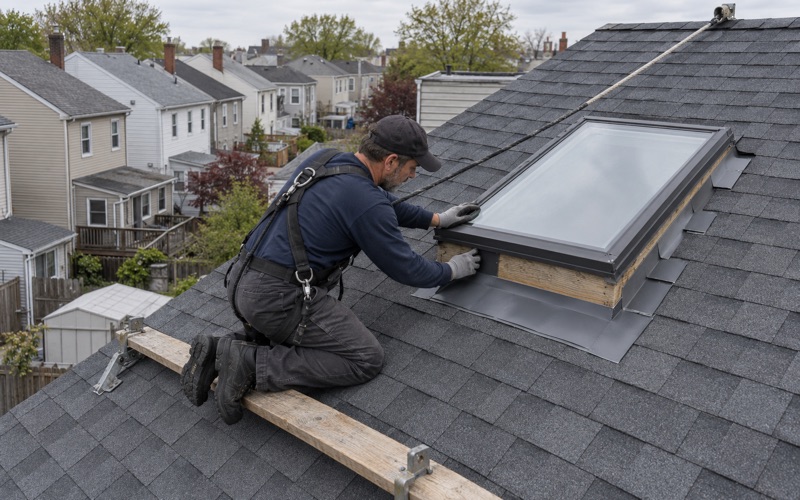
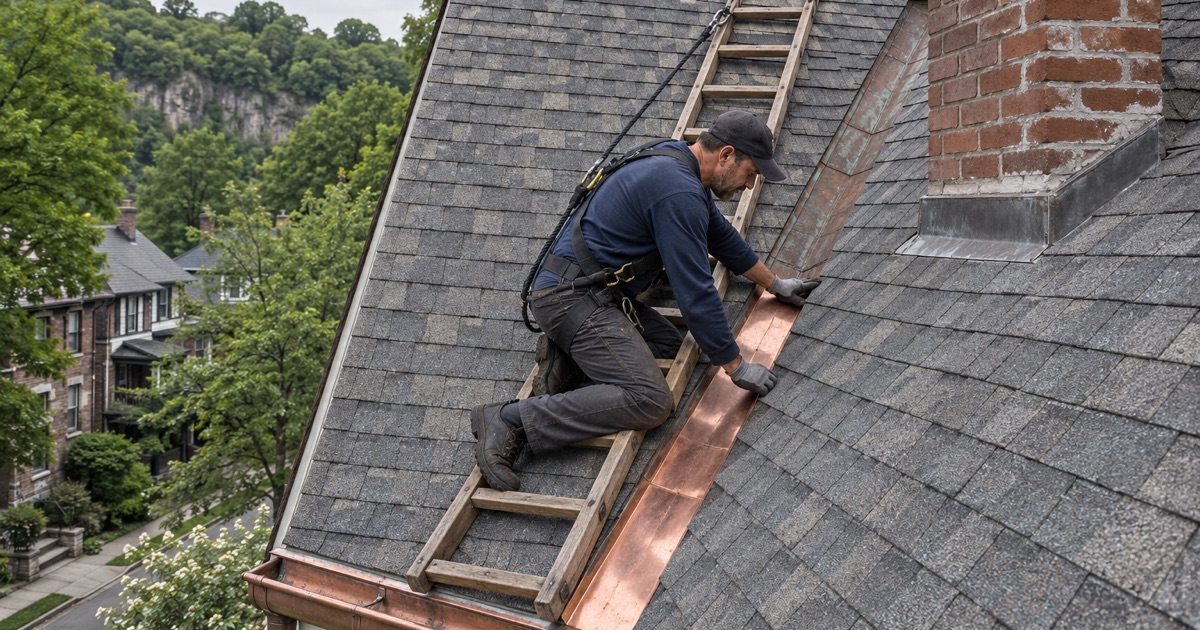
Where two roof slopes meet, older houses often used an open copper valley, a sheet of metal running the full length of the joint with shingles cut back on each side. Copper can last a very long time, but valleys wear at the seams, at old solder joints and where a nail was driven through the metal. When we re-roof, we judge whether an existing copper valley is sound enough to keep or should be replaced in kind. Step flashing, counter flashing and chimney flashing are replaced with the roof rather than reused under new material, because tired flashing under a new shingle is the most common source of a callback.
Box gutters and leaders
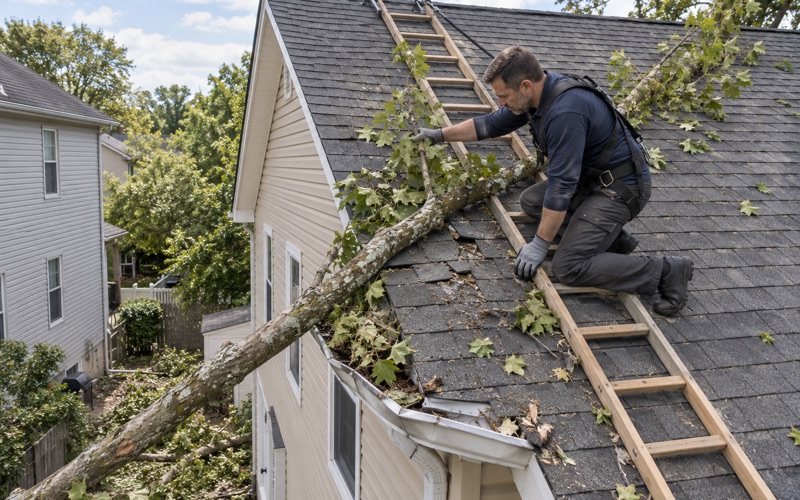
Some older houses carry built-in box gutters, troughs set into the roof edge and lined with metal, rather than hung gutters. When the lining fails, water goes straight into the cornice and the wall below. We clear and test box gutters, scuppers and leaders with water before we call a repair finished, so a slow drain or a split seam shows up while we are still on the roof. Where a box gutter is beyond saving, we lay out the options, including relining in copper or another metal, and let the owner decide.
Repointing where the roof meets masonry
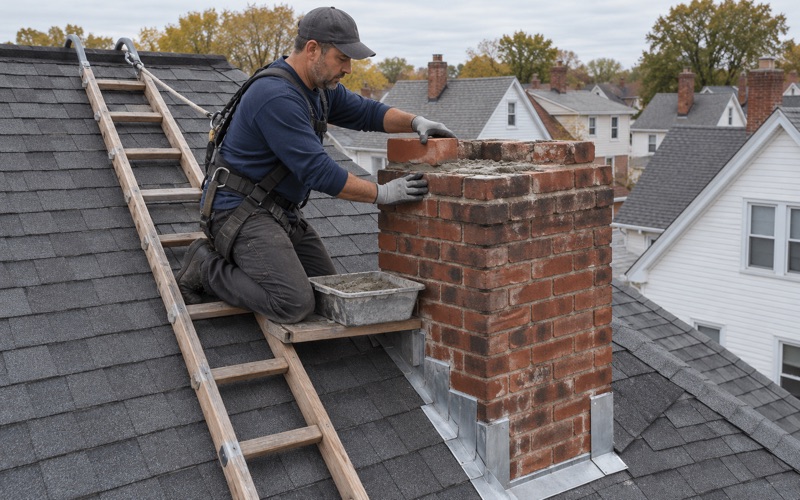
Flashing is only as good as the masonry it seals against. On a chimney or a parapet wall, counter flashing is set into a mortar joint or a cut reglet, and if that joint is soft or open, water gets behind the metal. Repointing means raking out the failed mortar and packing in new mortar to a sound depth. We check chimney crowns, caps and the joints at the roof line, and we repoint where the counter flashing needs a solid joint to hold.
Chimneys on older houses deserve a closer look than they usually get. A wide chimney on the uphill side of a slope traps water and debris unless a cricket, a small peaked saddle, diverts it around the masonry. Many prewar chimneys were built without one, and adding a cricket during a re-roof is one of the simplest ways to stop a leak that has been patched for years.
Shared walls and attached houses
Some of the older housing in the borough is attached, with roofs that run across a party wall from one owner to the next. When a leak shows up along that line, we trace it on both sides before anyone’s roof is blamed, because the flashing and mortar at a shared wall often belong to both houses at once.
Matching Original Details on a Prewar Re-Roof
There is no local historic commission rule that governs private roofs in Edgewater, and nothing requires a homeowner to use copper or to match original details. Matching is a choice. For many owners of older houses it is a reasonable one, and we walk through what it involves before any material is ordered.
Copper or a substitute
Replacing copper valleys, flashing and gutters in copper costs more up front than aluminum or coated steel. It also looks right against old brick and tends to outlast the shingles around it. Where an owner prefers to keep costs down, painted aluminum gutters and leaders or prefinished steel flashing are honest alternatives. Our scope lists the metal line by line so the difference between the two choices is plain in dollars.
Profile matters as much as metal. Many prewar houses were built with half-round gutters on round leaders, and a modern K-style gutter hung in their place changes the look of the eave even when it is the same color. Where an owner wants the original profile, we price half-round in copper or aluminum and note which hangers the fascia will take.
Shingles, slate and how many layers come off
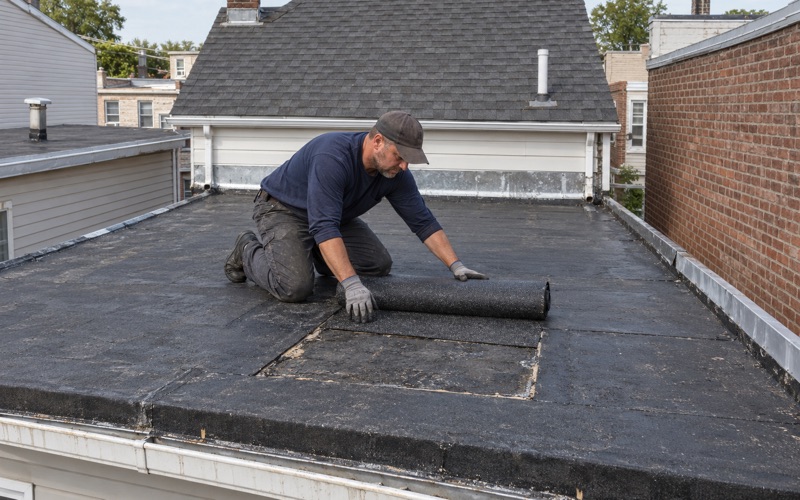
On the main field of the roof, most prewar houses here now carry asphalt shingles, often over an older layer. New Jersey’s rehabilitation subcode calls for tear-off rather than another overlay when a roof already has two or more layers, or when the existing covering is slate, wood shake or tile. Where original slate survives, repairs use copper nails and slate hooks rather than tar.
Paperwork, scheduling and cleanup
Replacing the roof covering on a detached one- or two-family house is ordinary maintenance under N.J.A.C. 5:23-2.7 and needs no permit. Attached houses and buildings with three or more units fall outside that item, and their roof work goes through the Edgewater Building Department at Borough Hall, 55 River Road, with a Construction Permit Jacket filed alongside each application. A dumpster on the street needs the borough’s construction debris container application, signed by the Police Chief when the container sits on public property.
On two-family houses we schedule with both units in mind, so the upstairs tenant knows when the crew arrives and where we need access. Our contracts follow New Jersey’s home improvement rules, including the three-day cancellation notice. At the end of every work day, we clean the yard, the sidewalk and the gutters and run a magnet sweep for nails, so an old house looks no worse for having its roof replaced.
- 20+ Years in Roofing
- Line-Item Written Estimates
- Daily Nail-Magnet Cleanup