Bayonne Superior Roofing has handled roofing in Fairview for owners who want the job planned before the first shingle comes off, drawing on more than 20 years of work on the tight lots and multi-unit houses of this part of New Jersey. A roof replacement here is as much a logistics problem as a craft problem: where the old material goes, how long it sits there, and how quickly the house is closed up again.
That is why our estimates start with the schedule. Before we price a tear-off, we look at where a container can stand, how many working days the job really needs, and what could stretch it. Then we write the scope so tear-off, decking, underlayment, flashing and drainage each appear as their own line, which lets you set our number beside anyone else’s and compare them item by item.
If the roof turns out not to need replacing, we say so first. We would rather tell you that up front than sell a full roof you do not need.
Street or driveway: when Fairview needs a container permit
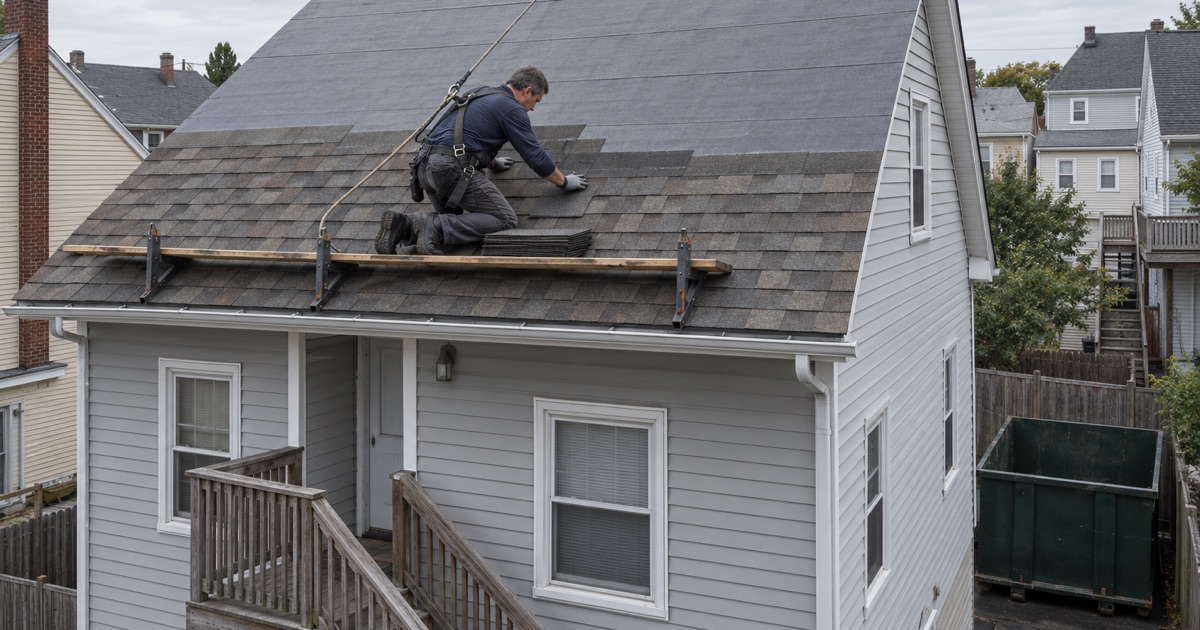
The first question on any tear-off is where the debris goes. On a full replacement, old shingles, felt, nails and any rotted sheathing come off in volume, and on most jobs that means a roll-off container parked close to the house for the length of the work.
A container in the driveway
The Fairview Building Department’s rule is simple: a dumpster permit is required if the container goes on the street. If it fits in your driveway, no permit is needed. For an owner with a usable driveway, that removes the clock entirely, and we plan the container size and delivery so it fits without blocking the house or the neighbor’s access.
Driveways in Fairview are often short or shared, though, so we measure before we promise anything. A container that hangs past the property line into the street is a street container, and it should be treated as one.
A container on the street
When the driveway will not take it, the container goes at the curb and the borough’s dumpster permit applies. That single decision changes how the whole job is run, because a street permit is not open-ended. It covers a fixed number of days, and the roof work has to be organized to fit inside them.
We settle this with you during the estimate visit, not on delivery morning. Knowing whether the container will be in the driveway or on the street tells us whether we are working to a calendar or simply working to the weather.
Looking for roofing closer to Ridgefield? See Roofing in Ridgefield.
Fifty dollars for three days, seven days at most
The Building Department publishes the fee plainly: the first three days are $50, and each additional day after that is $25, up to a maximum of seven days. Seven days is the ceiling for a street container, and we treat it as a hard limit when we build the schedule.
What the clock means in practice
A three-day permit costs the least and suits a straightforward tear-off on a modest roof with sound decking and good weather. A larger roof, a second layer to strip, or a low-slope rear section that needs its own membrane can push past three days, and each added day carries its own $25. Planning the work so the container arrives when the crew is ready, and leaves as soon as the last load is in, keeps that cost where it belongs.
We do not order a container and then wait for materials. Shingles, underlayment, flashing metal and any membrane are on site or scheduled before the container is dropped, so the permit days are spent tearing off and dry-in, not standing around.
Paying at 59 Anderson Avenue
The Building Department sits on the third floor of the Municipal Building at 59 Anderson Avenue. Its posted hours are Monday through Friday, 8:30 a.m. to 1:00 p.m. and 2:00 p.m. to 4:30 p.m., and it takes cash in exact change, check or money order. It does not take credit cards.
That detail matters more than it sounds. Someone showing up with a card, or with cash that needs change, leaves without a permit, and a container that was booked for the next morning cannot legally go on the street. We go over who is filing and how they are paying when we set the date, so the permit is in hand before the truck is.
Sequencing a tear-off inside the window
A roof that is open to the sky is the riskiest version of any house, and a street permit that runs out adds a second deadline on top of the weather. Our sequence is built to close the roof quickly and get debris into the container in the same motion.
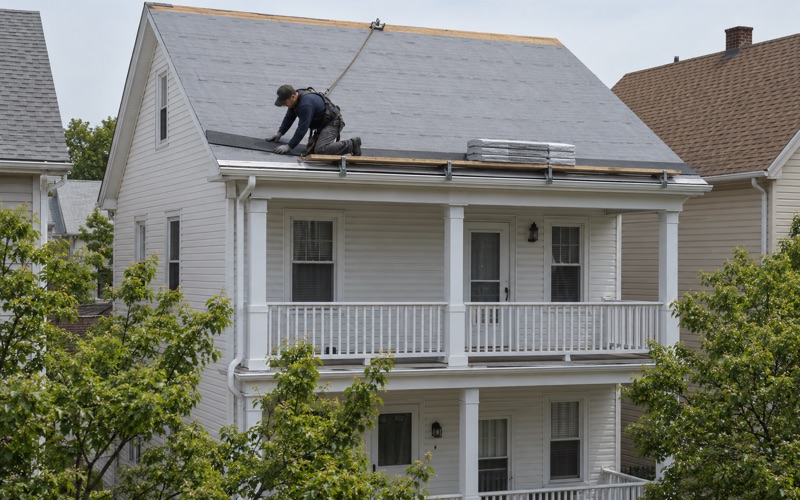
Tear off in sections, dry in the same day
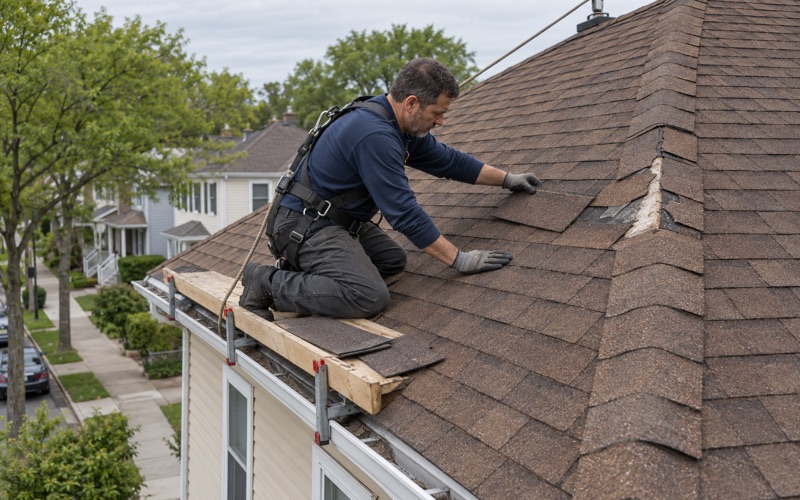
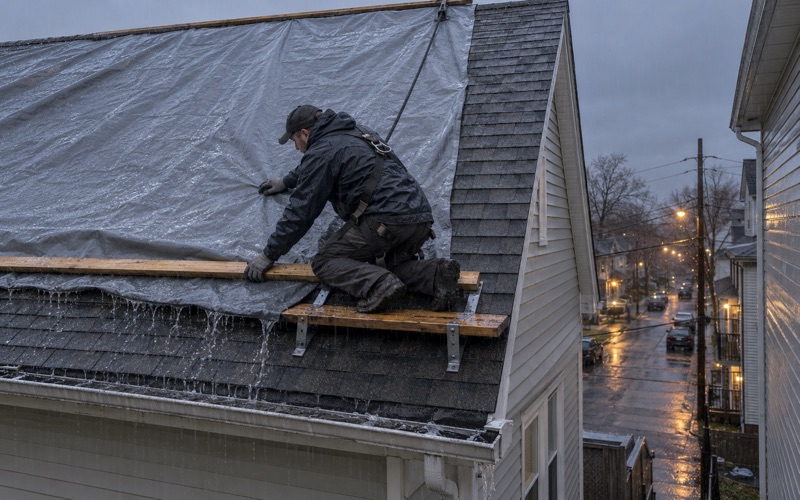
We strip only as much roof as we can cover again before the end of the day. Once a section is down to the deck, we inspect it, fix what needs fixing, and lay ice and water barrier at the eaves and valleys and synthetic underlayment across the field. Each night the house goes to bed dried in, whether or not the shingles are on.
That approach also keeps the container fill steady. Debris goes off the roof and into the container as each section comes off, rather than piling on the lawn or sidewalk to be moved later.
Decking found under the old roof
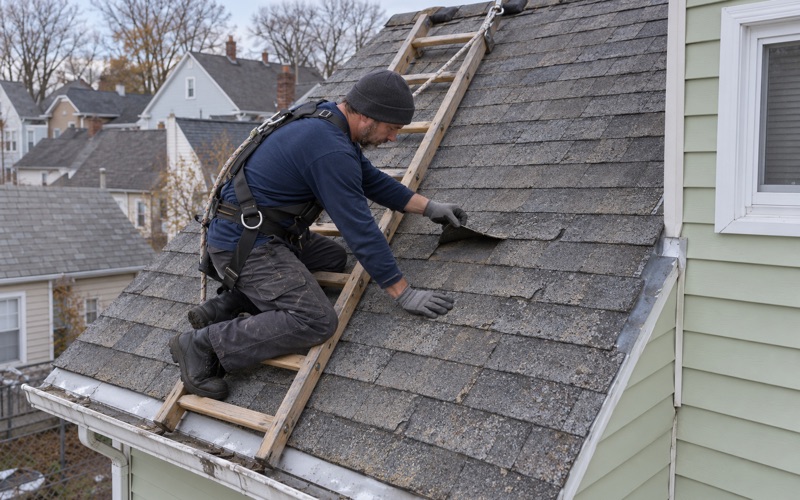
The one thing nobody can price for certain until the old roof is off is the sheathing. When we find soft or rotted decking, we photograph it and show it to you before it is replaced, and the contract already sets a per-sheet price for it. You make the call on the spot, and the work keeps moving instead of stopping for a second estimate while the permit days run.
On older housing, which describes much of Fairview, a little decking repair is normal. About half the borough’s housing was built before 1960, and roughly a quarter before 1940, so we plan for some board replacement on most full tear-offs.
Flashing replaced, not reused
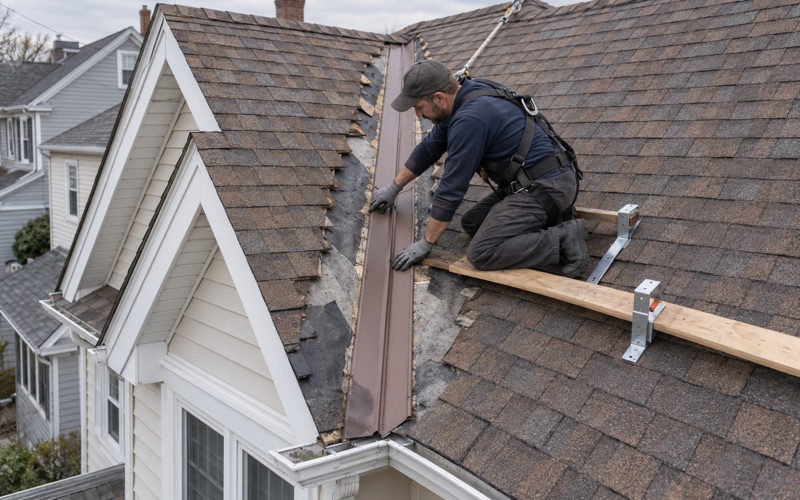
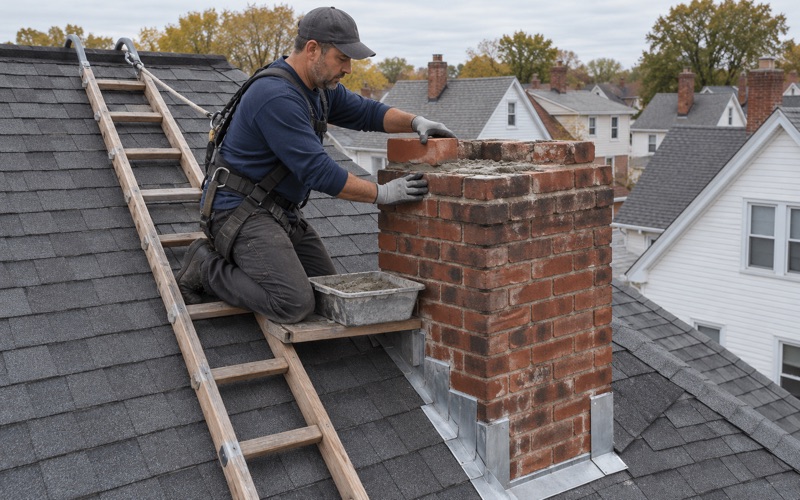
Step flashing, counter flashing and chimney flashing are replaced along with the roof, not bent back and buried under new shingles. That work fits naturally into the dry-in step, section by section, so it does not add a day at the end. New drip edge goes on at the eaves and rakes before the underlayment, and pipe boots are swapped as each vent is reached.
Finishing with time to spare
Our target on a street-permit job is to have the last load in the container with at least a day left on the permit. That margin covers a rain morning or a late material delivery without pushing the container past the seven days. Gutters and leaders are cleared and run with water before we call a job finished, and the sidewalk, yard and gutters are cleaned at the end of every work day, including a magnet sweep for nails.
Shared curb space on dense blocks
Fairview is a small borough, 0.85 square miles in Bergen County, with about 17,800 people per square mile in the 2020 census. Curb space on a block like that is shared by everyone who lives on it, and a roll-off container takes several parking spots at once.
Being a decent neighbor for a week
We keep the container footprint as small as the job allows, place it where it blocks the fewest driveways and hydrants, and keep the street around it swept. A shorter permit is not only cheaper for you, it gives the parking back to the block sooner, and neighbors notice a job that clears out on time.
Material deliveries are timed the same way. Pallets of shingles go on the roof or in the driveway the day they arrive rather than sitting at the curb next to the container.
Two- to four-family houses with tenants upstairs
Much of Fairview’s housing is the small multi-unit house. Nearly half of the borough’s homes are in buildings of two to four units, and about two-thirds of occupied homes are rented, so the person ordering the roof is often an owner who lives in one unit and rents the others.
On a two-family or three-family house, the tenant upstairs is the one living directly under the open roof. We schedule with every unit in mind, so tenants know which mornings the crew arrives, whether anyone needs to reach the attic or top-floor ceiling, and when the noise ends. A clear calendar is easier to share when the permit has already fixed the dates.
Leaks along the party wall
Attached and closely spaced houses share walls and sometimes share a roofline. When a leak shows up near a party wall, we trace it on both sides of the line before anyone’s roof is blamed, and we look inside at the attic or top-floor ceiling as well as on the roof so the water is followed to where it actually gets in. That keeps repair money on the right house.
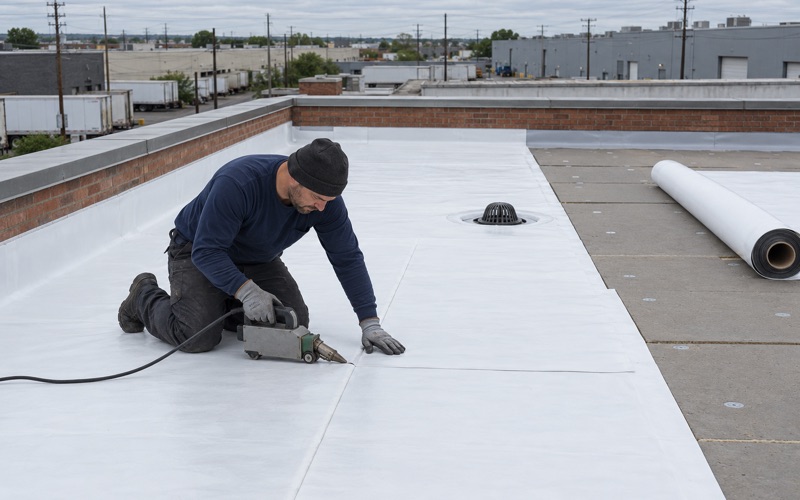
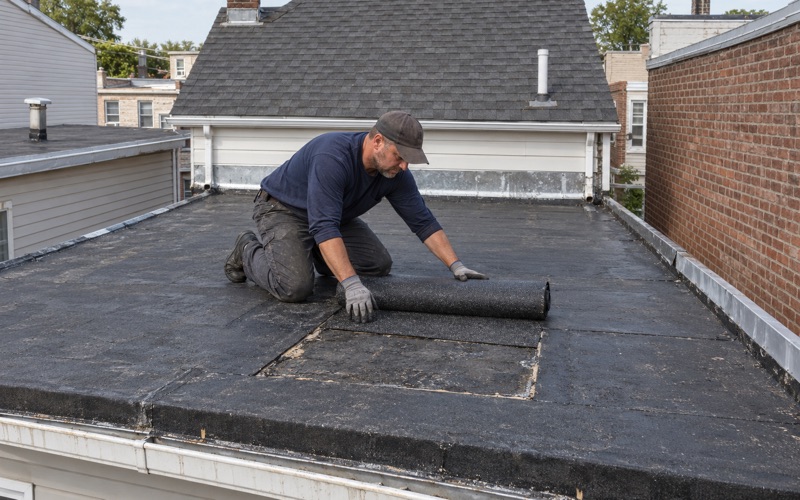
The same goes for low-slope rear roofs, common on the back sections of older Fairview houses. We check the seams, the parapet coping and the drain or scupper rather than just the visible patch, because a flat section that holds water will undo a new pitched roof’s work at the joint where they meet.
Contracts and paperwork
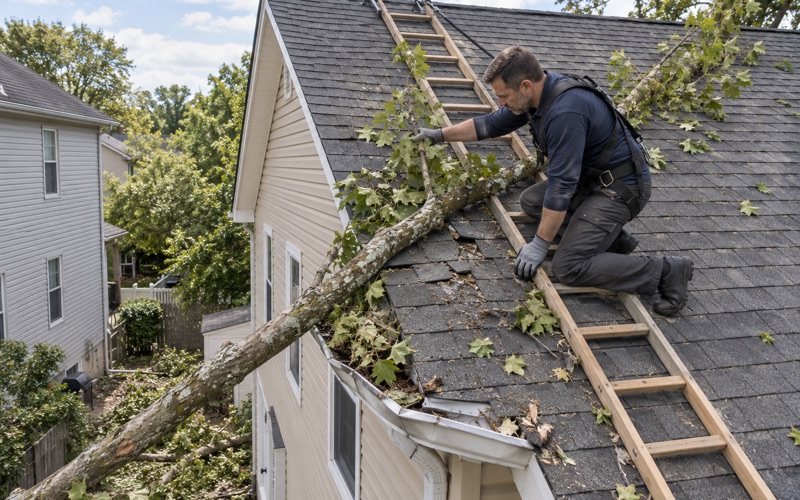
Every contract is written to New Jersey’s home improvement rules, including the three-day cancellation notice, and lists the container plan alongside the roofing scope. If storm damage brought you to us, we photograph and write it up for your own claim and will meet the adjuster on site when asked. Roofs under solar panels get the panel removal and reinstall built into the same schedule, so it fits inside the permit window rather than being discovered on the day.
- 20+ Years in Roofing
- Line-Item Written Estimates
- Daily Nail-Magnet Cleanup