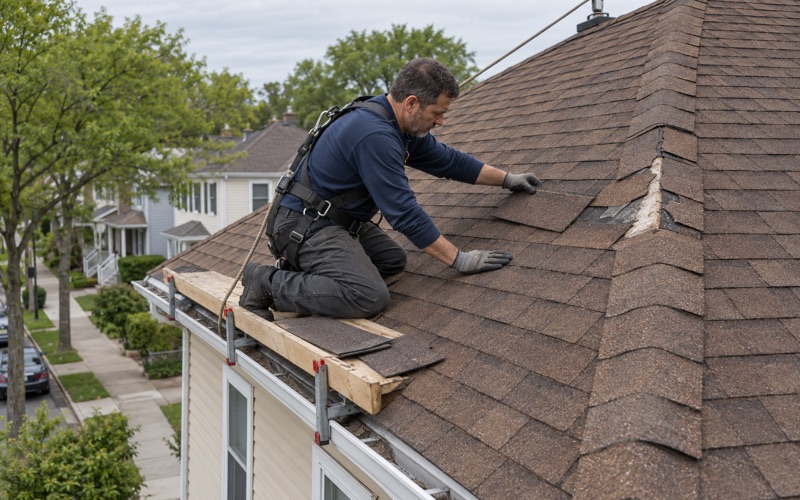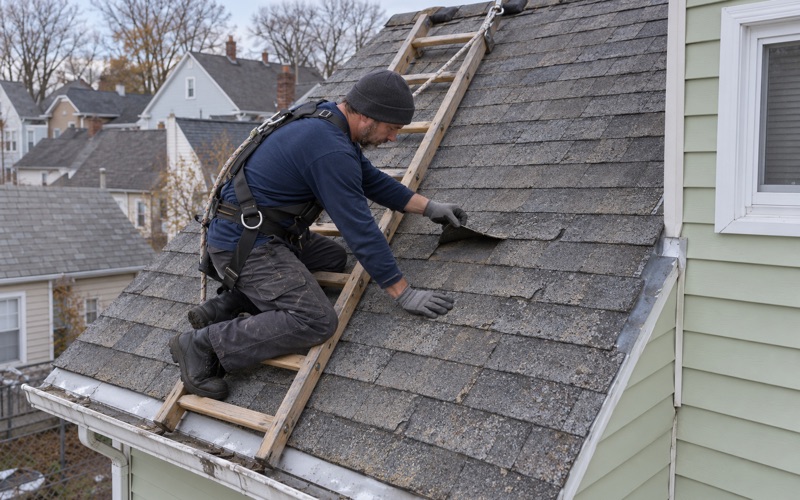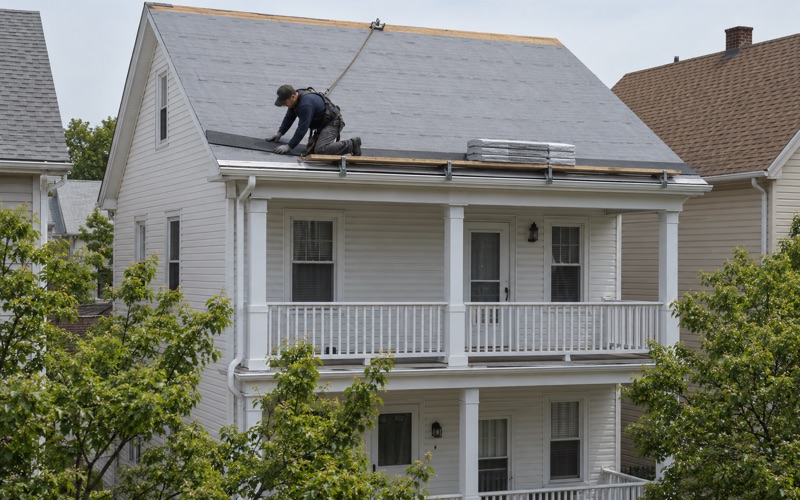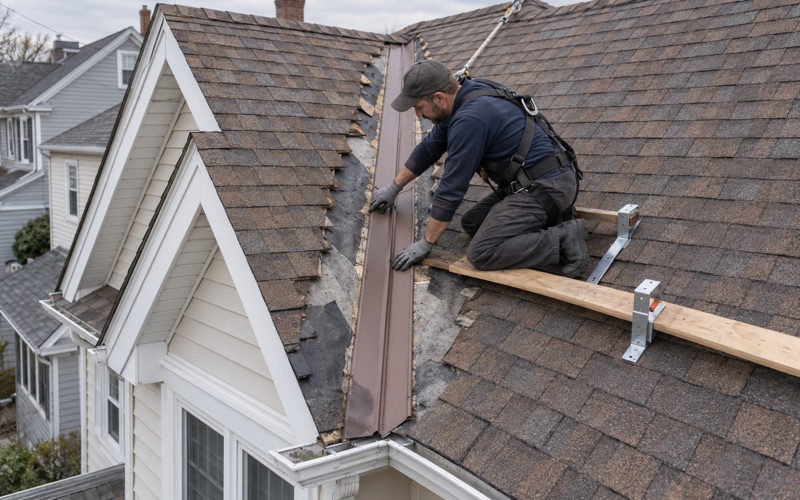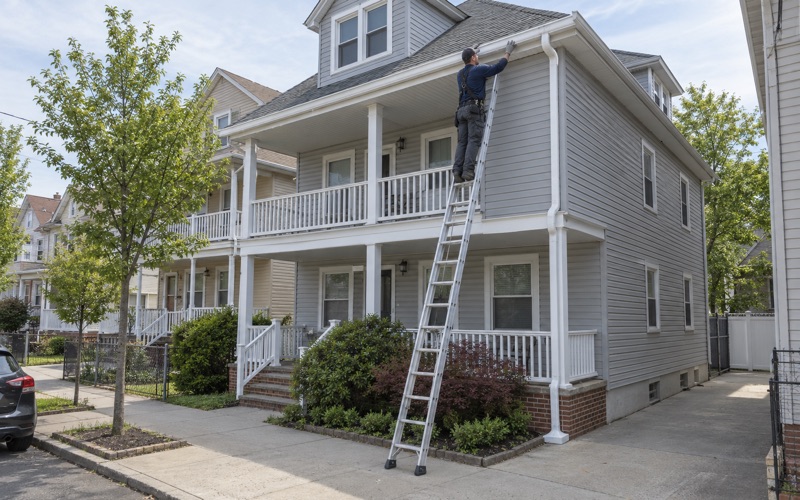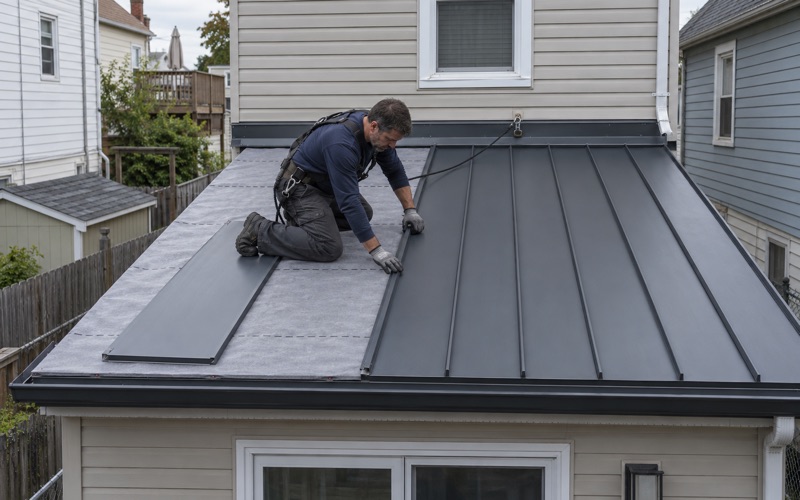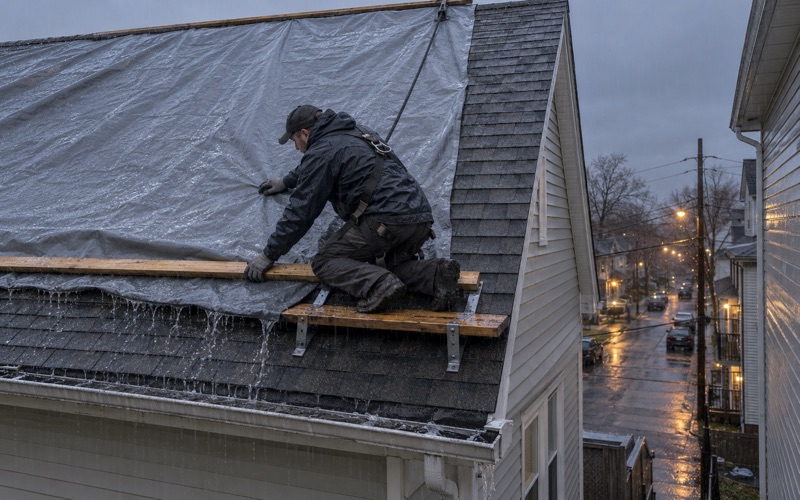
Bayonne Superior Roofing has spent more than 20 years on roofing in Guttenberg and the rest of Hudson County, and most of the roofs we climb onto here do not stand alone. They meet another roof at a shared wall, and that line decides how a leak is found, how a repair is scoped and how a replacement is filed.
We start every leak call in the same place: inside, at the attic or the top-floor ceiling, before anyone prices a thing. Water that shows up over a bedroom can enter several feet away, and on an attached building it can enter on the far side of the property line. Tracing it first is how we can tell you honestly whether the roof needs a repair or whether replacement is really on the table.
When a full job is warranted, our written scope breaks out tear-off, decking, underlayment, flashing and drainage as their own lines. That lets you set our number beside anyone else’s and compare like for like instead of guessing at what a single lump sum covers.
Guttenberg’s Row-House Blocks and the Wall You Share
The housing here is overwhelmingly attached. Census figures for the town (ACS 2024 five-year estimates) count 5,476 housing units, and only 169 of them, 3.1 percent, are detached houses. Another 4.7 percent are attached single-family houses, 20.8 percent sit in two-unit buildings and 15.8 percent in three- and four-unit buildings. A 1983 New York Times description called Guttenberg “an old community of two-story row houses, small stores and light industry,” and much of that fabric is still what we work on.
One roof ends where the next begins
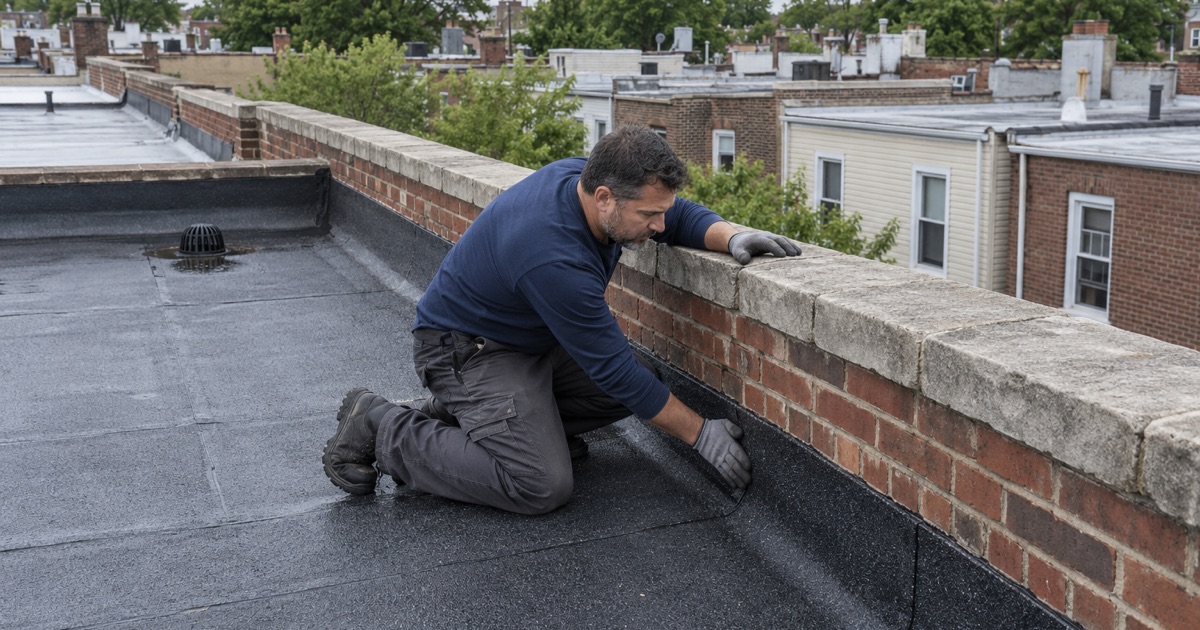
On row houses, your roof does not have a free edge on every side. At least one side runs into a party wall, and often that wall rises a little above both roofs as a parapet. Everything at that line has to shed water in two directions at once, and it has to stay watertight even though two different owners may have re-roofed their halves decades apart with different materials.
That is why we treat the seam with next door as seriously as the open field of the roof. A brand-new membrane can fail within a season if it is simply butted against an old, cracked edge on the neighboring side and sealed with a bead of caulk.
Leaks that travel along the line
Water that gets into a shared wall does not respect the property line. It can run inside the masonry and surface in the unit next door, or in yours from a defect on their side. When a leak sits along a party wall, we trace it on both sides of the line before anyone’s roof gets blamed.
That usually means looking at the parapet cap, the flashing on each roof and the ceiling below, then comparing what we find. With the neighbor’s permission we look at their side too, because guessing from one side is how two owners end up paying for the wrong repair.
Looking for roofing closer to East Rutherford? See Roofing in East Rutherford.
Where Your Roof Meets Your Neighbor’s
The tie-in is the part of an attached roof that gets rushed most often, so it is the part we plan first. Before a crew arrives we want to know what the adjoining roof is made of, how old it looks, how its edge is terminated against the wall, and whether anything on it is already failing.
Planning the tie-in
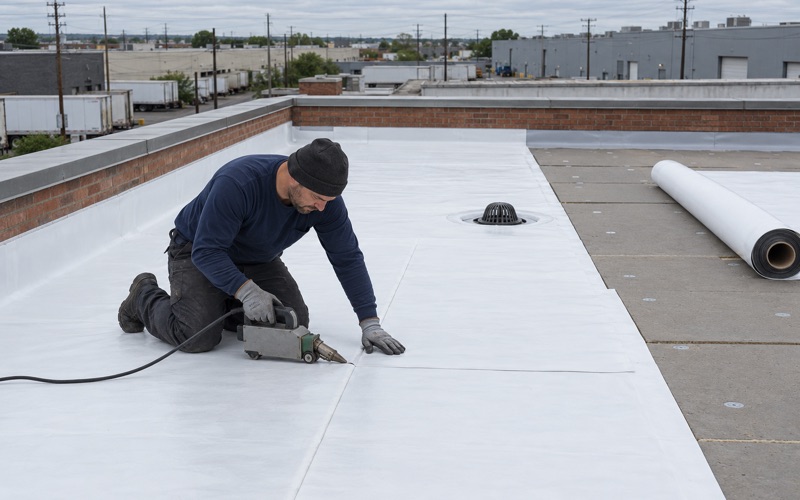
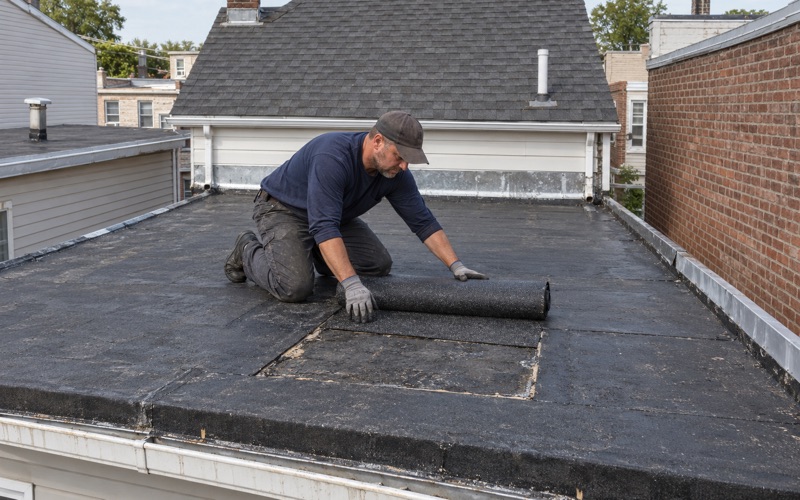
On a low-slope row-house roof the usual materials are torch-down modified bitumen, EPDM rubber or an older built-up roof with a coating. Each one tolerates a joint differently. A proper tie-in carries the new membrane up the party wall or parapet as a flashed base and terminates it under coping or counter flashing, so the new roof does not depend on the condition of the neighbor’s edge to stay dry.
Where the two roofs meet at nearly the same height with no parapet, the transition is lapped and flashed rather than buried under sealant. We tell you in advance which method the building calls for and why, and the transition appears as its own line on the written scope rather than being folded into a general labor figure.
Talking with the owner next door
Work at a shared edge goes better when the owner next door knows it is happening. We are glad to explain to your neighbor what we will touch, what we will leave alone and when the crew will be on the roof.
We do not tell anyone who owns a shared wall or who pays for its upkeep; that is a question between the two owners, and we stay out of it. What we can do is photograph the condition of both sides before and after the work, so there is a clear record of what the roof line looked like when we arrived.
Parapets, Coping and Flashing Along a Shared Wall
The parapet is where many Guttenberg row-house leaks begin. It is exposed on both faces and on top, it collects wind-driven rain, and it is easy to ignore from the street.
Coping and the top of the wall
Parapet coping, whether stone, terra cotta or metal, is meant to keep water out of the wall core. When its joints open, water soaks down through the masonry and comes out as a stain on an interior wall or the top-floor ceiling, often nowhere near the obvious patch on the roof. We check every joint, look for loose or cracked units, and confirm the coping actually sheds water away from the wall rather than into it.
Base, counter and through-wall flashing
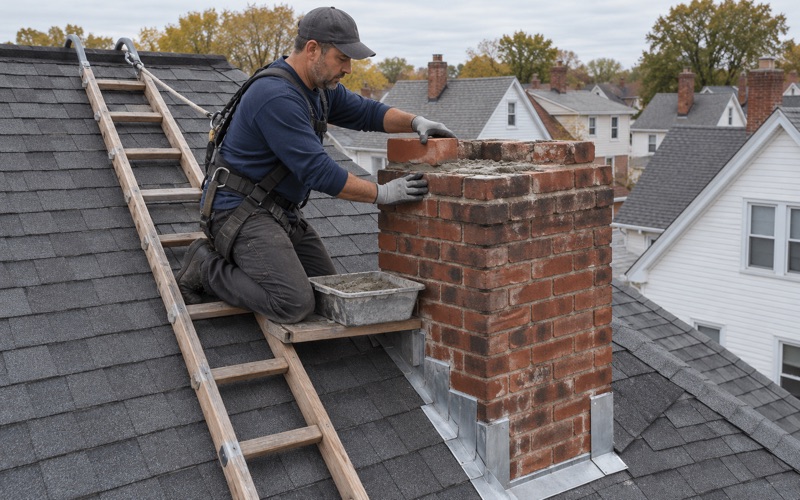
Where the roof turns up against the parapet, base flashing has to be bonded to the membrane and protected by counter flashing set in a reglet or under the coping. We replace step, counter and chimney flashing as part of a re-roof instead of reusing old metal under new material, because reused flashing is one of the most common reasons a new roof starts leaking at the edges.
If water is entering the wall itself, through-wall flashing and repointing may be the real fix. When that is the case we will say so, instead of selling a roof that would not solve the problem.
Drains, scuppers and the low corner
Low-slope rear roofs on attached buildings usually drain to a scupper through the parapet, an interior drain or a conductor head and leader. On every flat-roof visit we check the seams, the parapet coping and the drain or scupper, not just the spot someone already patched. Before a flat-roof repair is called finished, we clear the box gutter, scupper or leader and run water through it to prove it flows.
Two- and Three-Family Houses, and Why the Work Is Filed
A large share of the small buildings here are two- and three-family houses, and many of their owners live in one unit and rent the others. Of the 5,203 occupied units in town, 2,080 are owner-occupied and 3,123 are rented. The town itself treats owner-occupied two- and three-family houses as a distinct category: they are the only dwellings eligible for its short-term rental certificate.
Scheduling around the people upstairs
When we work on a two-family house we schedule with both units in mind. The tenant upstairs is told when the crew will arrive and where we will need access, whether that is the attic hatch, a top-floor ceiling we need to inspect or a rear window for a material hoist.
At the end of each working day the sidewalk, yard and gutters are cleaned, and we run a magnet sweep for roofing nails. That matters on blocks where tenants, neighbors and children walk past the building all day.
Decking you can see before it is replaced
Older attached houses sometimes hide soft or rotted decking under several layers of roofing. Once the old roof is off, any damaged boards are photographed and shown to the owner before they are replaced, at a per-sheet price already written into the contract. You never find a surprise total at the end, and you can see exactly what was wrong.
Attached houses go through the Building Department
New Jersey’s Uniform Construction Code lists certain jobs as ordinary maintenance that needs no permit, inspection or notice. Under N.J.A.C. 5:23-2.7(c)1x, repair or replacement of existing roof covering counts as ordinary maintenance only on detached one- and two-family dwellings. An attached row house, or a building with three or more units, does not fall under that item, so most of Guttenberg’s small buildings have their re-roofing filed with the Guttenberg Building Department.
We build that step into the schedule rather than treating it as an afterthought, and we explain to the owner what the filing covers before work begins. Our contracts are written to New Jersey’s home improvement rules, including the notice of your three-business-day right to cancel.
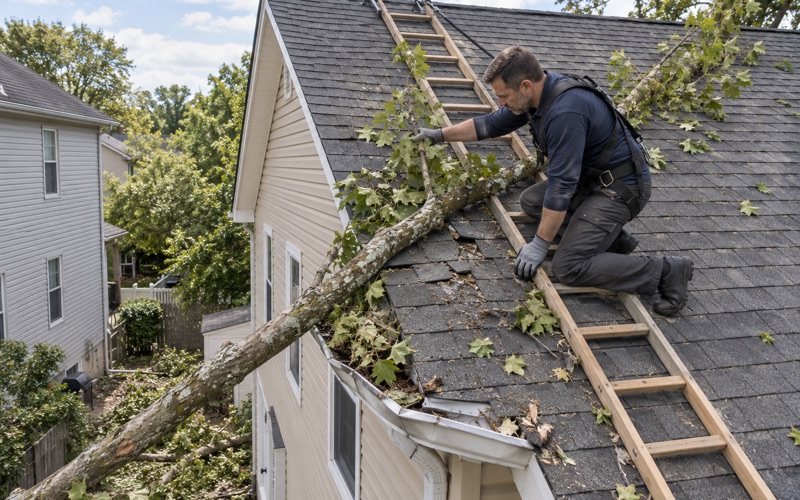
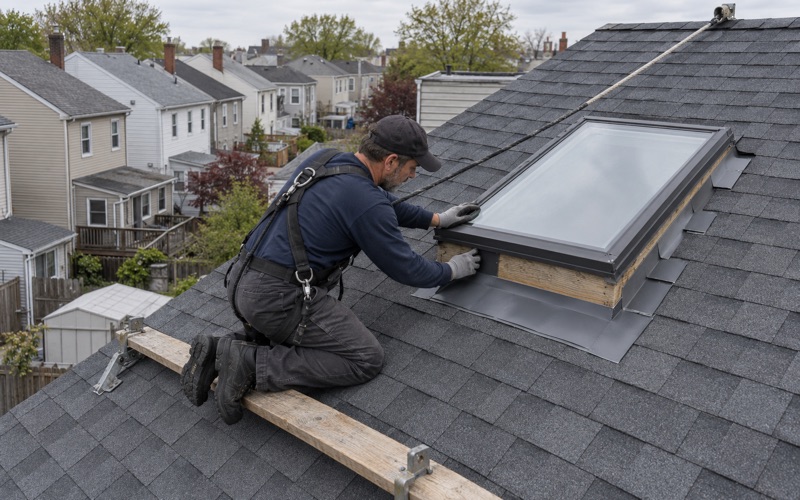
If a storm caused the damage, we photograph it and write it up for your own claim, and we will meet the insurance adjuster on the roof if you ask us to. When solar panels sit on the roof, their removal and reinstallation go into the schedule from the start instead of being discovered on the morning of the job.
- 20+ Years in Roofing
- Line-Item Written Estimates
- Daily Nail-Magnet Cleanup