Bayonne Superior Roofing brings more than 20 years of roofing work to Hasbrouck Heights, and one decision we are asked to settle comes up before anything is installed: whether the roof on a house should be replaced before solar panels are bolted to it. A solar proposal usually covers the array in detail and the roof underneath it in a sentence. We supply the missing half of that picture.
What we deliver is a number of years. After looking at the shingles, the flashing, the decking from the attic side and the ventilation, we tell the owner roughly how much life the current roof has left and whether a repair would carry it, before replacement is ever on the table. That estimate is the figure to set against the term of the solar project.
We do not sell, design or install solar, and we have no arrangement with any solar company. Our part is the roof: inspecting it, repairing or replacing it, and fitting our schedule to whichever installer the homeowner chooses.
Solar on a Hasbrouck Heights House Starts With the Roof
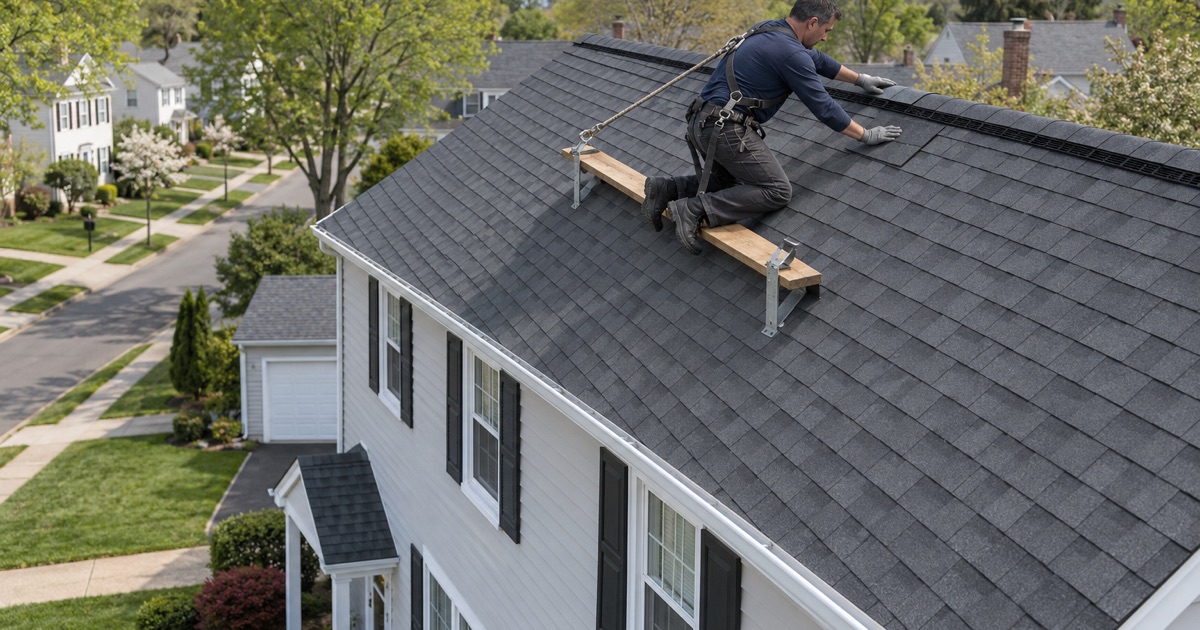
An array is a long-term tenant. Once the racking is lagged into the rafters and the wiring is run, every roof repair beneath it means working around equipment, and any full replacement means taking the system down first. The cheapest moment to deal with an aging roof is before that tenant moves in.
The New Jersey Clean Energy Program says as much in its own ADI Program FAQs. The program advises scheduling a roof inspection before installing solar, to find out whether the roof is structurally sound enough to support a system. It also notes that roof replacements are not free when a solar system is installed, which is worth reading twice before signing a contract that assumes the roof will simply be there.
What the inspection covers
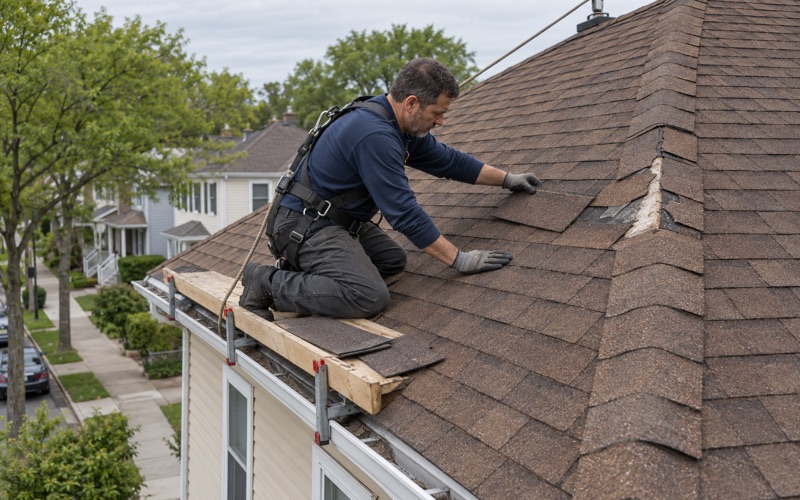
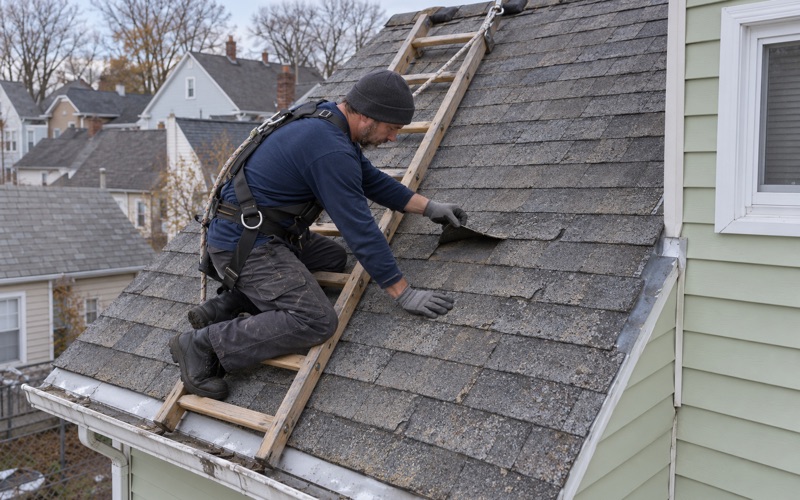
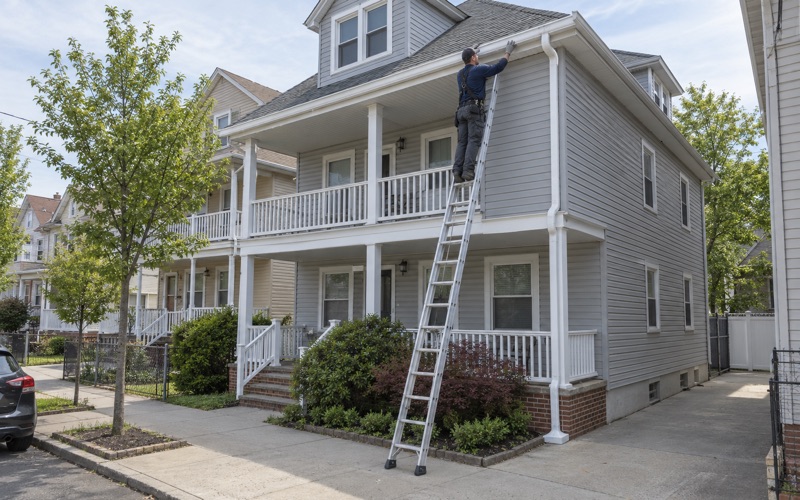
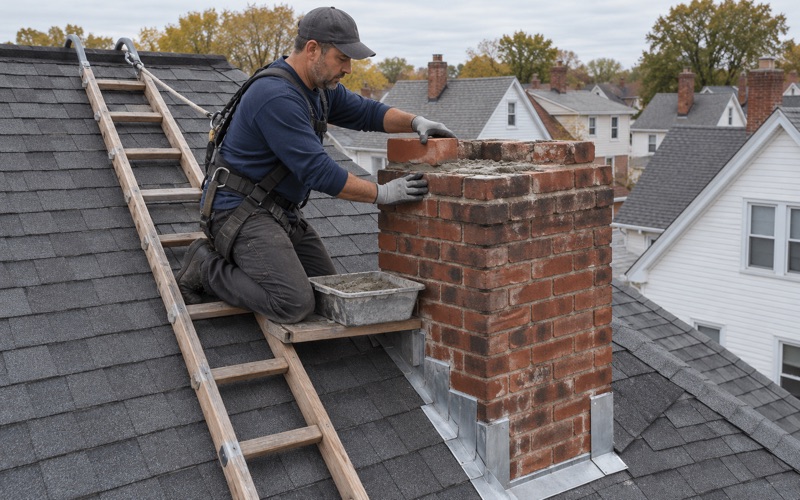
We walk the roof and then go inside. On top, we check the shingle surface for granule loss, curling and brittle tabs, and we look hard at the flashing around chimneys, walls and pipe boots, since those are the spots panels will sit near or over. From the attic, we look at the underside of the decking for staining, delamination or soft areas, and we check whether the space has working intake at the soffits and exhaust at the ridge.
Each of those findings feeds the same answer: how many more years this roof can reasonably be expected to keep water out without major work. We also note anything that would have to be fixed before an installer drills a single hole.
Why this borough sees the question so often
Hasbrouck Heights is largely a town of owner-occupied single-family homes. Census figures (ACS 2024 five-year estimates) put 64.1 percent of occupied homes in the owner-occupied detached category, and those owners are the people who sign solar contracts. The same data show 45.7 percent of housing units were built between 1940 and 1959.
Age alone does not tell us what a roof needs, because most houses that old will have been re-roofed at least once already. What matters is when the current roof went on, how many layers sit on the deck, and how the original boards have held up. Those are things only an inspection answers.
Looking for roofing closer to Ridgefield Park? See Roofing in Ridgefield Park.
The 15-Year Qualification Life, and Lining It Up With the Roof
Solar projects in New Jersey’s Administratively Determined Incentive (ADI) Program earn SREC-IIs, one for each 1,000 kWh the system generates. According to the program’s FAQs, participating projects are eligible to receive SREC-IIs for 15 years, a period the program calls the project’s Qualification Life. The value of each SREC-II is set administratively by the New Jersey Board of Public Utilities; we leave the financial side to the installer and the owner.
For roofing purposes, that 15-year window is the useful number. It is the stretch during which a homeowner most wants the array producing without interruption, and it gives the roof a concrete target to meet.
Counting the years
The question is simple to state. If the roof under a new array has eight years left, it will need replacing roughly halfway through the Qualification Life, and that replacement will mean removing the panels, storing or protecting them, re-roofing, and putting the system back. If the roof has twenty years left, it should outlast the 15-year window with room to spare.
Shingle type changes the arithmetic as well. An older three-tab roof and a newer architectural (laminated) shingle such as GAF Timberline HDZ or Owens Corning Duration age differently, and a roof that has already shed much of its granule surface is further along than its install date suggests. We weigh what we see on the roof over what the paperwork says.
We give owners our estimate in plain terms, along with what it is based on. Where the answer is borderline, we say so rather than rounding it in either direction.
Why alignment is the goal
The same state FAQs say that, ideally, the lifespans of the roof and the panels should align so that both can be replaced together. That is the logic we plan around. A roof that wears out at about the same time the array reaches the end of its service lets the owner handle both in one project, with one round of scaffolding, ladders and disruption.
Perfect alignment is rare, and nobody can promise it. But a fresh roof under a fresh array closes most of the gap, while an old roof under a new array almost guarantees the two will be out of step for years.
Re-Roofing Before the Panels Go Up
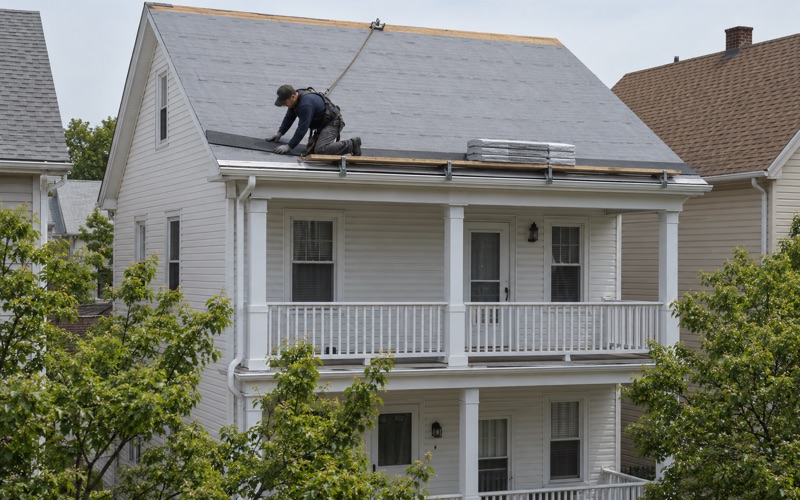
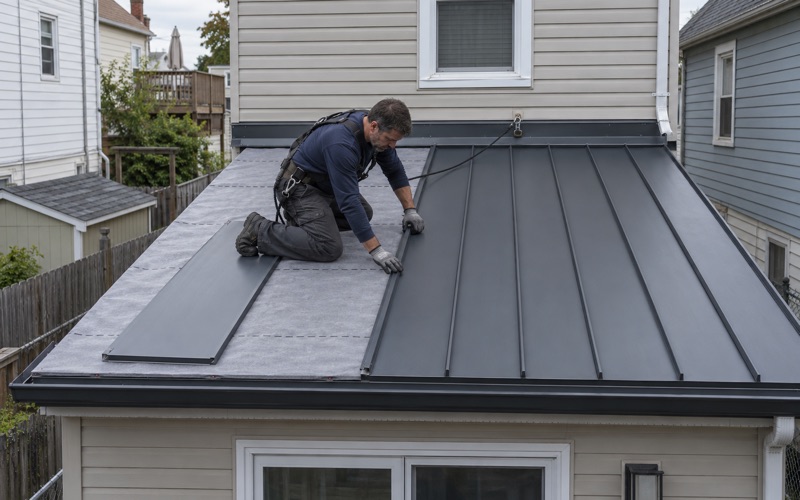
When the inspection says the roof will not carry the 15-year term, replacing it first is usually the straightforward call. For the covering on a detached one- or two-family house, New Jersey treats replacement as ordinary maintenance under N.J.A.C. 5:23-2.7, so no permit stands between the decision and the work.
Tear-off and decking
On a house with two or more layers already on it, New Jersey’s rehabilitation subcode re-roofing rule calls for tearing off rather than adding another layer, and under solar we prefer a full tear-off in any case. Panels are mounted through the roofing into the structure, so a sound, single-layer surface over solid decking matters more here than on an ordinary re-roof.
Once the old material is off, we can see the boards. Any damaged decking is photographed and shown to the owner before we replace it, at the per-sheet price already written into the contract. On a house of this era that may be original plank sheathing, and the deck is what the racking will ultimately rely on.
Underlayment, flashing and ventilation
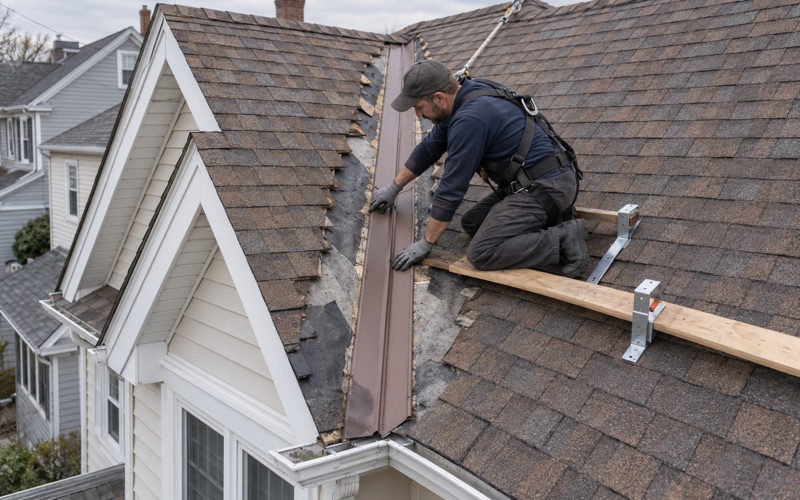
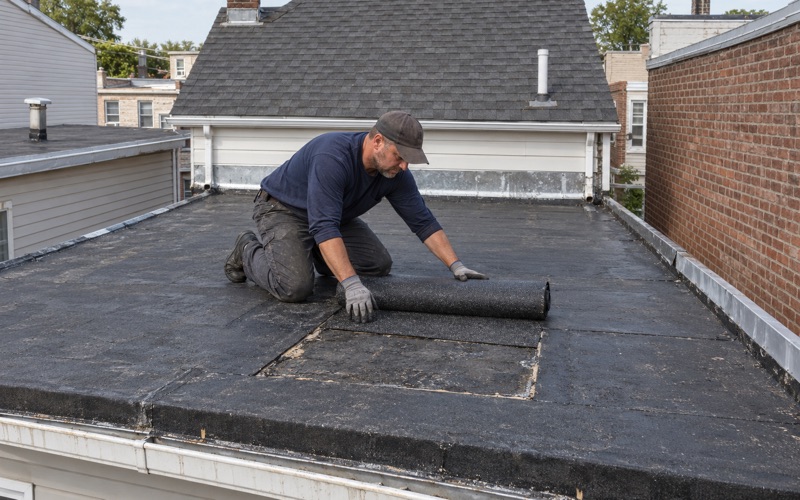
The new roof goes on with ice and water barrier along the eaves and in the valleys, synthetic underlayment over the field, and new drip edge. Step, counter and chimney flashing is replaced with the roof rather than reused, because flashing that fails under an array is far harder to reach than flashing on an open roof.
We also set up the ventilation properly, matching soffit intake to a ridge vent. An attic that breathes keeps the deck drier and helps the shingles reach their rated life, which is the whole point of the exercise.
Fitting the installer’s schedule
Our written scope lists tear-off, decking, underlayment, flashing and drainage as separate lines, so the owner can compare our price against any other roofer’s on the same terms. The contract follows New Jersey’s home improvement rules, including the three-business-day cancellation right. We coordinate the finish date with the solar company so the racking goes onto a completed roof rather than one still being cleaned up. If the installer wants a gap between our finish and their start, we build it in; if their crew plans to begin layout the next morning, the surface is ready for them.
When an Older Roof and a New Array Don’t Line Up
Not every roof needs replacing before solar, and not every homeowner calls us before the panels are already up. The mismatch shows up in a few common forms.
A roof in the middle of its life
Sometimes the inspection lands in the gray zone: a roof with perhaps ten to twelve years left, sound today but unlikely to last the full 15. Here the owner has a real choice. Replacing now means paying to discard years the old roof still has, while waiting means paying for panel removal and reinstallation later.
We lay out both paths in writing and let the owner weigh them. Where a targeted repair, such as new flashing at a chimney or replacing failed pipe boots, would meaningfully extend the roof, we say that first.
Panels already in place
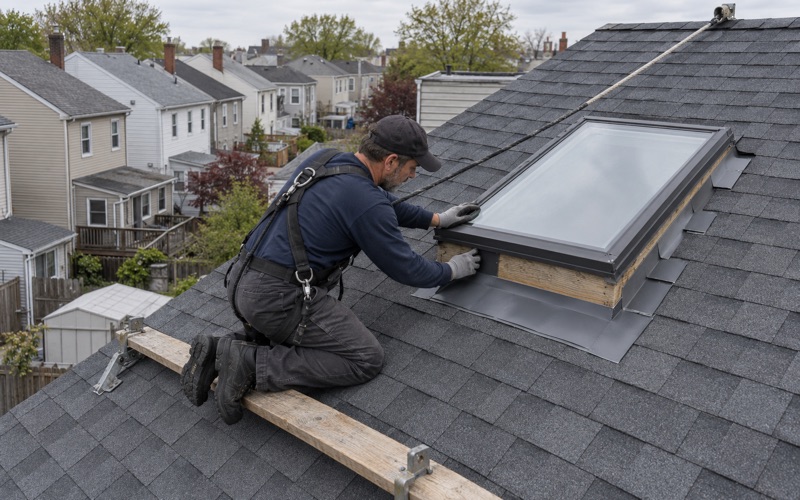
If the array is already installed and the roof under it is failing, the work has to be sequenced around the system. We plan the panel removal and reinstall into the schedule from the start, with the owner’s solar company, rather than discovering the problem on the morning of the job. Every leak call also includes a look in the attic, so we know whether water is coming through a racking penetration or somewhere else entirely before we price anything.
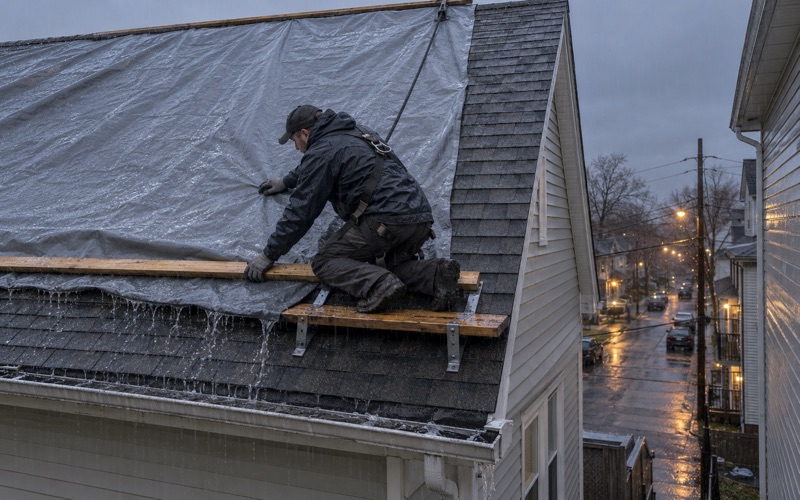
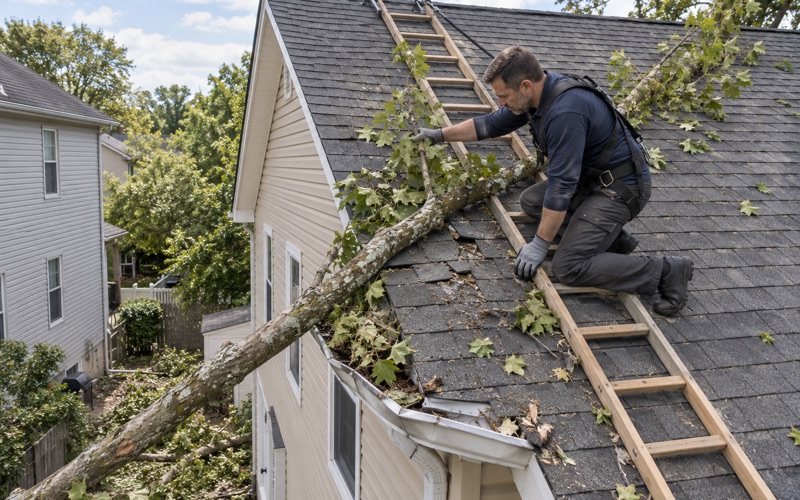
When storm damage is the reason a roof under panels has failed, we photograph it and write it up for the owner’s own insurance claim, and we will meet the adjuster on site if asked. That record matters more than usual when the array has to come off before anyone can reach the damage.
Keeping the site clean around the house
Whether the house is a few blocks from Route 17 or on a quiet side street, a re-roof on a solar timeline still has to respect the neighbors. At the end of each working day we clean the sidewalk, yard and gutters, and we run a magnet sweep for roofing nails.
For Hasbrouck Heights homeowners weighing a solar contract, the practical step is to get the roof’s remaining years on paper first. We can supply that number, explain how we arrived at it, and help line the roof up with the panels that will sit on it.
- 20+ Years in Roofing
- Line-Item Written Estimates
- Daily Nail-Magnet Cleanup