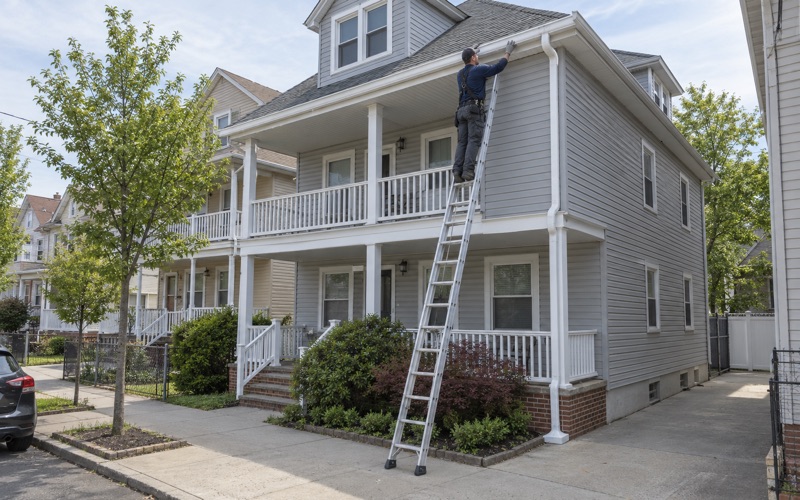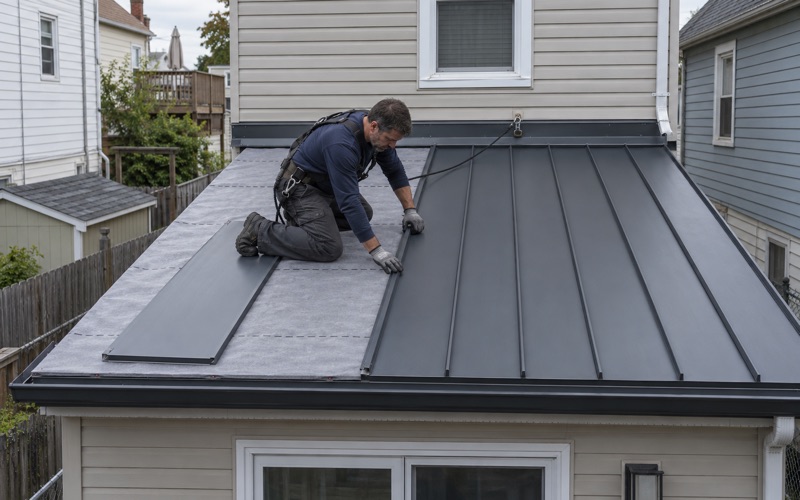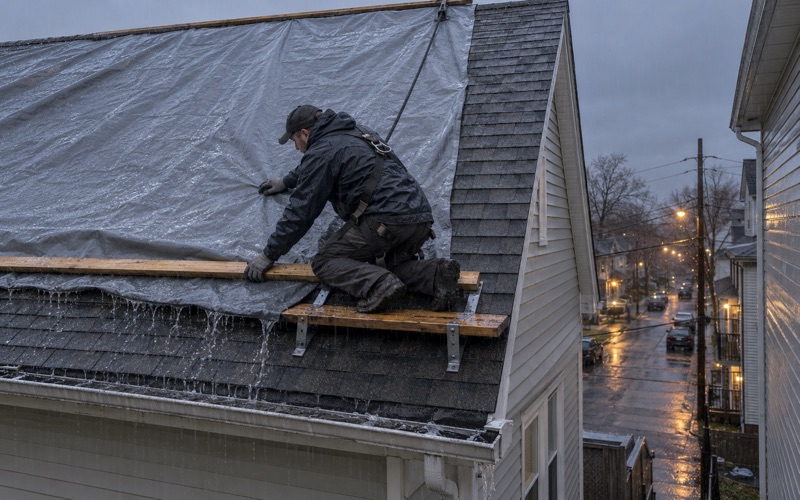
Bayonne Superior Roofing provides roofing in Metuchen backed by more than 20 years in the trade, and we treat each roof here as the specific thing it is rather than a generic replacement job. Some houses carry slate that can last for generations if it is repaired with the right fasteners, while others need a clean tear-off and a new shingle system. Our first job is telling you honestly which situation you are in.
That starts with the attic. On a leak call we look at the underside of the deck or the top-floor ceiling as well as the roof surface, so the water is traced to the point where it actually gets in before anyone puts a price on the fix. A cracked slate, a lifted shingle tab and a tired chimney flashing can all stain the same ceiling.
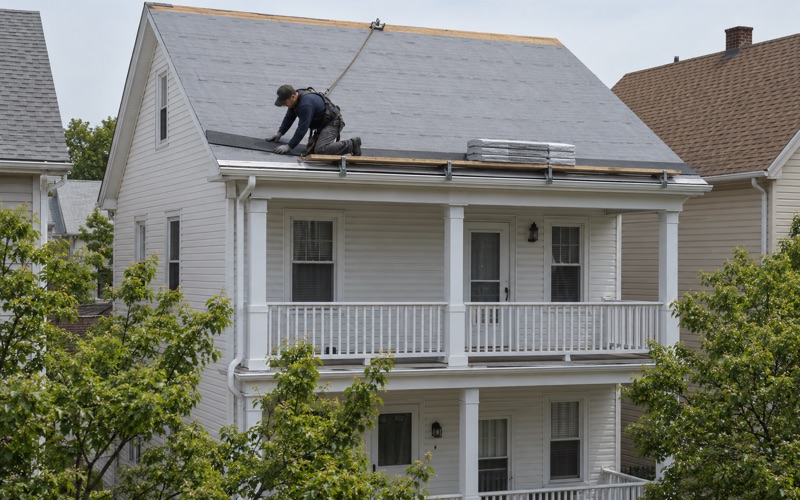
When the answer is replacement, our written scope breaks tear-off, decking, underlayment, flashing and drainage into separate lines. That lets you set our number beside another contractor’s and compare them item by item instead of guessing what a single total includes.
Slate Roofs in the Woodwild Park District
Metuchen’s Middlesex Avenue-Woodwild Park Historic District was listed on the National Register of Historic Places on July 31, 2017, covering roughly 89 acres with a period of significance running from 1860 to 1949. The borough’s own walking tour of the district reads, for a roofer, like a catalog of roof forms, and it calls out slate on several of the houses it describes.
Where the tour records slate
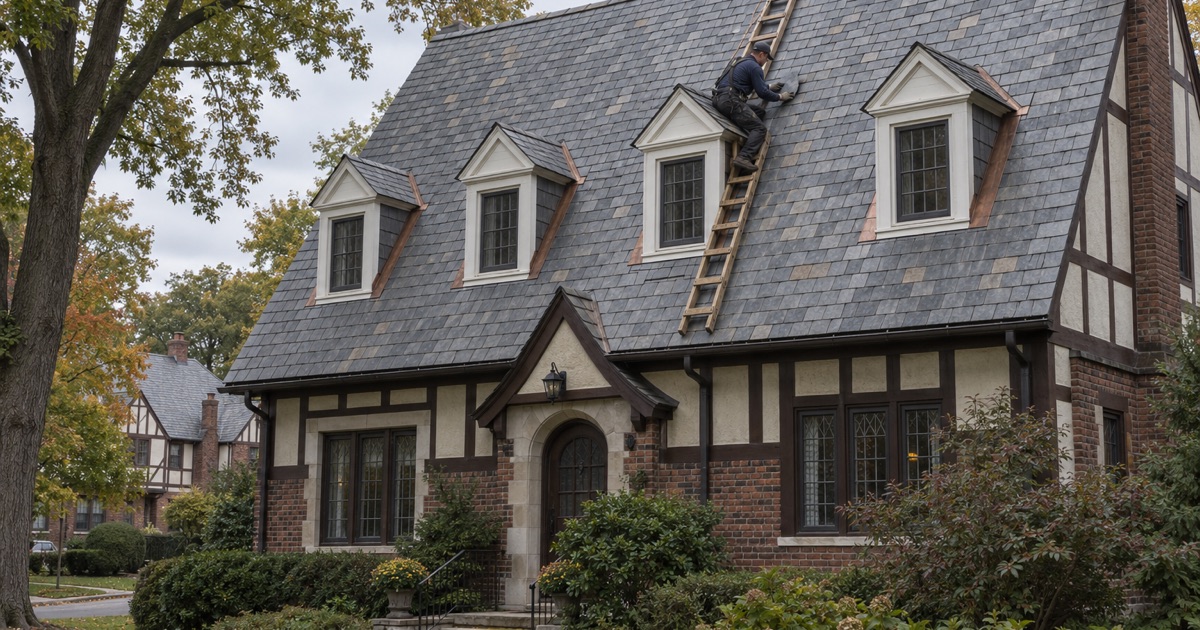
On East Chestnut Avenue, the tour describes number 245, a 1924 Tudor Revival, as having a steeply pitched slate gable roof with four pedimented dormers, and its 1924 Colonial Revival neighbor at 251 with a slate gable roof. At 82 Linden Avenue it lists a 1938 house with a hipped slate roof, cross gables and dormers. The 1937 library at 480 Middlesex Avenue is noted with a slate roof as well.
Two of those houses, 245 East Chestnut and 82 Linden, are attributed by the tour to architect Clement Fairweather, who also designed a 1927 Tudor Revival at 83 Linden. That is a sample, not a census. The tour documents particular houses, and we do not assume any house in the district has slate until we have been up to look.
How slate repair differs
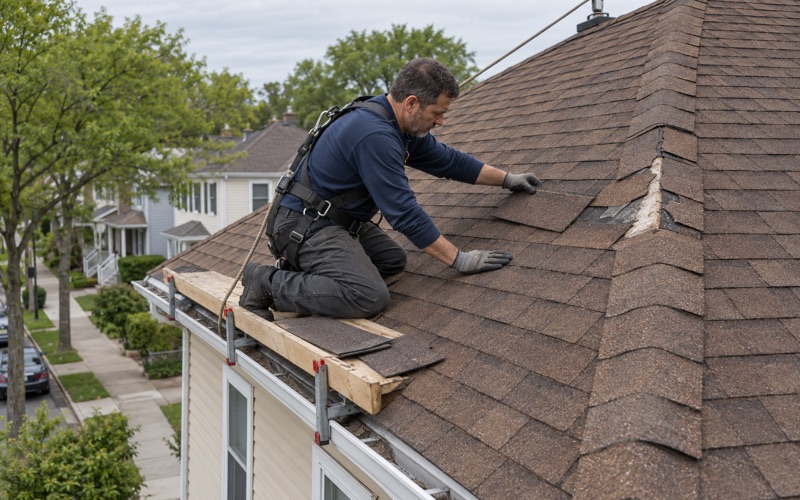
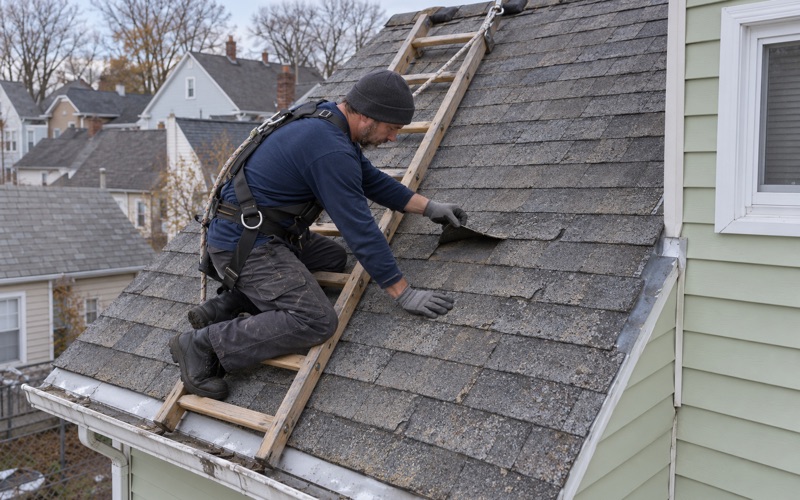
Slate fails differently from asphalt. The stone itself often outlasts the nails holding it, so a slipped or cracked piece is usually a fastener or impact problem, not a worn-out roof. We replace individual slates with copper nails and slate hooks, matching size and thickness as closely as we can source, and we keep foot traffic off the field with ladders and hooks rather than walking the surface.
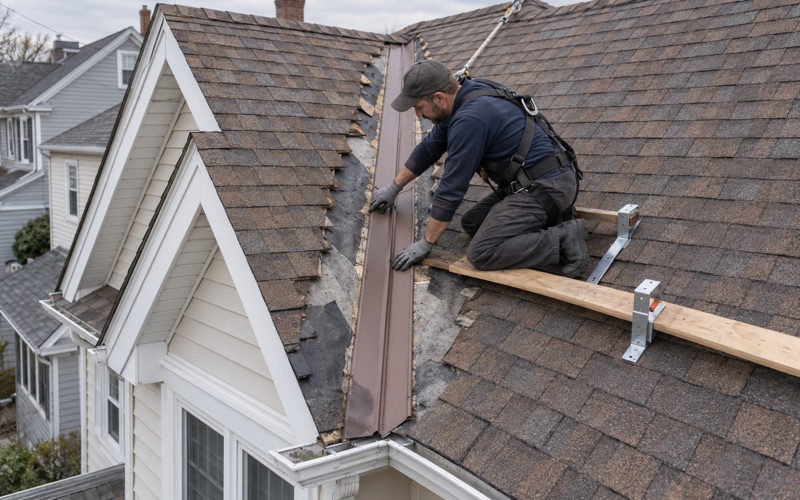
Where flashing or a valley is rebuilt on a slate roof, we lay self-adhering ice and water barrier meeting ASTM D1970 under the new metal before the slates go back, because valleys and dormer edges are where ice and wind-driven rain push hardest.
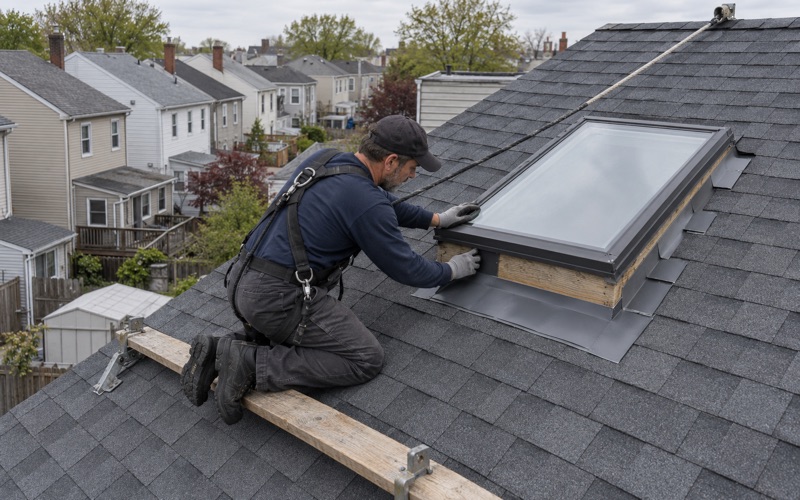
On a steep Tudor gable that matters even more, because the pitch that sheds water so well also makes careless work dangerous to the roof and the crew. Our people tie off under OSHA’s fall protection rule for residential roofing, which applies from six feet up.
Looking for roofing closer to New Providence? See Roofing Services in New Providence.
Dormers, Gables, Foursquares and a Mansard
Slate is only half of what makes district roofs demanding. The other half is geometry. Every dormer, cross gable and hip line is a joint where two planes meet, and joints are where water finds its way in long before the field of the roof wears out.
Pedimented dormers on steep revival roofs
A pedimented dormer set into a steep slate gable has step flashing running down both cheeks, a saddle or apron at its face, and valleys where its roof ties back into the main slope. When one of these leaks, the stain inside often shows up well below the actual entry point. We open the attic side first, then lift slates around the dormer only as far as the flashing problem demands.
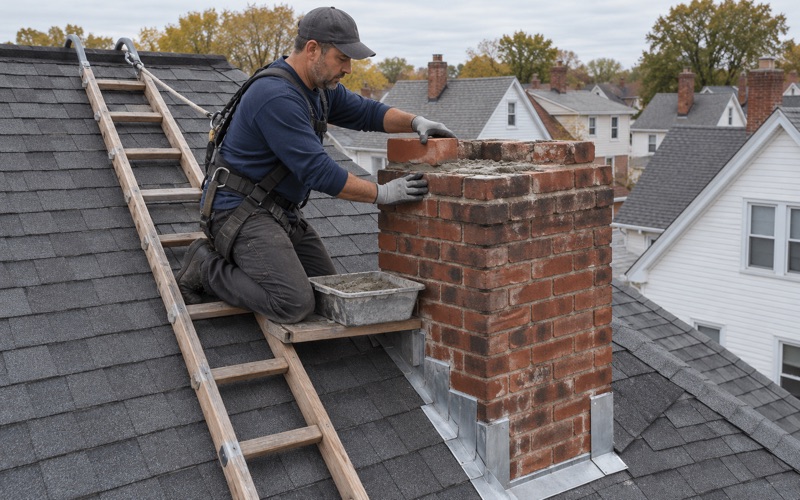
When a roof is replaced, step, counter and chimney flashing comes off with it and new metal goes on. Reusing old flashing under a new roof saves an hour and costs a ceiling later, and on a house with four dormers on one slope that trade is not worth making.
Foursquares and bungalows
Elsewhere on the tour, foursquares carry pyramidal roofs, where four hips rise to a single peak. The house at 459 Middlesex Avenue, built around 1905, pairs its pyramidal roof with a pyramidal dormer, and 68 Linden Avenue, from 1921, has the same basic form. On these roofs the hips and the peak take the weather, and the ridge cap and hip details deserve more attention than the broad faces.
Bungalows bring their own detail: the 1925 bungalow at 70 Linden Avenue has broad eaves with exposed rafter tails. There the drip edge and first course of roofing sit over trim open to the weather, and on any house built before 1978, painted trim we disturb is handled under the EPA’s lead-safe rule.
The Second Empire mansard on Middlesex Avenue
The tour also records a Second Empire mansard at 424 Middlesex Avenue, the building known as the Metuchen Inn, dated to around 1840. A mansard puts a nearly vertical lower slope above the walls and a shallow upper slope above that. The steep face behaves like a wall clad in roofing, while the nearly flat top behaves like a low-slope roof, so the two need different detailing, especially where they meet.
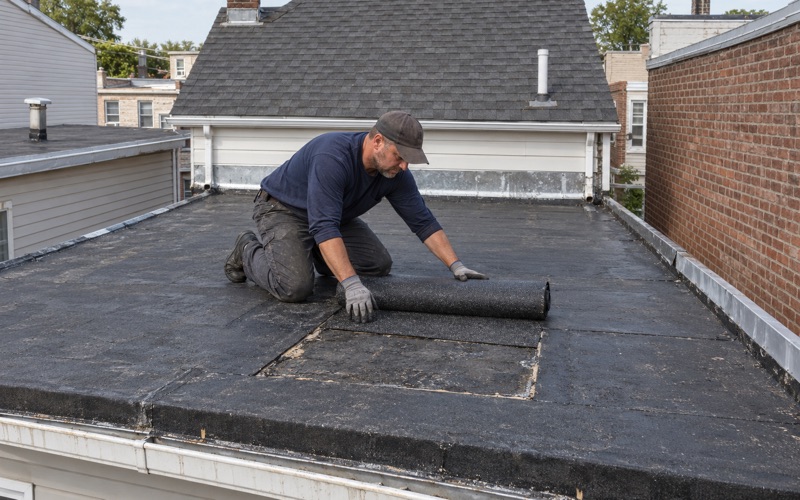
That upper deck is where we check seams, the perimeter edge and any drain or scupper, not just the spot someone patched last. A mansard’s upper roof is easy to forget because nobody sees it from the street.
National Register Listing, Permits and Paperwork
What the 2017 listing does and does not do
Owners in the district often ask whether the listing means they must keep slate or get approval before work, and the answer is no. National Register listing recognizes a district; it does not by itself regulate what a private owner puts on a roof. Metuchen has a Historic Preservation Committee that is advisory, and as of the most recent records we have seen, a local preservation ordinance has been discussed and drafted but not adopted.
So whether slate stays slate on a district house is your decision. We think it should be an informed one, which is why we explain what the existing roof can still do before we talk about what could replace it.
Permits and the code office
Under New Jersey’s Uniform Construction Code, replacing the roof covering on a detached one- or two-family dwelling is ordinary maintenance, with no permit or inspection required. Attached single-family homes and buildings with more units fall outside that wording, and Metuchen’s Construction Code Enforcement Office at Borough Hall, 500 Main Street, is the place to confirm what a particular project needs. Its office notes that some projects may also need zoning approval.
What a contract here includes
Our contracts follow New Jersey’s home improvement rules, including the notice of your right to cancel within three business days. If decking turns out to be damaged once the old roof is off, we photograph it and show you before replacing it, at a per-sheet price already written into the contract.
Storm damage and insurance claims
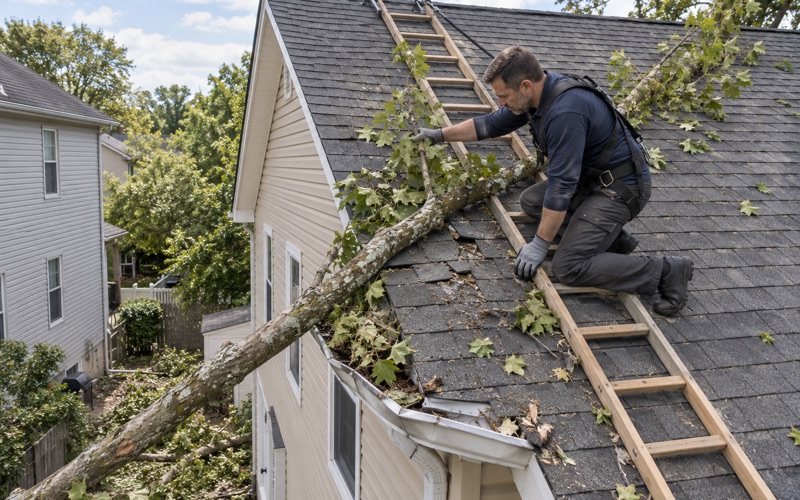
After a storm, we photograph the damage and write it up for your own claim, and we will meet your insurance adjuster on site if you ask. On a slate roof that record matters, because a few broken pieces near a ridge are easy to miss from the ground and easy to dispute later.
Repair or Replace: Keeping a Slate Roof Slate
Before replacement ever comes up, we give you a straight answer on whether the roof can be repaired. For slate, the question is rarely whether the stone looks old. It is whether the slates are still sound, whether the nails and flashing have given out around them, and whether the repairs needed are scattered or spread across the whole surface.
When repair is the right call
Scattered broken or slipped slates, a leaking valley, or worn flashing at a chimney or dormer are repair work on a roof whose stone still has life in it. Replacing pieces one at a time with slate hooks or copper nails, and renewing the metal at the joints, can keep a slate roof working without disturbing the rest of the field.
Chimneys deserve their own look. On an older house the crown, cap and mortar joints are often the real source of a leak blamed on the roof, and repointing or a new crown may solve what a slate repair never would.
When replacement makes more sense
When slates are delaminating or soft across large areas, piece repairs stop making sense. At that point the choice is new slate or a different material, and either way the old slate comes off: New Jersey’s rehabilitation subcode does not allow a new roof to be laid over slate. We lay out both paths in writing so you can weigh what each one involves.
If you choose new slate, the existing roof’s size and exposure set the pattern. If you choose a different material, standing seam metal or a laminated architectural shingle such as GAF Timberline HDZ or CertainTeed Landmark are the usual alternatives. Either way, the valleys, ridges and dormer cheeks on a steep revival roof need the same care the slate once got.
Most of Metuchen’s housing sits outside the district. Census figures put 38.9 percent of the borough’s housing units in the 1950s and 1960s, and 66.4 percent are one-unit detached houses, so much of the roofing here is on postwar homes with simpler rooflines. Our habits do not change for them: attic first, new flashing rather than reused, and a magnet sweep for nails at the end of every work day.
If you own a Woodwild Park house with slate overhead, or any roof in Metuchen that has started to stain a ceiling, we will tell you what we find, show you photographs and put the recommendation in writing.
- 20+ Years in Roofing
- Line-Item Written Estimates
- Daily Nail-Magnet Cleanup