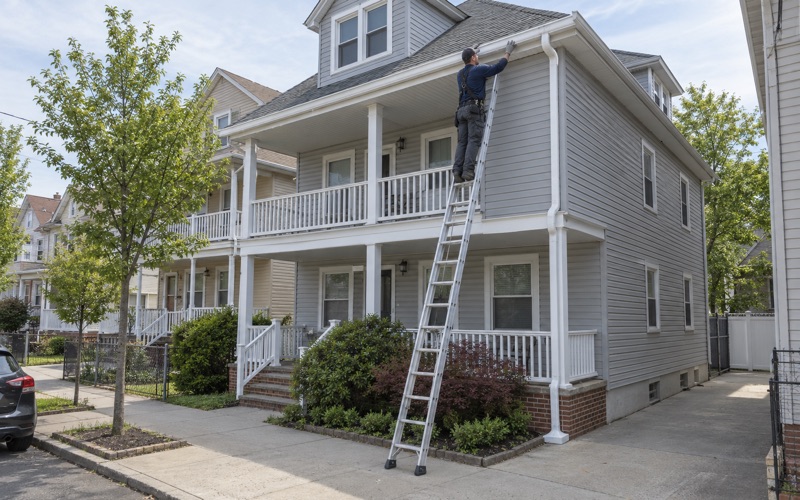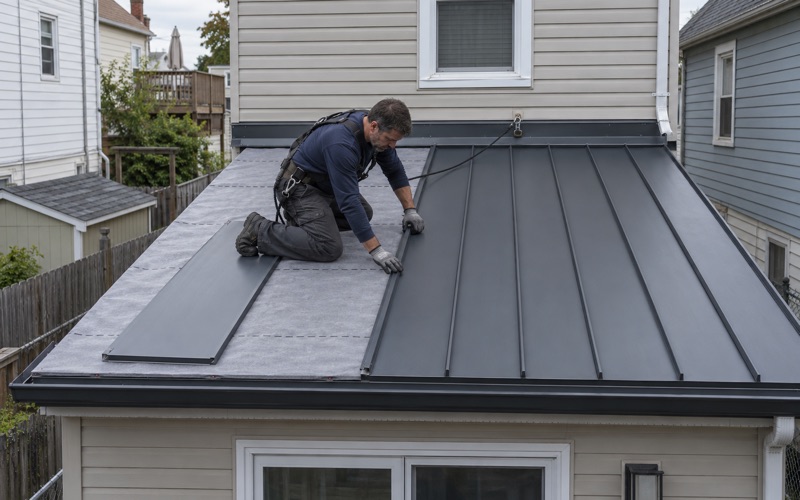
Bayonne Superior Roofing has handled roofing in New Milford for homeowners and small landlords who want more than new shingles, and after 20+ years on North Jersey roofs we treat the drainage as part of the roof rather than an afterthought. A roof sheds water quickly. What happens to that water in the next ten seconds, along the eaves, through the gutters and down the leaders, decides whether the job actually worked.
Most of our New Milford calls start with a symptom: a stain on a bedroom ceiling, a gutter that overflows at one corner every storm, or a roof that is simply old. Before we price anything, we go up into the attic or check the top-floor ceiling as well as the roof itself, so a leak is traced to where water really enters. Sometimes the answer is a repair, and we say so plainly before replacement is ever on the table.
When a full re-roof is the right call, our written scope separates tear-off, decking, underlayment, flashing and drainage into their own lines. That makes it easy to set our estimate beside anyone else’s and compare them item by item.
From Vegetable Fields to Postwar Rooftops
New Milford’s own history explains a lot about how its houses handle rain. Jay Levin’s 2025 book on the borough describes the area before suburban growth as “level in terrain and dotted with vegetable fields.” After World War II, the construction of houses and garden apartments on that former farmland drove a near tripling of the population in the 1950s. The same description calls New Milford both the “Birthplace of Bergen County” and one of the county’s youngest municipalities, which fits a place whose older history sits beside a housing stock that arrived mostly at once.
The housing count still shows it. Census estimates put 3,424 of the borough’s 6,376 homes, or 53.7 percent, in the 1940s and 1950s. Those Capes, ranches and small multiplexes are now commonly on a second or later roof covering, and many still carry gutters and leaders that were sized for a different era of roofing.
Why roof water lingers on a level lot
On a hillside lot, water that leaves a roof has an obvious way downhill. On flat ground in the Hackensack River valley, it has nowhere to run on its own. Rain that drops off the eaves or spills from a short leader tends to stay close to the house, puddling along the foundation line, splashing back onto siding and soaking the lower edge of trim boards.
That is why we look at the whole path on a New Milford house: roof surface, drip edge, gutter, leader and the point where the leader lets go of the water. A sound roof paired with a tired drainage system still sends water where an owner does not want it.
Ice where the water waits
Water that sits in a slow gutter in late fall is still sitting there when the cold arrives. Ice in the trough and along the eave can push meltwater back under the first courses of shingles. On every re-roof we run a self-adhering ice and water barrier meeting ASTM D1970 along the eaves, and we fix the gutter pitch so the trough actually empties between storms.
What we look for on a postwar roof
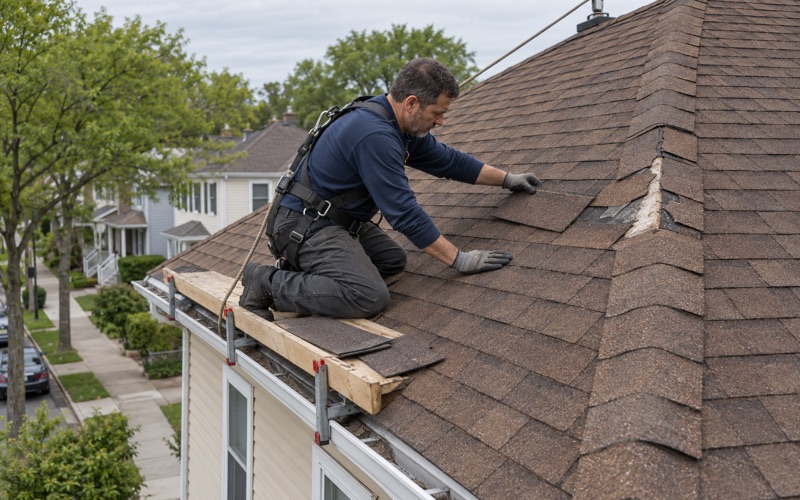
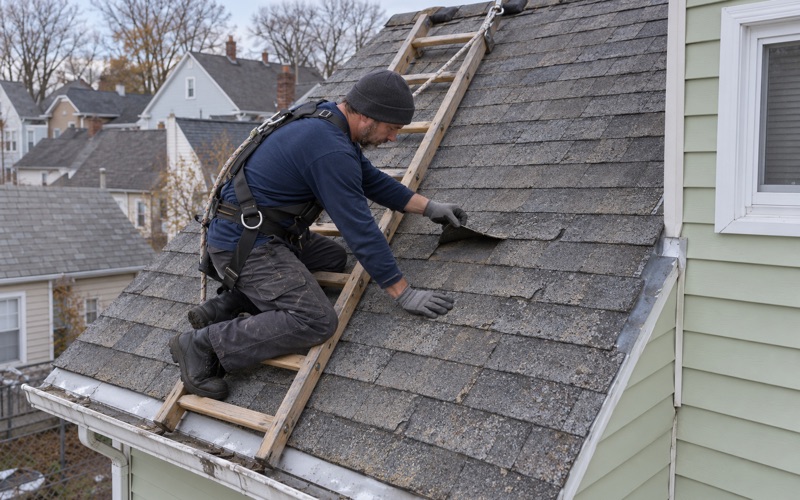
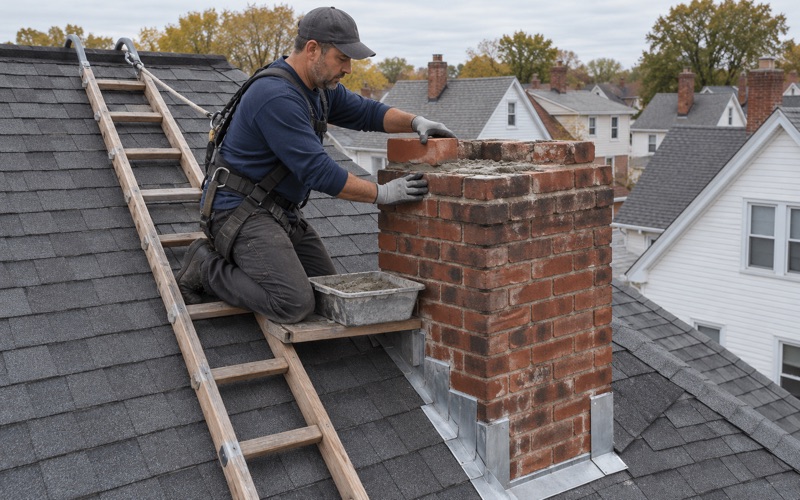
On houses from this era we count the layers of old shingles, because New Jersey’s rehabilitation subcode calls for a tear-off once a roof already carries two or more. We look at drip edge, which older roofs often lack entirely, and at fascia and soffit boards that have been wetted for decades by overflowing gutters. Rot at the fascia is a gutter problem as much as a carpentry one, and we note both in the scope.
Looking for roofing closer to Tenafly? See Roofing in Tenafly.
Gutter Sizing and Leader Placement on Postwar Houses
Many New Milford houses still drain through gutters that were hung for a smaller or simpler roof. Dormers get added, a rear addition goes on, the roof gets a heavier architectural shingle, and the original run of gutter and its single leader are expected to keep up. In a hard rain they often cannot, and water sheets over the front edge at the far end of the run.
Gutter capacity
We size replacement gutters to the roof area and pitch they serve rather than to what was there before. On most postwar homes that means seamless aluminum gutters with a larger profile and hangers set close enough to hold the gutter’s pitch under a load of wet leaves. Where a house has half-round gutters for appearance, we keep the style and make sure the outlets are big enough to empty it.
Leader count
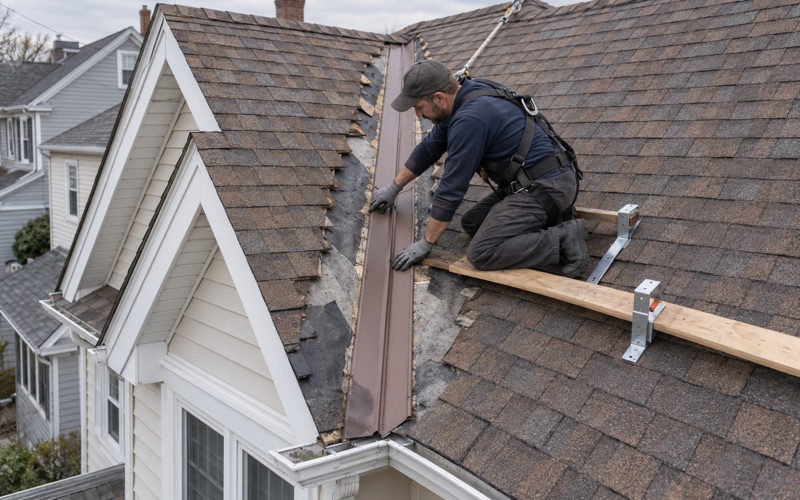
The leader is usually the real bottleneck. A long gutter run feeding one corner leader backs up long before the gutter itself is full. Adding a second leader at the opposite end, or at a valley where two roof planes dump into one spot, is often the cheapest fix for a gutter that overflows in the same place every storm. We also check that inside corners and valleys have enough capacity, because that is where concentrated water first jumps the gutter.
Pitch, hangers and outlets
A gutter hung dead level holds a shallow pool along its whole length, which feeds rust at the seams and grows a mat of leaves. We set a steady fall toward each outlet and cut the outlets clean so the leader takes water at full width. Hangers go into solid fascia or rafter tails, not into soft wood that will let the gutter sag back to level within a few seasons.
Rear low-slope roofs and box gutters
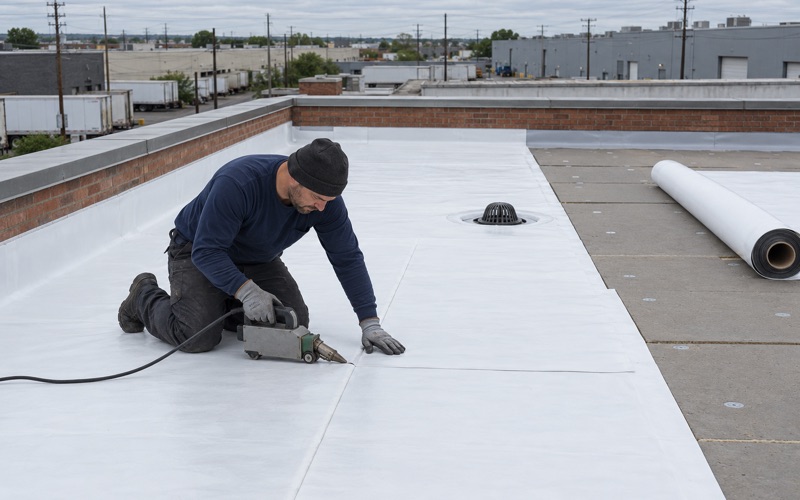
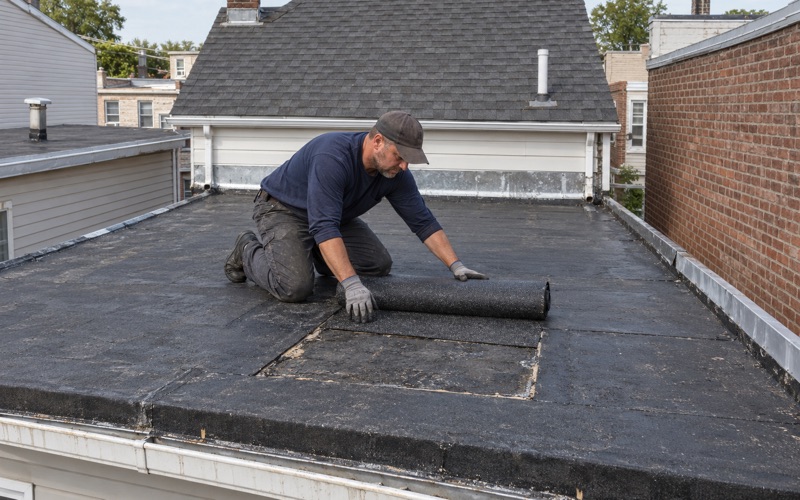
Plenty of postwar houses and garden-style multiplexes have a low-slope rear roof or porch roof tied into the gutter system. On those, we check the seams, the parapet coping and the drain or scupper rather than just the obvious patch. Box gutters, scuppers and leaders are cleared and tested with water before we call a flat-roof repair finished, so a clogged outlet does not undo the work at the first storm.
Where the Leaders Discharge
A leader that ends at the corner of the house just moves the problem a few feet. On a flat lot, water released at the foundation tends to stay there. So the discharge point gets as much attention from us as the gutter.
Extensions and splash blocks
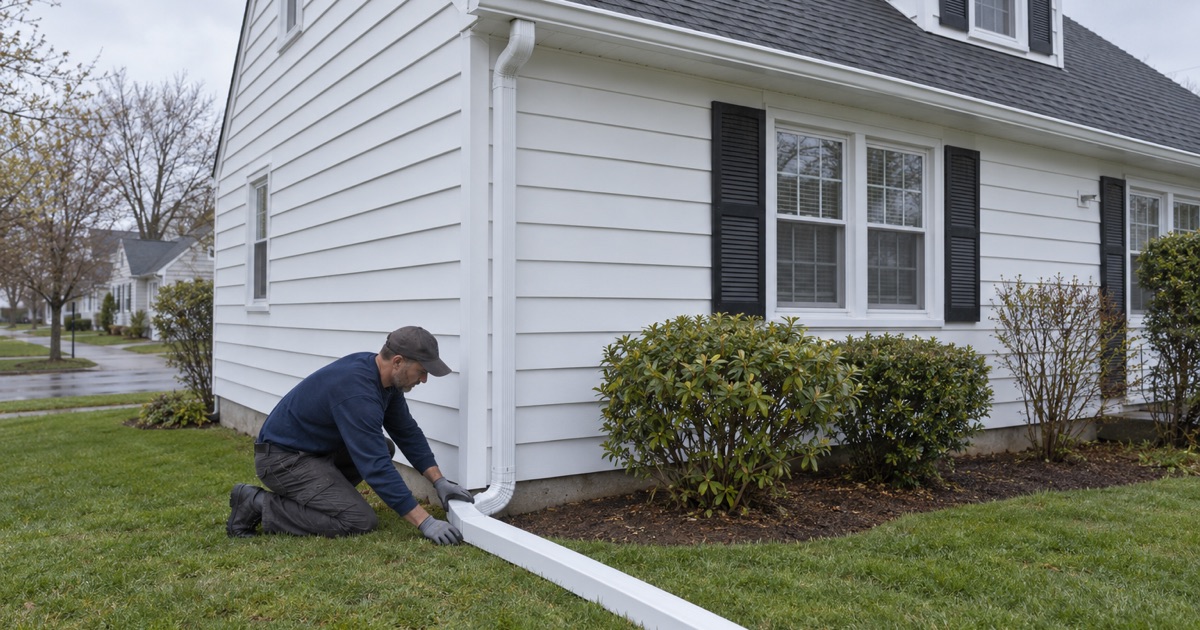
The simplest improvement is a leader extension that carries water away from the wall before releasing it, paired with a splash block so the outflow does not dig a hole. On a level New Milford yard, a longer extension that reaches lawn or a hard surface sloping away from the house generally performs better than a short elbow aimed at a flower bed. We place extensions where they will not cross a walkway or get clipped by a mower and torn off.
Leaders that run into the ground
Some older houses have leaders that drop into a pipe at grade instead of ending above the lawn. Before we reconnect a new leader to one of those, we run water down it and watch whether it takes the flow or backs up at the joint. If it backs up, the owner hears that from us and decides whether to clear the line or switch that leader to an above-ground extension.
Where water should not go
We will not point a leader at a neighbor’s property, onto a shared driveway where it freezes, or against a detached garage wall. On two-family and small multi-unit buildings, where lots are tight, we talk through the options with the owner before cutting in a new outlet. To be clear about the limits: gutters and leaders manage roof water. They are not a fix for ground-level water from the river, and we do not sell them as one.
Kick-out flashing and splashback
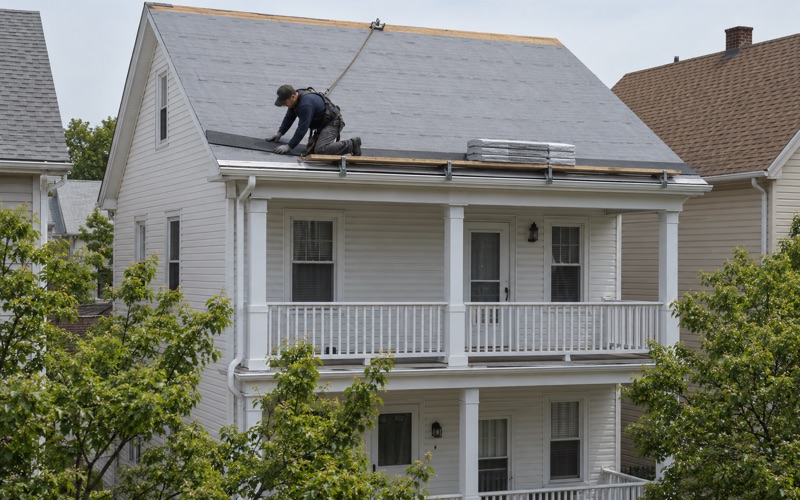
Where a roof edge dies into a sidewall, such as a porch roof meeting the second story, we install kick-out flashing to steer water into the gutter instead of down behind the siding. It is a small part, but on postwar houses that were re-sided over the years it is often missing, and the stain on the wall below is the clue.
Re-Roofing and Re-Guttering as One Job
When a roof is coming off anyway, it is the best moment to fix the drainage. New drip edge goes on at the eaves, the fascia is exposed and can be repaired, and new gutters can be hung to the new roof line instead of being refit around old work. Doing both at once avoids a second crew pulling hangers through a brand new shingle course a year later.
What it means for permits
For a detached one- or two-family house, New Jersey treats replacing the roof covering as ordinary maintenance under N.J.A.C. 5:23-2.7, and the same section lists gutters and leaders. No construction permit, inspection or notice is needed for that work on those houses. Three- and four-unit buildings are different: they sit outside that exemption, and about one New Milford home in five is in one of them. A re-roof there goes through the New Milford Building Department as a permit or minor-work filing, with an inspection booked by phone at least 24 hours ahead. If an owner is unsure which side of the line a building falls on, the department invites a call at 201-967-5044, ext. 5415.
How we run the job
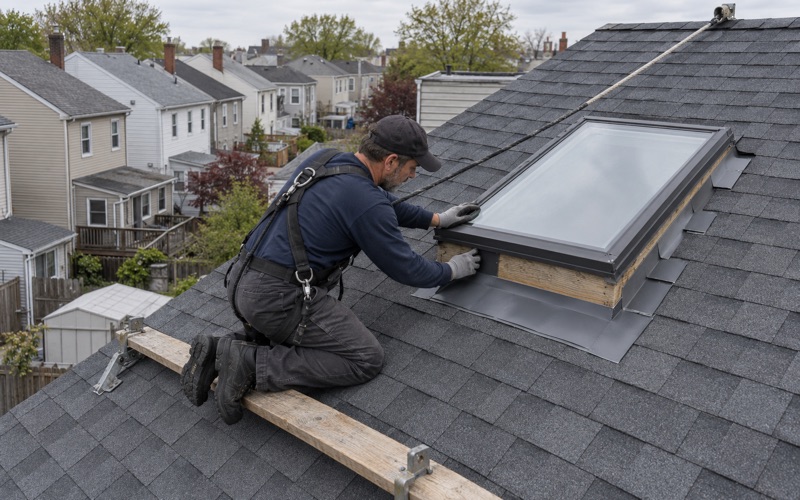
Damaged decking found after tear-off is photographed and shown to the owner before it is replaced, at a per-sheet price already written into the contract. Step, counter and chimney flashing are replaced with the roof rather than reused under new material. On a two-family house, we schedule with both units in mind so the tenant upstairs knows when we arrive and what access we need.
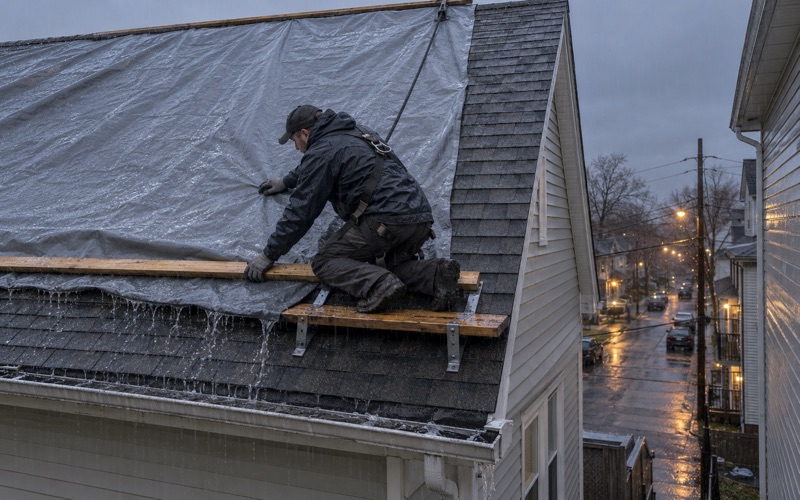
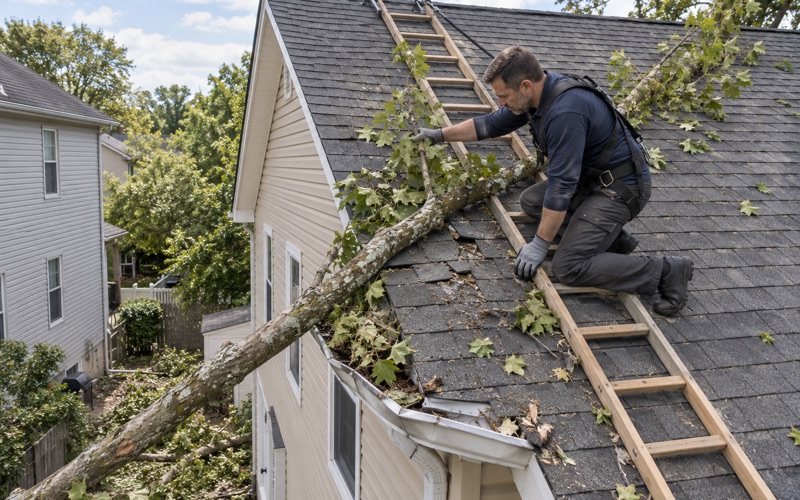
At the end of each work day, the yard, sidewalk and gutters are cleaned and a magnet sweep picks up roofing nails. Our contracts follow New Jersey’s home improvement rules, including the three-day cancellation notice. If storm damage is what brought us out, we photograph it and write it up for the owner’s own claim, and we will meet the insurance adjuster on site when asked.
- 20+ Years in Roofing
- Line-Item Written Estimates
- Daily Nail-Magnet Cleanup