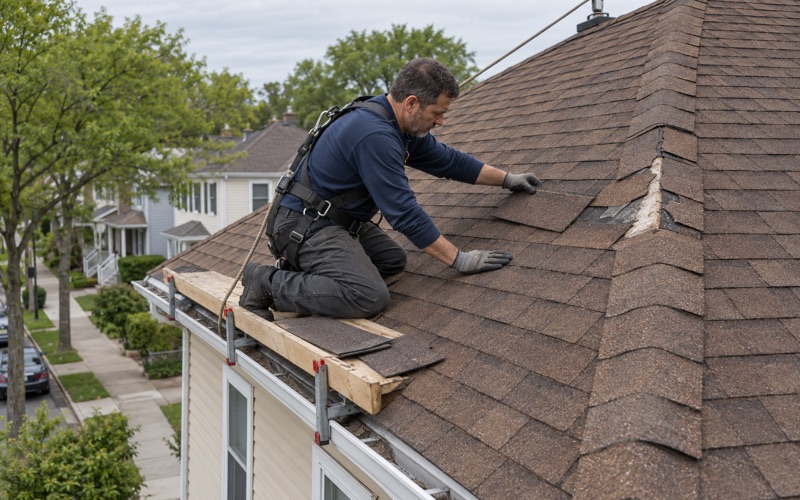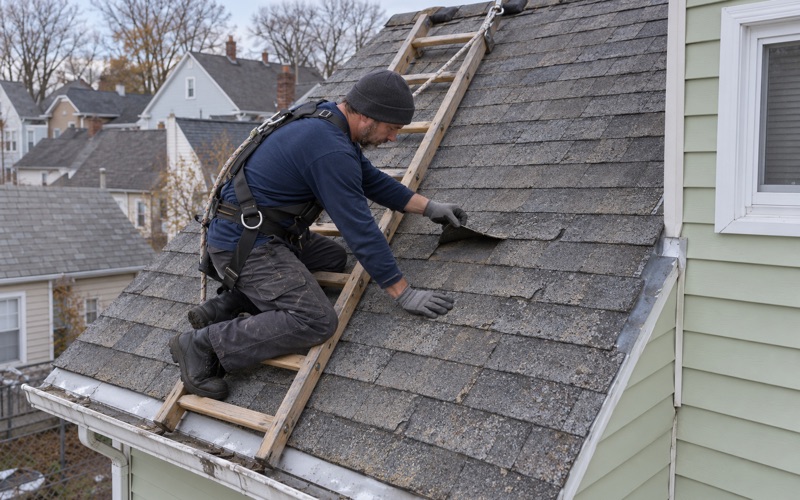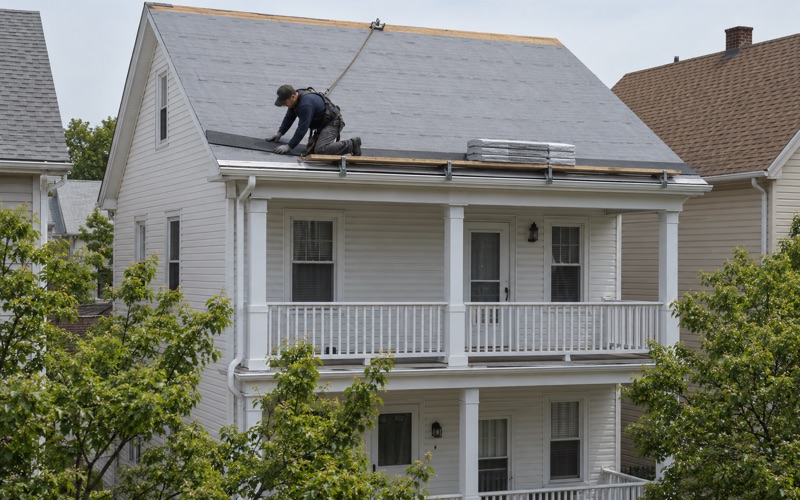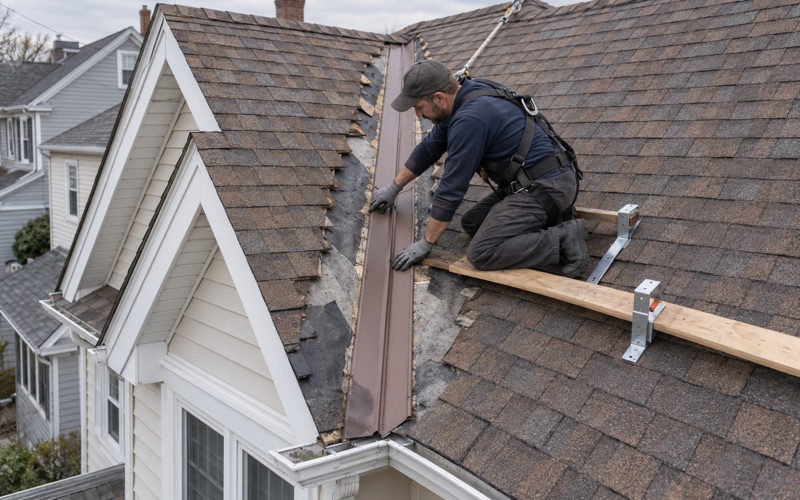
Bayonne Superior Roofing brings more than 20 years in the trade to roofing in North Arlington, where a good share of our calls come from owners who do not live under the roof in question. A landlord with a tenant upstairs, an heir getting a house ready to list, an investor who just closed on a two-family: the roof question arrives with a deadline attached.
That deadline is usually a sale, a vacancy or a new lease, and we plan the work around it rather than the other way around. On every leak call we look in the attic or top-floor ceiling as well as on the roof, so the water is traced to where it actually enters before anything is priced.
This page is for the owner whose roof decision is tied to paperwork and tenants. It covers how the borough’s rental rules shape timing, what a two-family job involves when someone lives in each unit, and where the Certificate of Occupancy stops and the roof starts.
A Certificate of Occupancy at Every Sale and Every New Tenant
North Arlington requires a Certificate of Occupancy when a property is sold or changes ownership, and again each time an apartment or business space is rented. That second trigger is the one that sets a landlord’s calendar. In a borough where 55.6 percent of households rent, the owner of a multi-unit house will see the CO process come around more than once over the life of a single roof.
The borough’s fee schedule, printed as of July 1, 2015, sets the CO at $75 for a one-family house or per apartment, $125 for a two-family, $175 for a three-family and $225 for a four-family. Those figures may have changed since, so confirm them with the borough at 214 Ridge Road before budgeting. For roofing, the point is the rhythm: every turnover is a scheduled moment when the house is empty, being shown or changing hands.
What the CO page does not say
The borough’s Certificate of Occupancy page does not say that roofs are inspected, and it says nothing about how a leaking roof affects an application. We will not tell you otherwise. What we can say is that a stained ceiling in a vacant apartment is a poor thing to show a prospective tenant or a buyer’s home inspector, and that a leak is far easier to chase with the unit empty.
Why an empty unit helps
With no one living upstairs, we can get into the top-floor ceiling, the attic hatch and the closets under the eaves without working around furniture or a tenant’s schedule. On a leak call that access is most of the job. We follow the stain back to its source, whether a cracked pipe boot, a lifted step flashing or an open seam on the low-slope rear roof, and only then write up a repair.
Keeping a record for the next turnover
Because a multi-unit house goes back through the CO process at every new lease, a roof record is worth keeping in the same folder as the CO paperwork. We hand over the written scope, the photos of any decking we replaced and the materials used, whether that is an architectural shingle such as GAF Timberline HDZ or Owens Corning Duration over ASTM D1970 ice and water barrier at the eaves. The next owner, buyer or inspector then reads a dated record instead of guessing.
Looking for roofing closer to Guttenberg? See Guttenberg Roofing.
Two-Family Landlords and the Roof Over Both Units
Two-unit buildings make up 26.6 percent of North Arlington’s housing, and the Census count puts 1,169 renter units in two-unit buildings against 568 owner units. Put plainly, about two of every three units in those houses are rented. The roof covers both households, but only one person signs the contract.
Scheduling with the tenant in mind
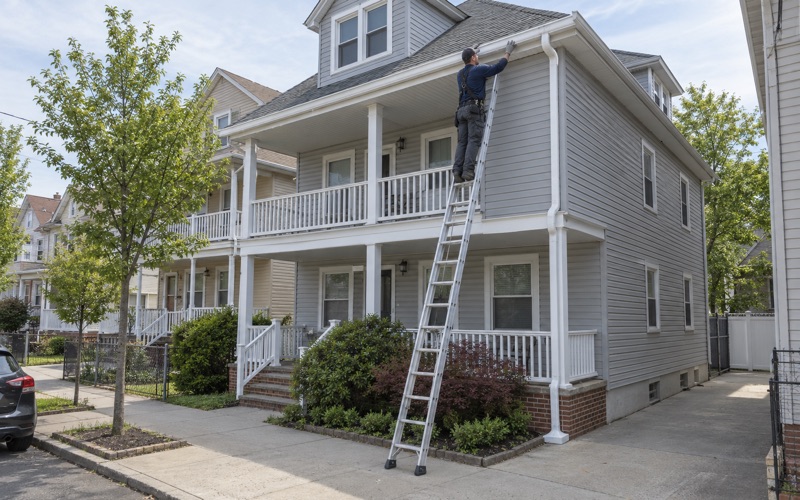
We schedule a two-family job with both units in mind. The tenant upstairs is told when the crew arrives, roughly how long the tear-off will run and whether we need access to the attic or a rear porch. If the owner lives elsewhere, we coordinate with whoever holds the keys so nobody is surprised by a ladder at the window.
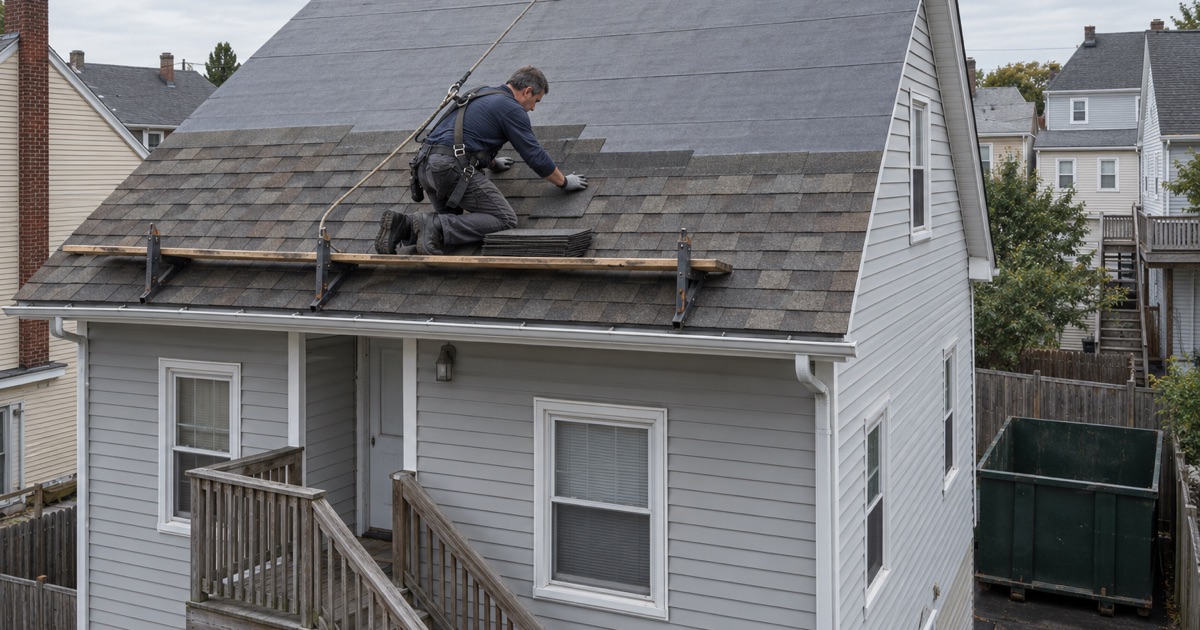
At the end of every work day the sidewalk, yard and gutters are cleaned and we run a magnet sweep for roofing nails. When two households share a driveway and a front walk, that daily cleanup is what keeps a roof replacement from becoming a tenant complaint.
Permits and layers on a two-family
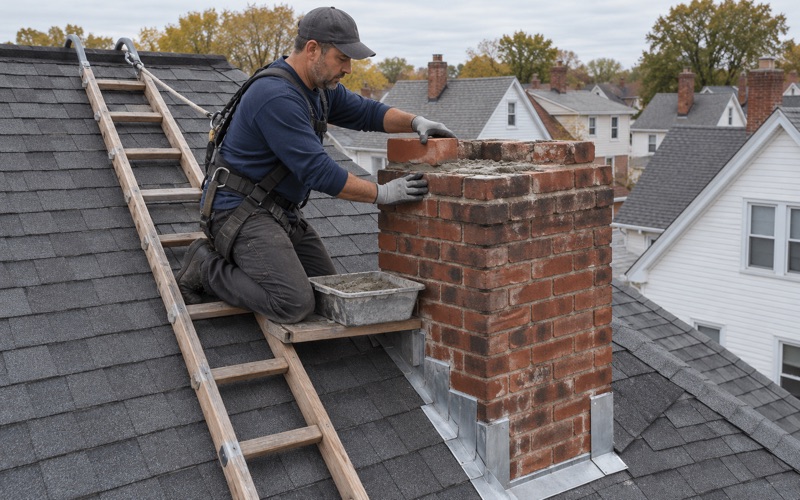
Replacing the roof covering on a detached one- or two-family dwelling counts as ordinary maintenance under N.J.A.C. 5:23-2.7, so it needs no construction permit in New Jersey. Layers are a different matter: the rehabilitation subcode at N.J.A.C. 5:23-6 calls for a full tear-off where a house already carries two or more layers, or slate, wood shake or tile. On an older two-family, the layer count is one of the first things we check.
Houses built before 1978 bring the EPA’s lead-safe RRP rule into play wherever painted trim or fascia is disturbed, which can happen when new drip edge goes on at the eaves and rakes. With more than two-thirds of North Arlington’s housing built before 1960, we plan for it on most jobs here and write it into the scope.
A scope you can compare
Our written scopes list tear-off, decking, underlayment, flashing and drainage as separate lines, so a landlord comparing bids from a distance can see what each contractor actually included. If damaged decking turns up once the old roof is off, we photograph it and show you before it is replaced, at a per-sheet price already set in the contract. Step, counter and chimney flashing is replaced with the roof, not reused under new shingles.
Timing Roof Work Around a Listing or a Vacancy
Roof decisions on rental property tend to be timed rather than chosen. A lease is ending, a buyer’s inspection is booked, or an estate is getting a house ready to list. Each sets a different clock, and the right scope depends on which one you are working against.
Before a listing
A seller usually wants one of two things from us: a repair that settles a known problem, or a written assessment so a buyer is not surprised. We give a straight answer on whether the roof can be repaired before replacement is ever on the table. When it can, a clean repair and a clear scope often serve a sale better than a rushed full replacement.
Our contracts are written to New Jersey’s home improvement rules, including the three-business-day cancellation right on contracts over $500, so a seller on a tight timeline still has the full protection the law provides. If the work is a capital improvement, ask whether Form ST-8, the Certificate of Exempt Capital Improvement, applies to your job.
Between tenants
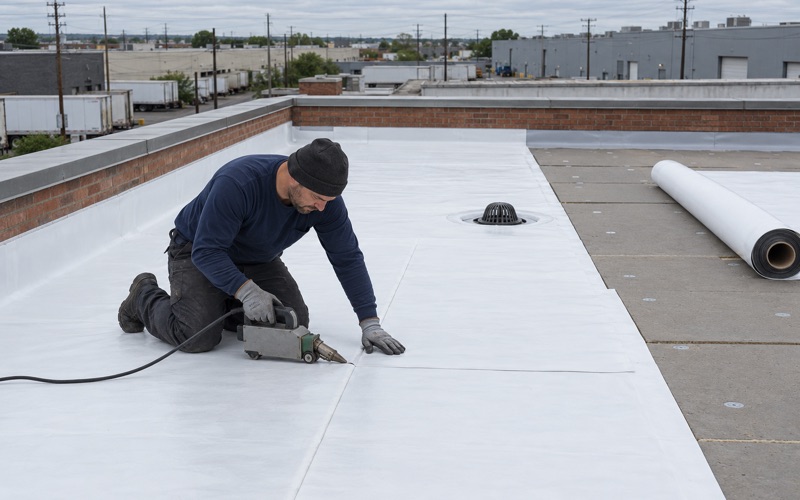
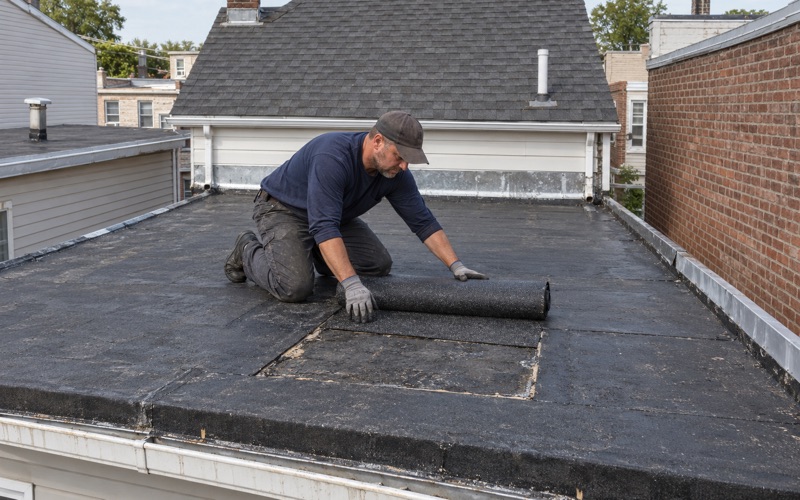
A vacancy also opens time for the jobs a tenant would rather not live through. We can check the ridge vent against the soffit intake from inside the attic and replace a low-slope rear roof without a household underneath it. On those rear roofs we check the seams, the parapet coping and the drain or scupper, not just the patch someone left last time.
Before a flat-roof repair is called finished, the box gutters, scuppers and leaders are cleared and tested with water. A drain that backs up in the first heavy rain after a new tenant moves in is exactly the call a landlord does not want.
If panels are on the roof, removal and reinstall are written into the schedule from the start rather than discovered the day the crew arrives. On a rental, where the lease may name a move-in date, a solar crew that cannot come back for a week is the delay that matters most.
When a storm will not wait
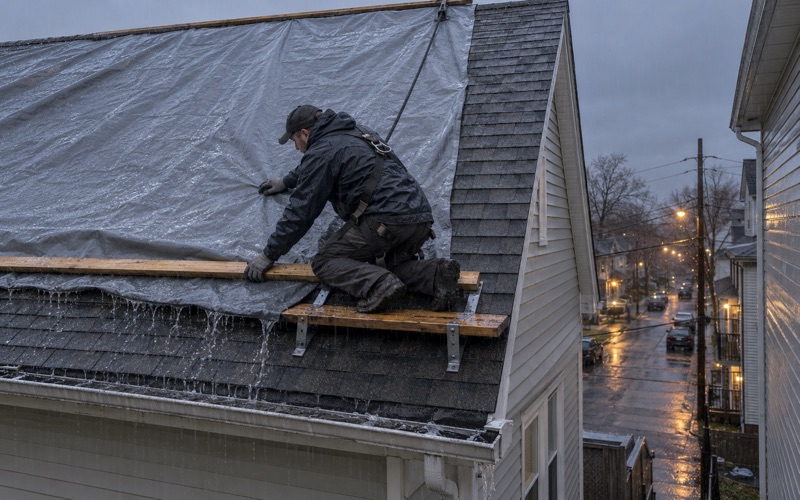
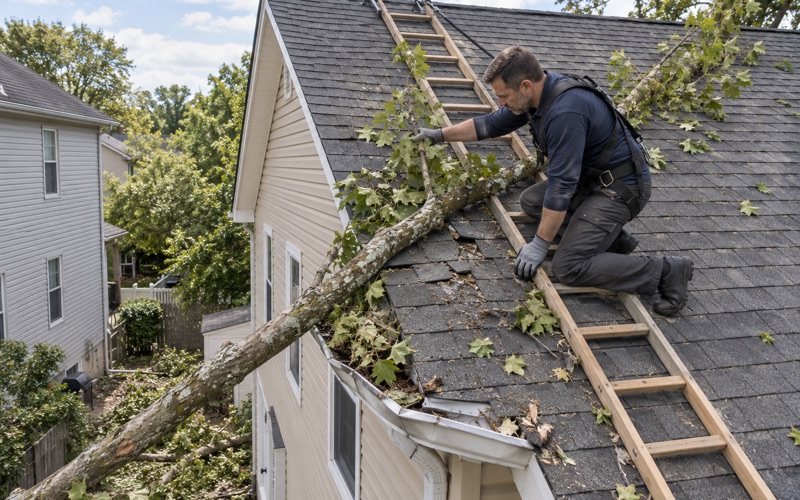
Not every roof job can wait for turnover. When a storm damages the roof while tenants are in place, we photograph the damage and write it up for your own claim, and we will meet the insurance adjuster on site if you ask. The New Jersey Department of Banking and Insurance publishes storm claims guidance worth reading before you file.
Three- and Four-Family Houses Under Rent Control
North Arlington applies rent control to houses or complexes with three or more dwellings, and landlords of those buildings file a registration and annual fire-alarm reports with the borough. Buildings of three and four units hold 12.6 percent of the borough’s housing. For their owners, the roof sits on a regulated building that already carries more paperwork than a two-family.
Where permits do apply
The ordinary-maintenance exemption covers detached one- and two-family dwellings only. On a three- or four-family house, roof work calls for a construction permit or a minor-work notice, filed with the Borough of North Arlington Construction Department. Its Building Sub-Code Inspector is available Tuesday, Wednesday and Thursday from 11 a.m. to 1 p.m., so we book inspections into those windows. Fees depend on several variables, and the office quotes them by phone or in person.
Party walls and several households
Attached houses share a wall with the building next door. When a leak shows up along a party wall, we trace it on both sides of the line before anyone’s roof is blamed, because the source can just as easily be the neighbor’s flashing. With three or four households under one roof, every unit gets notice of crew arrival and access needs, the same as on a two-family.
Matching the roof that is there
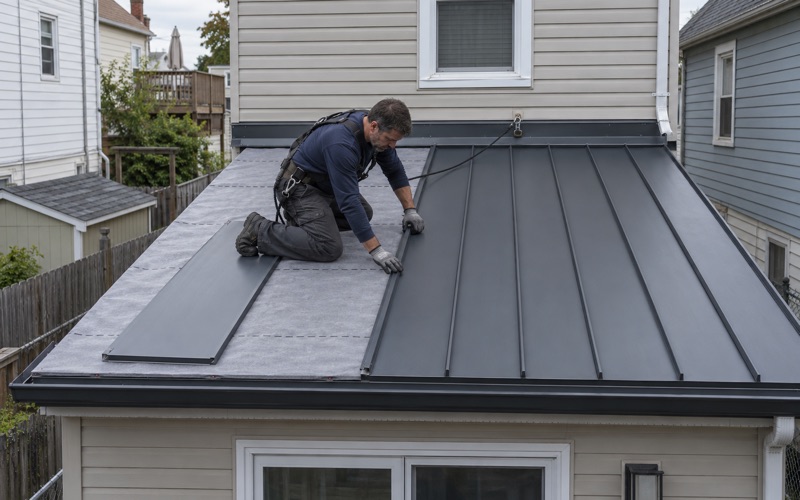
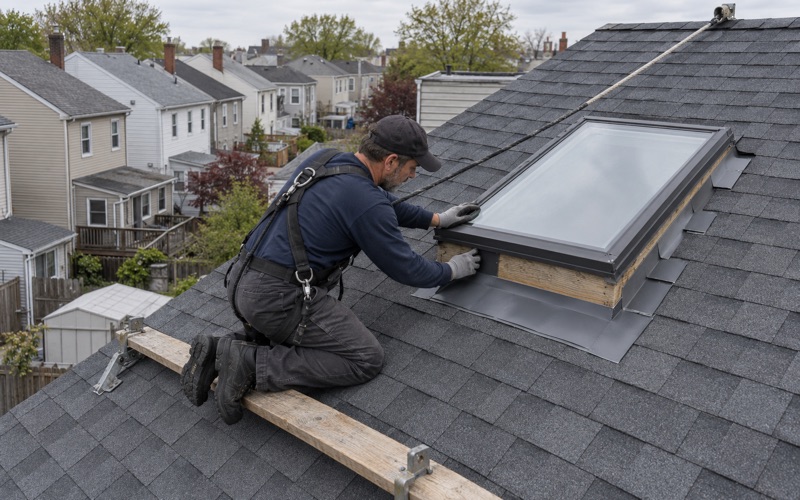
Where a building has a low-slope rear section, we work with what is on it, whether torch-down modified bitumen, EPDM rubber or an older built-up roof, and say plainly when a coating will buy time and when it will not. Our crews work under OSHA’s fall protection rule for residential roofing, 29 CFR 1926.501(b)(13), which applies at 6 feet.
For a landlord in Bergen County juggling a CO, a registration and a lease date, the roof is one more item on the list. We aim to make it the one that gets done on schedule, with a written scope you can file alongside the rest.
- 20+ Years in Roofing
- Line-Item Written Estimates
- Daily Nail-Magnet Cleanup