Bayonne Superior Roofing provides roof inspection in Bayonne, NJ, serving surrounding cities including Roselle Park, North Arlington, Guttenberg, East Rutherford and Rutherford. After 20+ years on local roofs, we know where the houses here tend to fail: flashing at brick chimneys, the low-slope roof behind a pitched front, box gutters, parapet coping and the walls two houses share.
A useful roof inspection covers more than the shingles you can see from the sidewalk. We check the roof surface, every flashing detail and penetration, the gutters and drains, and the attic or top-floor ceiling below, because water damage is often visible inside long before it shows on the roof.
Every inspection ends with a written report and photos. It tells you what condition the roof is in, roughly how much life it has left and which repairs matter now versus later, and it includes a straight answer on whether the roof can be repaired before replacement is ever raised.
Residential Roof Inspection
What We Check on a Pitched Roof
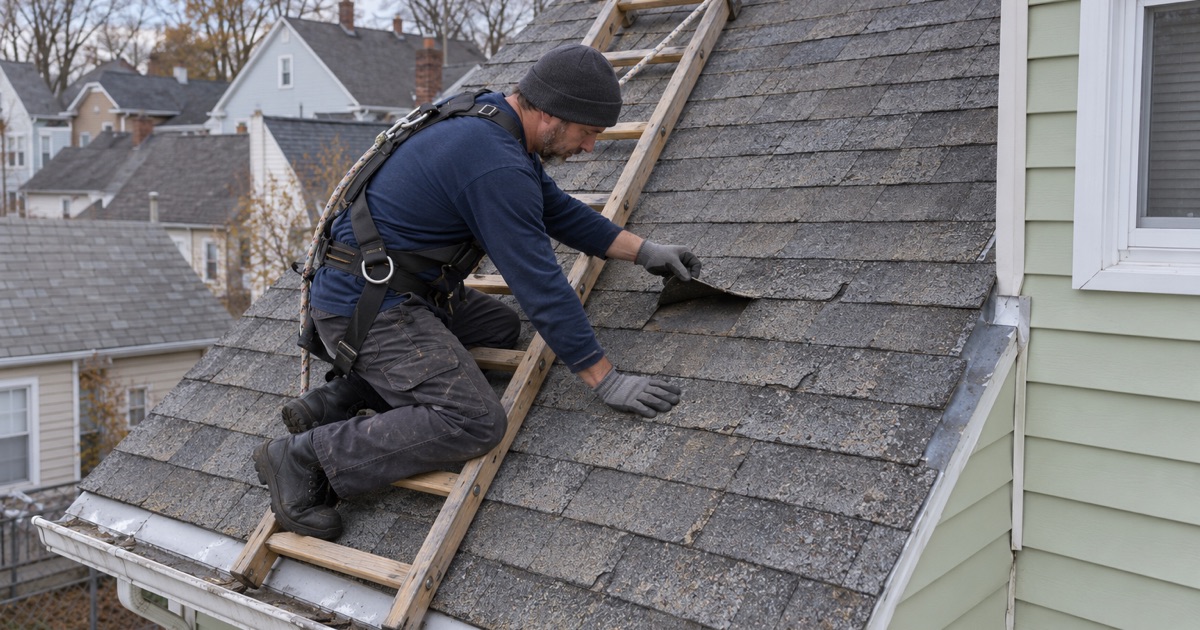
On shingle roofs we look for missing, creased and lifted shingles, granule loss, cracked or curled tabs, nail pops and the condition of the ridge and hip caps. We note which slopes face the prevailing wind, because damage tends to concentrate there, and whether the shingles are an architectural laminated product or an older three-tab.
We then check the details where leaks actually start: step and counter flashing at chimneys and sidewalls, apron flashing below dormers, rubber or lead pipe boots, skylight curbs and the drip edge at the eaves and rakes. A roof with good shingles and failed flashing still leaks, so these get as much attention as the field.
Inside the Attic
The attic tells us what the roof surface cannot. We look for daylight through the decking, water stains and dark streaks on rafters and sheathing, rusted nail tips, mold and soft spots around chimneys and pipes. Those signs show where water is getting in, even when the roof looks fine from above.
We also check ventilation. Balanced soffit intake and ridge exhaust keep the attic close to outdoor temperature, which protects the shingles and prevents winter ice dams. Frost on the nails or condensation on the sheathing in cold months usually means the ventilation or the air sealing below needs work.
Flat Rear Roofs and Drainage
Many local two-family and older houses pair a pitched front with a flat or low-slope roof at the back. We inspect that section at its seams, at the parapet coping and at the drain or scupper, and we probe for soft spots that suggest wet insulation or decking underneath.
Gutters, box gutters, leaders and scuppers are checked for clogs, loose joints and sagging sections. Where it is safe, we run water through the outlets to see whether they actually drain, because a flat roof that holds water is a leak waiting for the next storm.
Commercial and Multifamily Roof Inspection
Membranes, Seams and Rooftop Equipment
On commercial and mixed-use buildings we inspect modified bitumen, EPDM, TPO, PVC and built-up roofs for open seams, blisters, cracks, shrinkage at the edges and punctures from foot traffic. Rooftop HVAC curbs, exhaust fans, pipe stacks and roof hatches are each checked where they meet the membrane.
Parapet walls, coping, through-wall flashing and perimeter edge metal get the same scrutiny, along with drains, scuppers and conductor heads. The report ranks what we find so a building owner can plan repairs around budgets and tenants instead of reacting to a leak.
Condo, Co-op and Association Roofs
New Jersey’s Structural Integrity Law, P.L.2023, c.214, requires covered associations to carry out reserve studies, and the roof is one of the largest items in those studies. A roofing inspection gives the board and its engineer a documented view of the roof’s current condition and the work it is likely to need.
We provide written findings and photos that an association can file with its records or pass to the professional preparing its reserve study. We report what we see on the roof; the study itself and any structural findings remain the work of the association’s engineer.
Roof Inspections for Specific Situations
Before You Buy a House
A general home inspection usually views the roof from the ground or a ladder. Before you buy, we walk the roof where it is safe, check the attic and any flat sections, look for a second layer of shingles and give you a written estimate of remaining life and needed repairs.
That matters on the older houses common here. A roof that already carries two layers cannot take a third under New Jersey’s rehabilitation subcode, so the next roof will require a full tear-off, which is worth knowing before you agree on a price.
After a Storm
After high winds or a fallen limb, we document the roof with photos and a written description before any temporary repairs are made. The report separates storm damage from ordinary wear, so you know whether a claim is worth filing and have your own record to compare with the insurer’s.
If the roof is open, we tarp it the same visit. When you ask, our crew will meet your insurance adjuster on site to show what we found, while the claim itself remains between you and your insurer.
Before Installing Solar Panels
Panels are typically expected to stay in place for many years, so the roof under them needs to be in good shape first. We inspect the roof and attic before an installation and give you a realistic picture of how long the roof is likely to last under the array.
If the roof is close to the end of its life, replacing it before the panels go up is far cheaper than removing and reinstalling the array later. Either way, you get the information while the choice is still yours.
Before Selling or Renting Out a Unit
A seller or landlord who knows the roof’s condition can fix a small problem before a buyer’s inspector or a tenant finds it as a ceiling stain. We give owners the same written report a buyer would get, so repairs can be made on their schedule rather than negotiated under deadline pressure.
On a two-family house the report also covers the parts of the roof over the rental unit, including the attic or top-floor ceiling, which an owner living downstairs may not see for months at a time.
What Your Inspection Report Includes
Photos and Plain Descriptions
Every finding comes with a photo and a short explanation of what it is and why it matters, written for an owner rather than a roofer. You can see the cracked pipe boot or the open seam yourself instead of taking our word for it.
Photos are labeled by location on the roof, such as the rear flat section, the north slope or the chimney on the party wall side, so anyone who reads the report later can find the same spot again without another visit.
Remaining Life and Repairs Ranked by Urgency
The report gives an honest range for the roof’s remaining life and sorts repairs into urgent items, work to plan within the next year or two, and things to keep an eye on. If you decide to go ahead with any of it, the estimate lists each item separately so you can compare it with another contractor’s.
Where a roof is nearing replacement, the report also notes what a replacement is likely to involve: the number of layers to remove, whether board decking is present, how many chimneys and skylights need new flashing and whether solar panels must come off. That gives you a realistic picture well before the work is due.
- 20+ Years in Roofing
- Line-Item Written Estimates
- Daily Nail-Magnet Cleanup