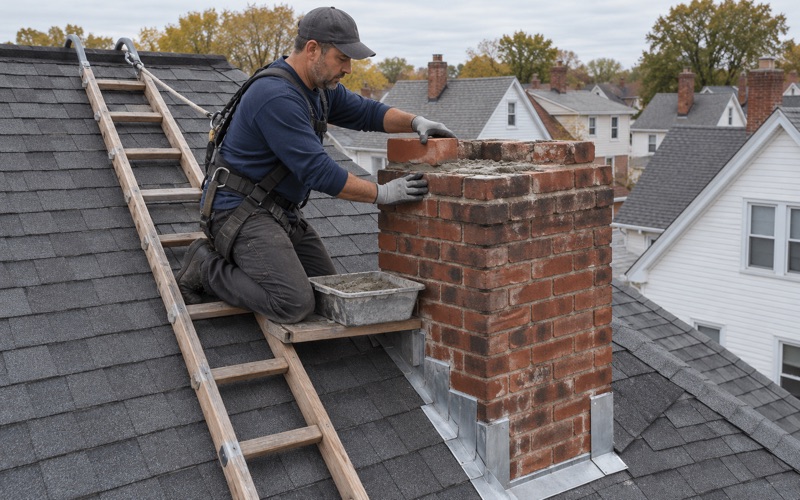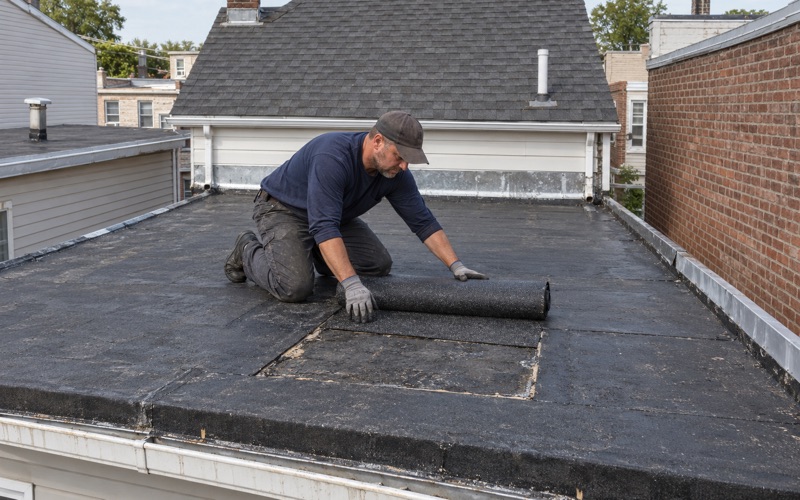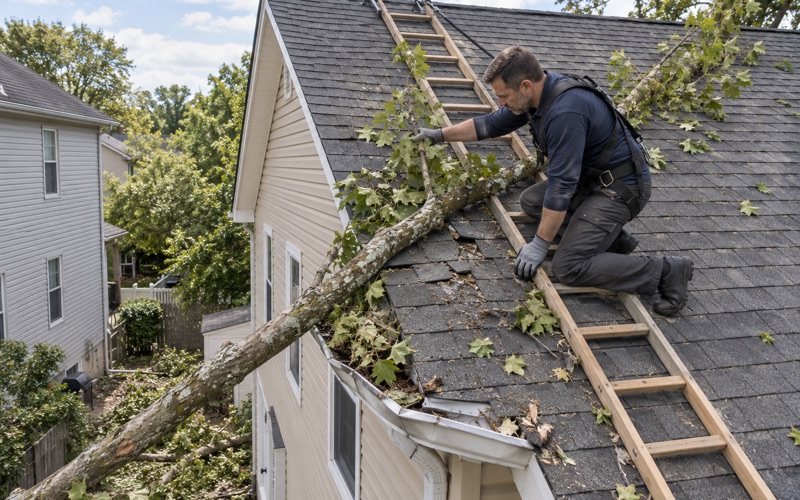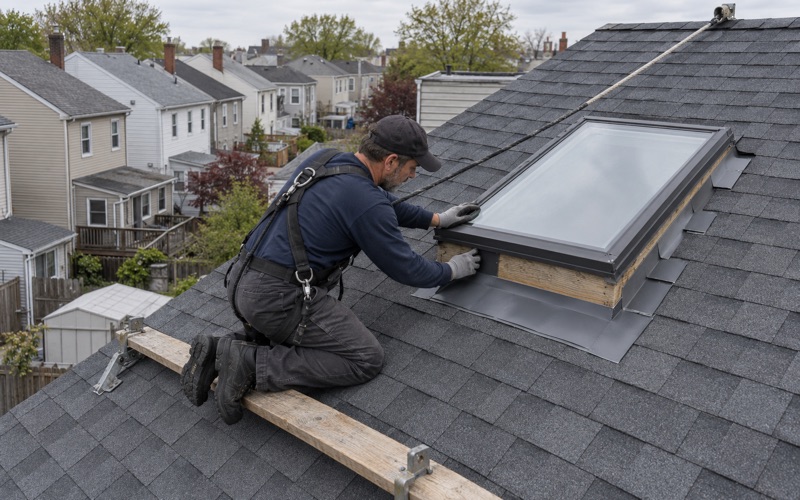
Bayonne Superior Roofing has spent more than 20 years on roofing in Roselle Park and nearby towns, and on these streets the hardest part of a roof job is often the ground beside the house, not the roof itself. The shingles, flashing and underlayment are familiar work. The narrow strip between your wall and the neighbor’s is what takes planning.
So before anyone climbs a ladder, we walk the lot with you. We look at where a ladder can stand on solid footing, which windows and cars sit within reach of falling debris, where a chute can run, and where a dumpster can go without blocking a driveway. That plan goes into the written scope next to the roofing lines, so you know what the crew will protect and how.
We also give you a straight answer on whether the roof needs replacing at all. Plenty of leaks on older houses come from one failed flashing joint, and a repair on a tight lot is far less disruptive for you and the people next door than a full tear-off.
Six-Foot Side Yards and 33-Foot Lots in Roselle Park
Roselle Park packs 14,093 residents into 1.225 square miles, with no water area to spread out into. The housing reflects that. Of the borough’s 5,522 housing units, 3,083 are detached houses, and many of them stand on lots that leave little room on either side.
What the zoning text describes
A third-party copy of the borough’s zoning code describes the R-1 district this way: standard lots of at least 5,000 square feet with 50 feet of frontage, and a side yard on each side of a building of at least 10 percent of the average lot width, but never less than six feet. The same text lets older lots of record as small as 3,300 square feet and 33 feet wide carry a single-family house.
We don’t treat those numbers as a survey of your property, and we don’t measure anyone’s lot against them. They are useful for one reason: they tell you how much room a roofing crew may be working with. A side yard of six or seven feet has to hold a ladder base, a person, a tarp line and a path for debris, all at once.
Why the gap matters on roof day
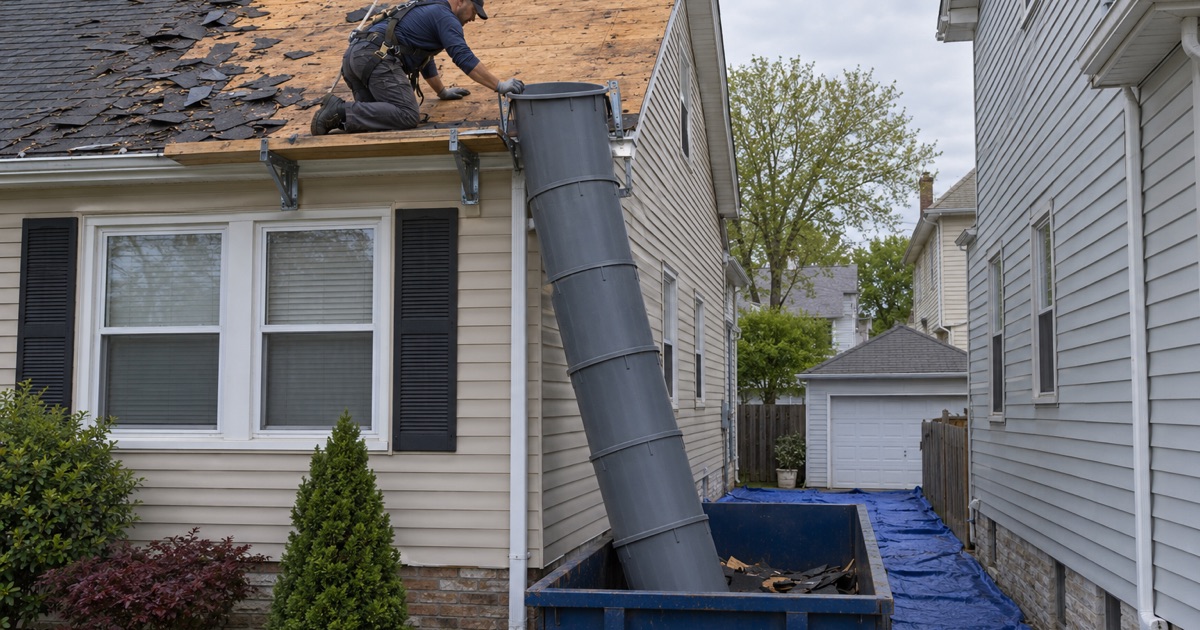
On a wide suburban lot, shingles slide off the eave into open grass. Here, the same shingles land a few feet from the house next door, close to its siding, its windows, its air conditioner and whatever car is parked in its driveway. Old roofing comes off in heavy, sharp pieces, and nails travel. Every decision about ladders, chutes and tarps starts from that distance.
The houses are old, too. Census estimates place 47.0 percent of the borough’s housing before 1950, and the median year built is 1952. When a job touches painted fascia or trim on a house built before 1978, the EPA’s lead-safe work rule generally applies, which means ground sheeting and containment in that same narrow strip.
A borough that filled in early
Roselle Park was incorporated in 1901 from portions of Union Township, and the Robert Gordon School, built in 1907, was the first poured concrete building made by the Edison process. Roselle Park station on the Raritan Valley Line still anchors the town. With most of its houses standing by the end of the 1960s, there is little open ground left between them.
Looking for roofing closer to North Arlington? See Roofing Services in North Arlington.
Planning a Tear-Off Beside the Neighbor’s House
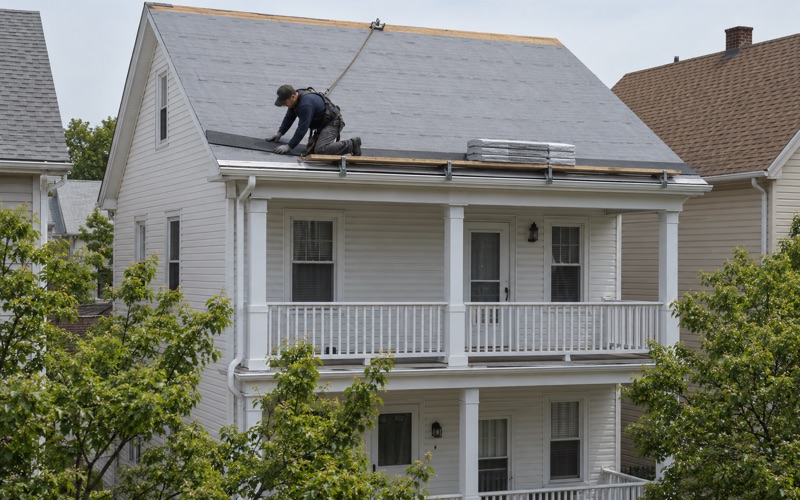
A tear-off on a small lot is planned side by side. We decide, for each wall of the house, how the old roofing will come down and what needs covering below it. The street side usually has the most room. The side yards and the back, where the neighbor’s house is closest, get the most protection.
Before work starts, we photograph the neighbor-facing wall, windows and any fixtures near the property line from your side. If a question comes up later about a scuff or a crack, there is a dated record of how things looked on day one.
Ladders on narrow ground
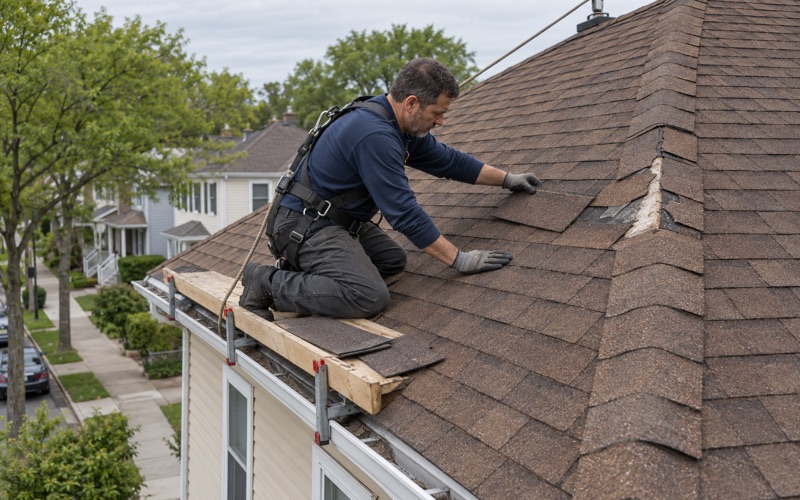
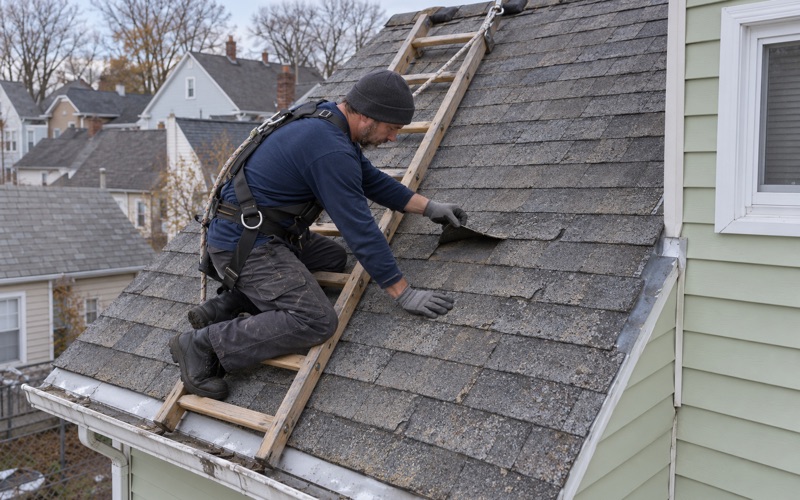
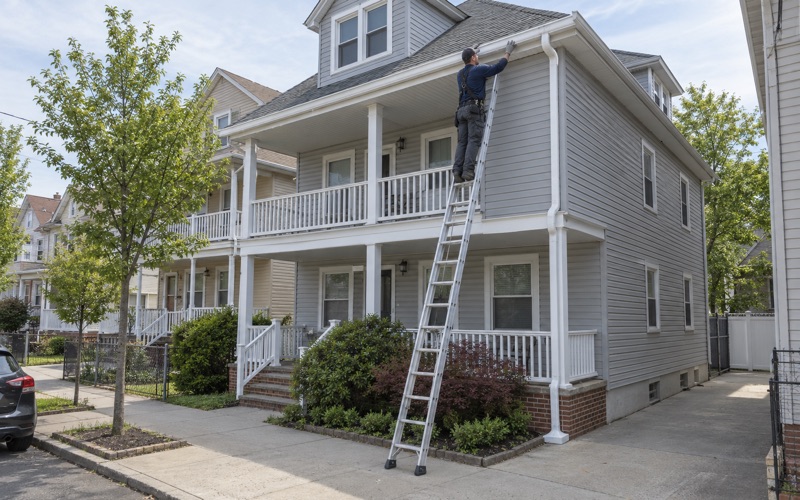
A ladder in a six-foot side yard often has to stand on a concrete walk, a strip of soil or a sloped edge. We set it on a level base, tie it off at the top and keep its feet clear of the neighbor’s foundation plantings and meter. Where the side yard is too tight for a safe angle, we stage from the front or rear and work the side slope from the roof.
Federal fall protection rules for residential roofing start at six feet above a lower level, which covers essentially every roof here. Anchors and harnesses go in before tear-off begins, not partway through.
Chutes and tarps
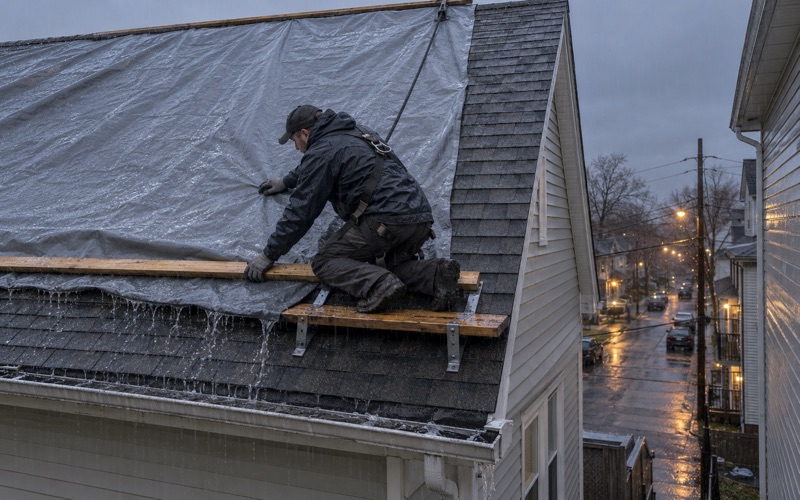
Debris from the side slopes goes down an enclosed chute or is carried to the front rather than thrown. Tarps hang from the eave to the ground along the side yard, and we ask before draping anything over a fence, a hedge or the neighbor’s wall. Windows within reach get covered, and on a breezy day we slow the tear-off on the windward side so loose granules and paper do not blow next door.
We only strip as much roof as we can dry in the same day. On a tight lot that matters twice: an open deck is a risk to your house, and a half-finished job means the ladders, tarps and chutes stay in the neighbor’s sightline for another day.
What shows up under the old roof
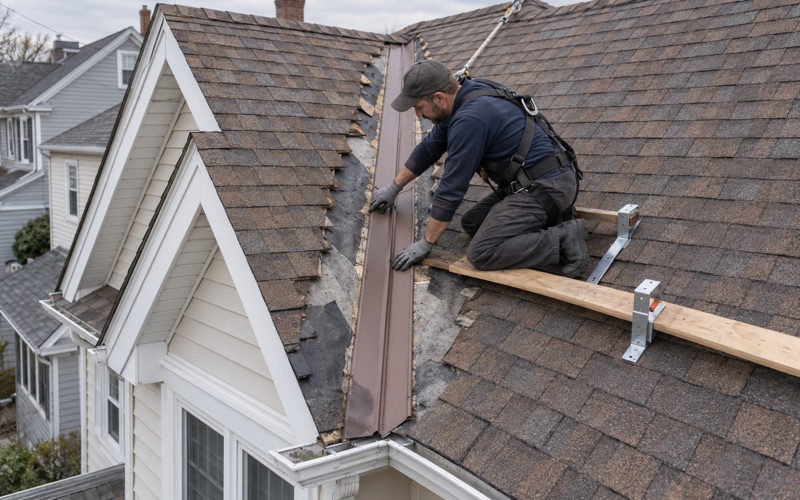
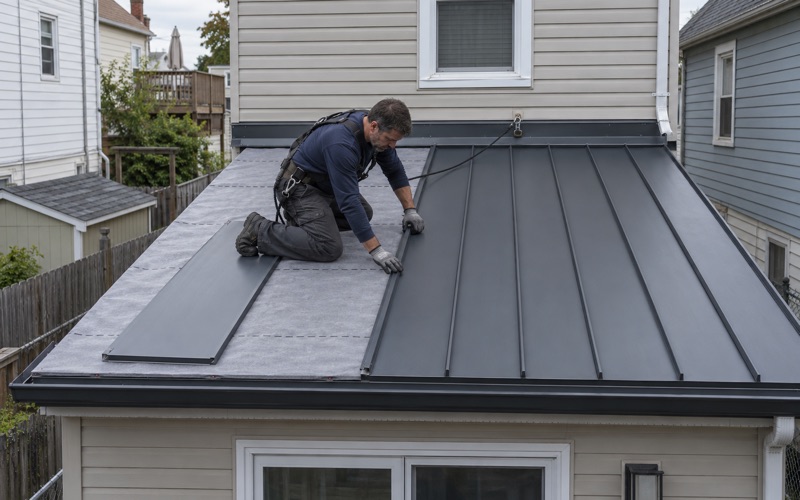
Once the old layers are off, we can see the decking. Any damaged boards or sheets are photographed and shown to you before they’re replaced, at the per-sheet price already written into the contract. Step, counter and chimney flashing is replaced with the new roof, never reused under new shingles.
Where the Dumpster Goes on a 50-Foot Lot
On a lot with 50 feet of frontage, the dumpster competes with your driveway, your car, the neighbor’s car and the sidewalk. Where it goes is settled before delivery day, not when the truck shows up. A driveway placement keeps the street clear but can tie up your car for the length of the job, so we talk through timing with you first.
Protecting the driveway and the path to it
We lay boards under the container to spread its weight on the driveway surface, and we keep the run from the side yard to the dumpster as short and straight as the lot allows. When debris has to be carried along a shared walk or past the neighbor’s door, it moves in covered loads, not armfuls trailing nails.
Where new materials wait
New shingles, underlayment and flashing need a spot too. When the supplier’s truck can reach the roof from the street, we have bundles loaded straight onto it, which keeps them out of the side yard entirely. When it can’t, they are stacked on the driveway on pallets and covered, and the dumpster delivery is timed so the two never fight for the same few feet.
End-of-day cleanup, every day
At the close of each work day, the crew cleans the sidewalk, the yard and the gutters, then runs a magnet sweep for roofing nails. On a small lot we sweep the neighbor’s side of the line too, with their okay, where the tarps hung and where debris was carried. A stray nail in a shared driveway is the kind of thing that sours a good relationship next door.
Gutters get one more check before the dumpster leaves. We flush them and the leaders with water, because shingle grit left in a downspout can back up the gutter and spill toward the neighbor’s wall at the next heavy rain.
Talking to the Neighbors Before Roof Day
A roof replacement on a small Roselle Park lot affects the house next door for a few days whether anyone says so or not. We suggest letting the neighbors know the dates ahead of time, and we’re glad to join that conversation or leave a short note with the schedule and a phone number.
Asking, not assuming
If the cleanest way to protect a wall or set a ladder means stepping onto the neighbor’s side, that is a request, and the answer belongs to them. We don’t offer legal opinions about property lines or access. What we can do is show the neighbor exactly what we would cover, where we would stand and how long it would take, which usually makes the conversation easy. If the answer is no, we plan the work from your side.
Two-family houses and tenants
Two-family houses add another set of neighbors under the same roof. Census figures count 345 units in two-unit buildings here, and on those jobs we schedule with both units in mind, so the tenant upstairs knows when the crew arrives and when we may need access to the attic or top-floor ceiling.
Solar panels and roof day
If your roof carries solar panels, their removal and reinstall go into the schedule from the start. That brings extra crew and equipment onto a lot that is already tight, and the neighbors deserve to hear about it along with the rest of the dates.
Paperwork before the first shingle
For a detached one- or two-family house, the borough’s own Ordinary Maintenance handout, which reproduces N.J.A.C. 5:23-2.7, lists replacing the existing roof covering as work that needs no permit or notice. That changes if the job involves cutting or removing a structural beam or bearing support, and the wording does not reach attached houses or buildings of three or more units; those go to the Construction Code Department at 110 East Westfield Avenue.
Our contract lists tear-off, decking, underlayment, flashing and drainage as separate lines, and it is written to New Jersey’s home improvement rules, including your three-business-day right to cancel. You get the site plan, the price and the neighbor-facing details in one document before the dumpster is ever ordered.
- 20+ Years in Roofing
- Line-Item Written Estimates
- Daily Nail-Magnet Cleanup