Bayonne Superior Roofing brings more than 20 years of work to roofing in Tenafly, and a good share of the calls we take here come from owners of houses that are not old at all. A roof put on in the last ten or fifteen years should not be leaking, and when it does, the cause is rarely worn-out shingles. It is almost always a detail: a piece of flashing set wrong at a wall, a valley that was cut short, or an attic that cannot breathe.
That changes what a homeowner needs from a roofer. You do not need someone eager to sell a tear-off on a roof with most of its life ahead of it. You need someone who will find the one spot where water gets past the system, explain why it happened, and fix that spot properly.
Our approach on these young roofs is simple. We tell you plainly whether the roof can be repaired before anyone talks about replacing it, and on a newer house the honest answer is usually repair. When replacement does make sense, the scope is written out line by line so you know exactly what you are paying for.
Tenafly’s Newest Roofs and Why They Leak
Census figures show how much of Tenafly is recent. Of the borough’s 5,420 housing units in the American Community Survey 2024 five-year estimates, 524 were built between 2010 and 2019 and another 117 in 2020 or later. Counting back to 2000, 976 units, or 18.0 percent, are from this century. Those houses carry what we call first-cycle roofs: the original covering, still on its first run of service.
What a first-cycle roof is
A first-cycle roof is the one the house was built or rebuilt with. Its shingles, underlayment and ridge vent are usually modern products in reasonable condition, so age is not the story. When one of these roofs fails early, the trouble sits in how the pieces were joined, not in what they were made of. That is why we treat a leak on a 2010s roof as an investigation rather than a sales visit.
Where the water actually shows up
Water on a ceiling rarely appears directly below the point where it entered. It can run along a rafter, follow the top of a wall plate, or soak insulation before it drips anywhere visible. On every leak call we go into the attic or check the top-floor ceiling as well as walking the roof, so the source is traced to the place it actually gets in before we put a price on anything.
Why the age of the roof matters for the fix
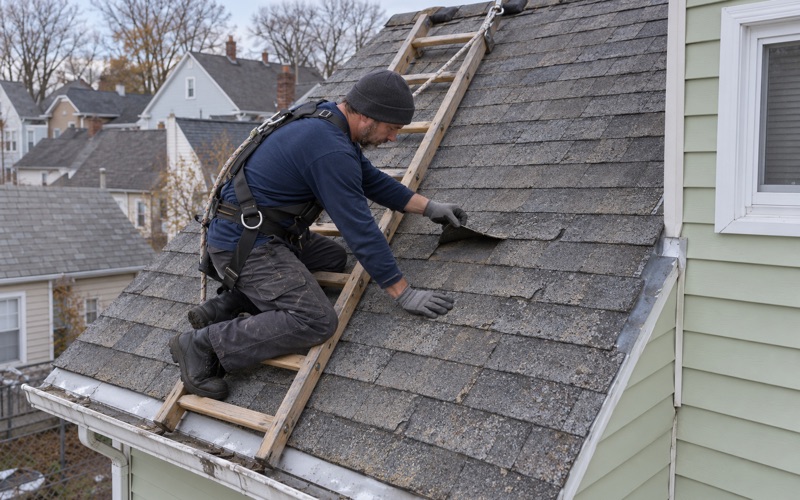
On an older roof, a leak can be a sign the whole covering is near the end. On a young one, it usually is not. Replacing a roof that still has most of its life left because one valley was installed poorly would cost an owner thousands for a problem that a careful repair can solve, and we would rather say so up front.
Looking for roofing closer to Highland Park? See Roofing Services in Highland Park.
First-Cycle Problems: Flashing, Valleys and Ventilation
Most early leaks on newer Tenafly houses trace back to three areas. Each one is a workmanship detail that a quick inspection from the ground will miss.
Flashing at walls and chimneys
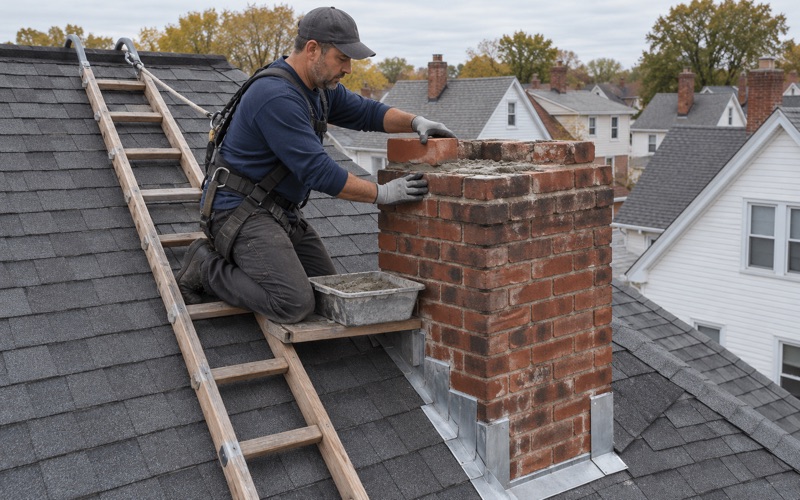
Where a roof meets a sidewall, a dormer or a chimney, the shingles alone cannot keep water out. Step flashing should be woven in with each course, with counter flashing over it, set into a reglet or lapped behind the siding. On newer houses we regularly find step flashing that was skipped, nailed through in the wrong place, or left without a kick-out at the bottom of a wall, which sends water behind the siding instead of into the gutter. A chimney that lacks a cricket on its uphill side can hold water and snow against the masonry, and the joint gives way.
Valleys that were cut short
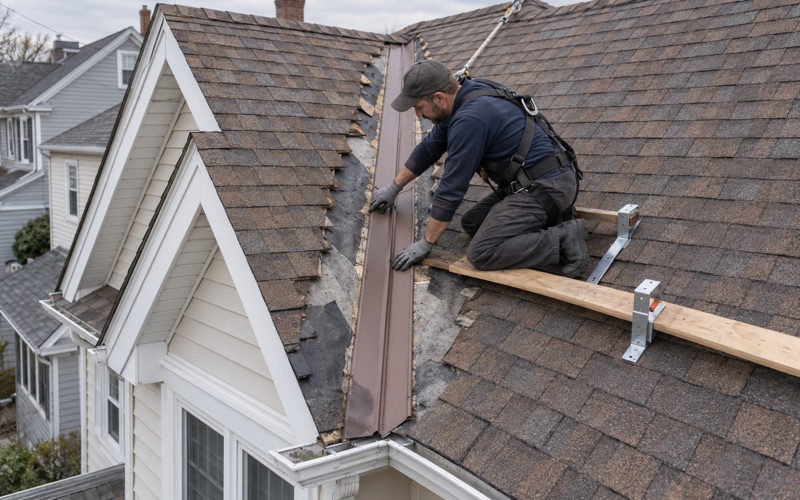
Valleys carry more water than any other part of a roof. If the underlayment beneath them is not an ASTM D1970 self-adhering ice and water barrier, or if a closed-cut valley was trimmed too close to the centerline, water finds its way under the shingle edge in heavy rain or during a freeze and thaw. These leaks often appear only in certain storms, which makes them easy to dismiss until the ceiling stains.
Attic ventilation that does not balance
A ridge vent needs matching intake at the soffits to work. On some newer houses the ridge was vented but the soffit openings were blocked by insulation or never cut in, so warm, damp air stays in the attic. The result can be frost on the underside of the decking in winter, damp insulation, and shingles that age faster than their rating. We check the net free area of intake against exhaust and look at the decking from below for staining or soft spots.
Inspecting a Young Roof Instead of Replacing It
An owner with a roof under fifteen years old usually needs a clear diagnosis, not a new roof. Our inspection of a first-cycle roof is built to answer one question: what exactly is wrong, and what is the smallest correct fix.
What we look at on the roof
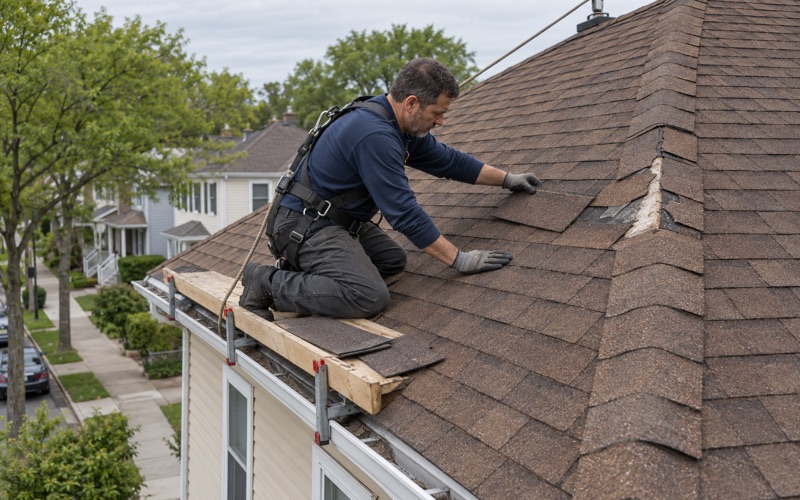
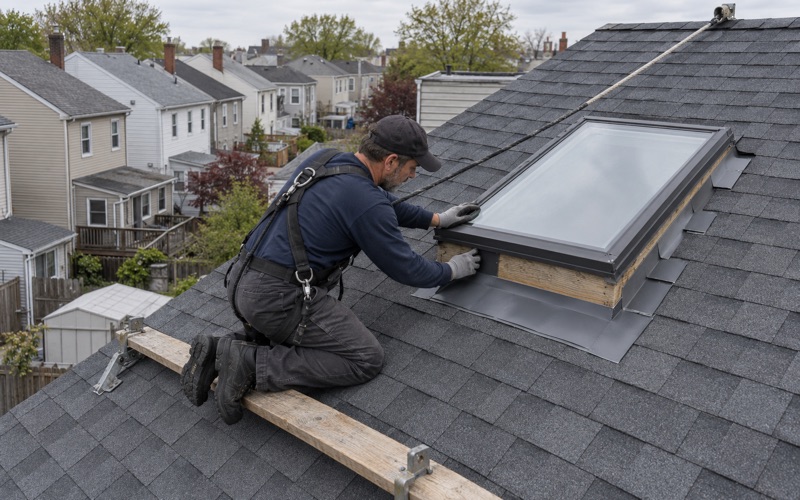
We walk the field of the roof, then spend most of our time at the transitions: wall and chimney flashing, valleys, pipe boots, skylight curbs and the drip edge at the eaves and rakes. Pipe boots are worth a separate look, since a cracked rubber collar can let water in long before the shingles around it show any wear. We note what we find with photographs, so you can see the problem rather than take our word for it.
What a proper repair includes
When flashing is the cause, we do not slip a new piece over the old one and caulk the edge. We lift the surrounding shingles, remove the faulty flashing and install new step, counter or chimney flashing with the courses relaid around it. If a valley needs to be redone, the underlayment beneath it is replaced with a self-adhering membrane before the shingles go back. A repair done this way should last as long as the rest of the roof.
When replacement is the honest answer
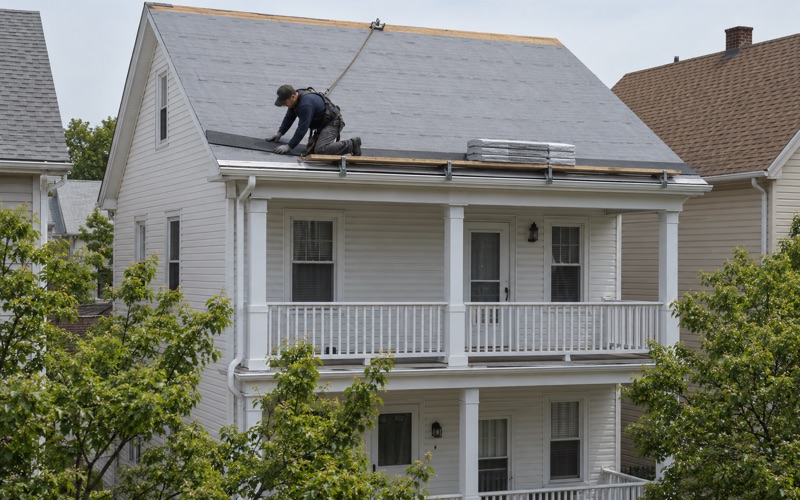
Sometimes the problem is widespread enough that patching would only chase leaks. If that is the case, the written scope lists tear-off, decking, underlayment, flashing and drainage as separate items so you can line our estimate up against any other one. If decking turns out to be damaged once the old roof is off, we photograph it and show you before it is replaced, at the per-sheet price written into the contract. Under New Jersey rules, replacing the roof covering on a detached one- or two-family house is ordinary maintenance under N.J.A.C. 5:23-2.7 and does not need a permit, though work that touches the structure does go through the Tenafly Building Department at 100 Riveredge Road.
Warranty Paperwork and Tenafly’s Mixed-Era Streets
A young roof often comes with paperwork, and that paperwork matters most when a house is bought or sold. It also sits on streets where the house next door may be a century older.
Gathering the records when a house changes hands
If you are buying or selling a newer house in Tenafly, ask early for whatever came with the roof: the manufacturer’s shingle warranty, any separate workmanship warranty from the installer, invoices and the original contract. Terms differ from one product and one installer to the next, so the documents themselves are the only reliable source on what is covered and whether coverage can pass to a new owner. We can inspect the roof and write up its condition so that a buyer and seller are working from the same facts, and we will tell you if a repair we make might affect a coverage question so you can check with the issuer first.
Newer roofs beside postwar and Victorian-era houses
Tenafly’s housing record runs across a long span. The 2012 Tenafly Design Guidelines describe houses from the 1860s through the 1880s in Gothic Revival, Second Empire, Italianate and Stick styles, and the census counts 1,215 units from the 1950s alone. A single block can hold a slate mansard, a postwar house on its second or third asphalt roof, and a rebuild from the last decade. Our crews work on all of them, and we adjust the approach to the house in front of us rather than applying one routine to the whole street.
Historic districts and trees
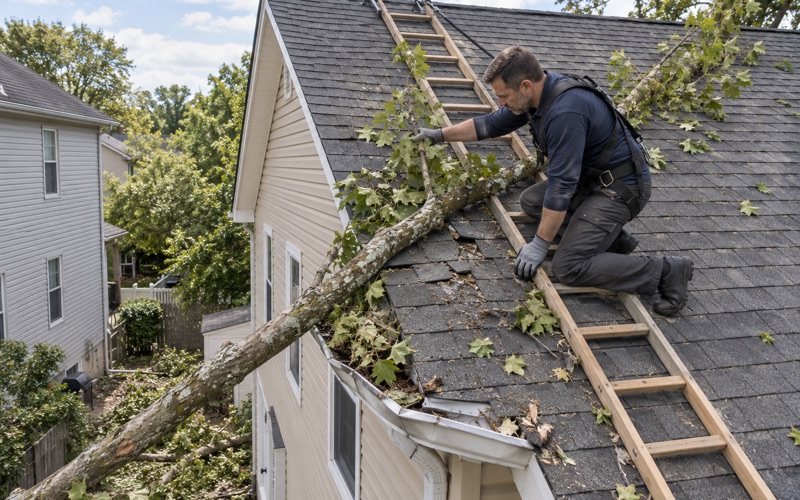
Owners inside the Atwood’s Highwood Park or Magnolia Avenue historic districts, or at a designated historic site, should know that replacing roof materials on those houses can require a Certificate of Appropriateness from the Historic Preservation Commission, even where no building permit applies. Plain repair of existing roofing with no change in material or appearance does not. Separately, if limbs over the roof need to come down before work begins, tree removal permits come from the Department of Public Works.
How we leave the property
On every job we keep to New Jersey’s home improvement contract rules, including the three-day cancellation notice. At the end of each work day the yard, sidewalk and gutters are cleaned and a magnet is run across the ground for loose roofing nails before the crew leaves. If panels sit on the roof, their removal and reinstall are planned into the schedule from the start.
- 20+ Years in Roofing
- Line-Item Written Estimates
- Daily Nail-Magnet Cleanup