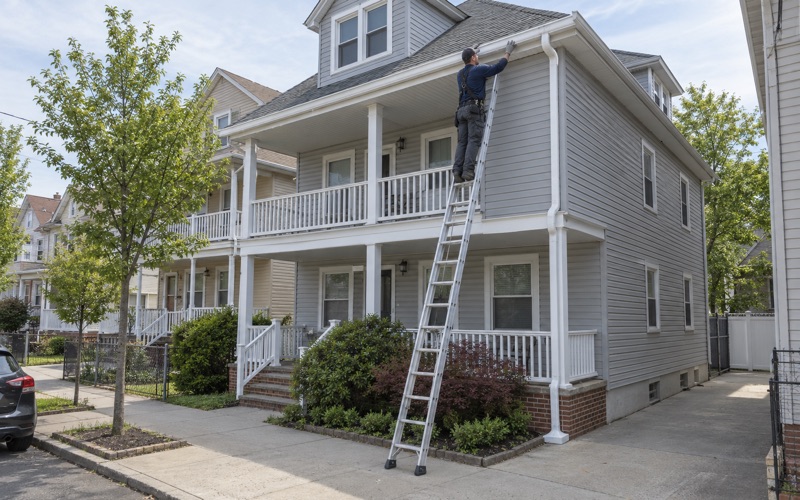
Bayonne Superior Roofing has handled roofing in Totowa and the rest of North Jersey for more than 20 years, and the question we plan hardest around is one owners seldom ask: what the weather will do to a new roof between the morning it is opened and the first warm afternoon after it is closed. Shingles, sealants and underlayment all have to bond and settle, and several of them are fussy about temperature.
That is why a Totowa estimate from us talks about timing as well as materials. We tell you when we would start, how much roof we would open in a day, and what we will check once the weather turns. If a repair will carry the roof another few seasons, you hear that first, before replacement comes up at all.
Every written scope lists tear-off, decking, underlayment, flashing and drainage on separate lines. That lets you lay our number beside anyone else’s and compare the same items, rather than two totals that may not describe the same job.
117 Freezing Nights a Year Near Totowa
What the Little Falls normals show
The closest long-term weather station sits in Little Falls, just across the Passaic River from the borough. Its 1991-2020 normals from NOAA record 117.4 days a year when the overnight low reaches 32 degrees or colder, against an annual mean temperature of 53.1 degrees. Because the station is in Little Falls, we treat the figure as a close neighbor’s record rather than a Totowa measurement. It is still the best long-run read on cold nights that anyone working on a Totowa roof has.
For the short run, Totowa sits in the National Weather Service forecast zone called Eastern Passaic. That zone forecast is what we check each evening during a cold-season job, because the normals tell us how often a freezing night arrives, not which night it will be.
Close to a third of the calendar
A hundred and seventeen frosty nights is close to a third of the year. Most of them fall between late fall and early spring, and many follow days mild enough to work in comfortably. That pattern is what makes cold-season roofing tricky: a crew can finish in sunshine at 3:00 p.m. and leave materials that will sit below freezing for the next twelve hours.
Why the night matters more than the day
Daytime highs decide whether the crew is comfortable. The overnight low decides whether adhesives keep curing, whether condensation forms under fresh underlayment, and whether a partly finished roof can take whatever falls on it. When we look at the forecast for a Totowa job, the low is the number we read first.
The annual mean of 53.1 degrees hides that swing. An average that mild suggests easy working conditions, yet it is built from summer heat and winter cold that roofing materials feel very differently. We plan around the cold end of the range, not the middle.
Looking for roofing closer to River Edge? See Roofing Services in River Edge.
Why Shingles Need Warmth to Seal
The self-sealing strip
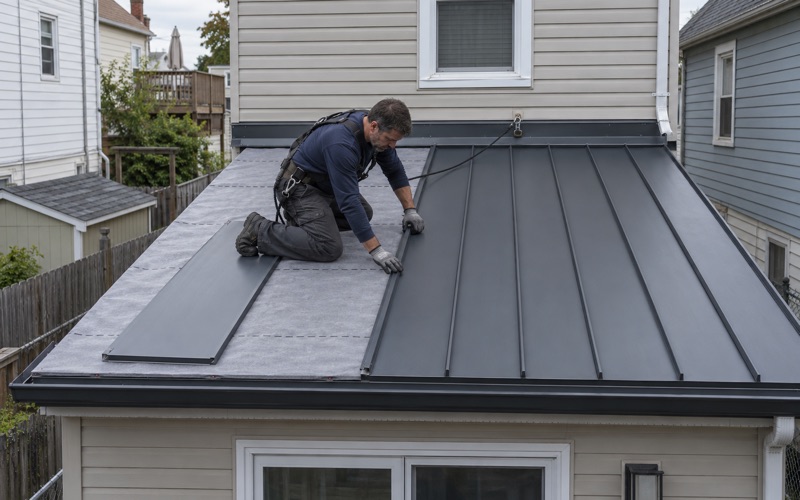
Architectural shingles such as GAF Timberline HDZ, Owens Corning Duration and CertainTeed Landmark carry a strip of asphalt adhesive along each course. Sunlight softens that strip and bonds each shingle to the one below, and that bond is a large part of how the roof resists wind uplift. In warm weather the bond forms within days. In cold weather it can wait for weeks, until enough sun reaches the roof.
Sealants, underlayment and flashing in the cold
Roofing cement stiffens as it cools, so it spreads poorly and grips less until it warms. Synthetic underlayment and self-adhering membranes lie flatter and stick better on a warm deck than on a frosty one. We keep rolls and tubes in a heated space until they go on, and we read each product’s own installation instructions for its temperature range rather than relying on a rule of thumb.
Frost and dew add a second problem. A deck that looks dry at 8:00 a.m. can carry a film of moisture that keeps a membrane from gripping, so on cold mornings we wait for the sun to clear the surface before anything adhesive goes down.
Wind before the bond forms
An unsealed shingle is held by its nails alone. That is normally enough, but a gusty week right after a winter install puts more strain on those nails than the same week in July would. This is part of why a cold-season roof gets a follow-up visit from us, covered in the last section of this page.
Low-slope rear roofs feel the cold too
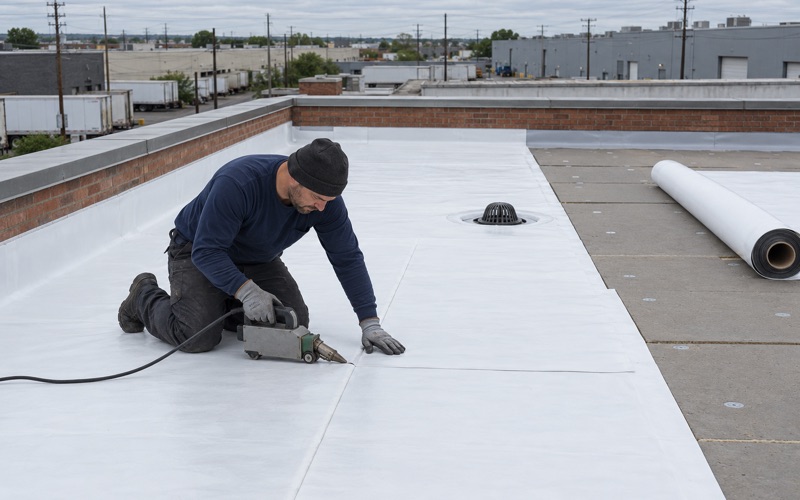
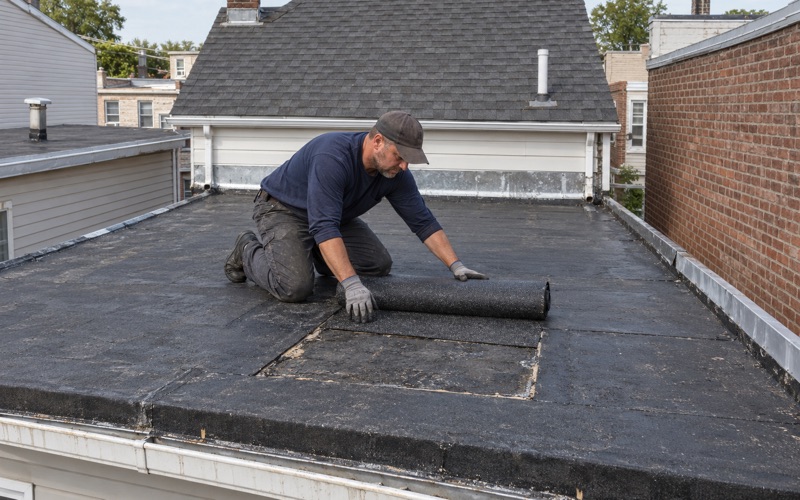
Many houses carry a low-slope section over a rear addition or porch, finished in EPDM rubber, torch-down modified bitumen or a single-ply membrane. Seam adhesives and primers on those systems are just as sensitive to a cold, damp surface as shingle strips are. When we work on one in winter, we check the seams, the parapet coping and the drain or scupper rather than only the patch, and we keep each day’s seam work to what can be finished and inspected in daylight.
Cold-Weather Tear-Offs and the Overnight Rule
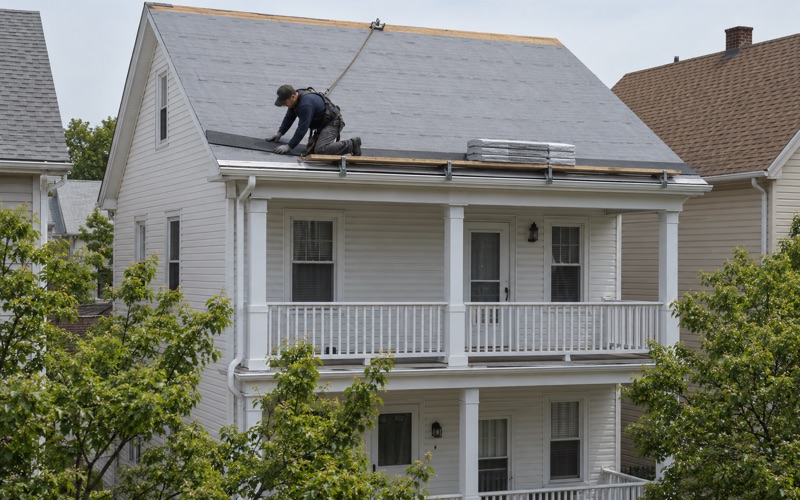
Open only what closes the same day
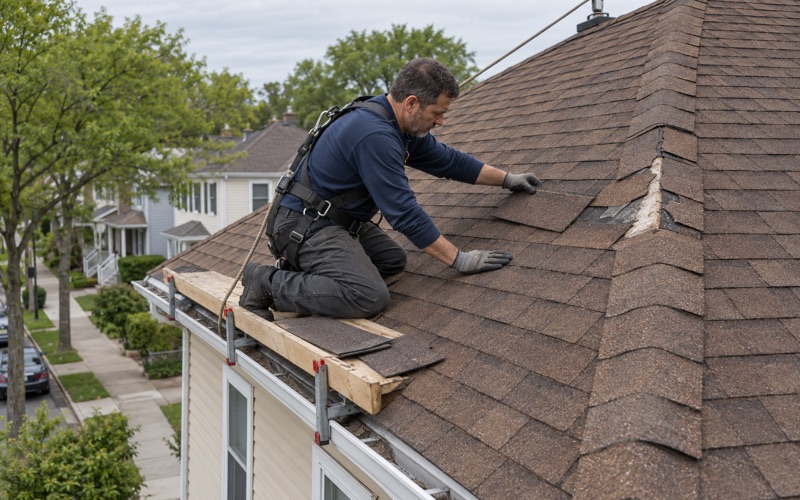
Our rule on every Totowa tear-off is simple: no section of deck is left open overnight, and on a night forecast to drop to 32 degrees or below, that rule is not negotiable. We size each day’s tear-off to what the crew can strip, inspect, underlay and dry in before dark. On short winter days that can mean opening one slope at a time rather than the whole roof.
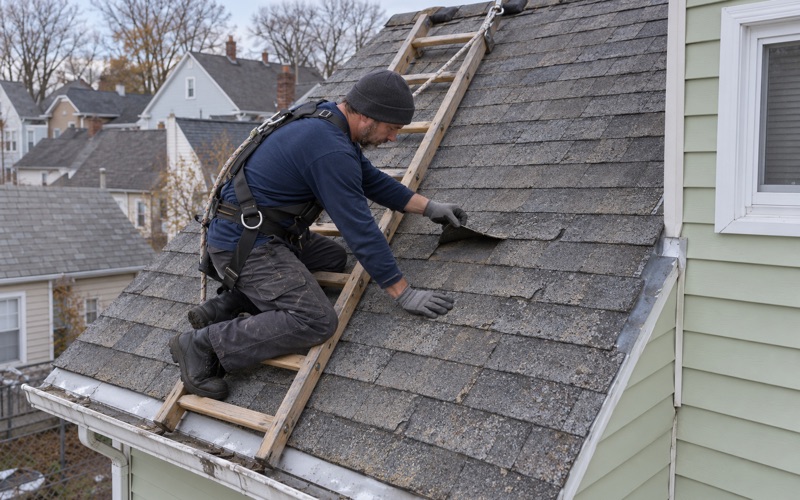
In practice, a winter day starts later and ends earlier. We wait for frost to lift before anyone walks the old shingles, strip and inspect through late morning, and have underlayment and drip edge on well before the light goes. If the crew falls behind, the next slope simply waits for tomorrow.
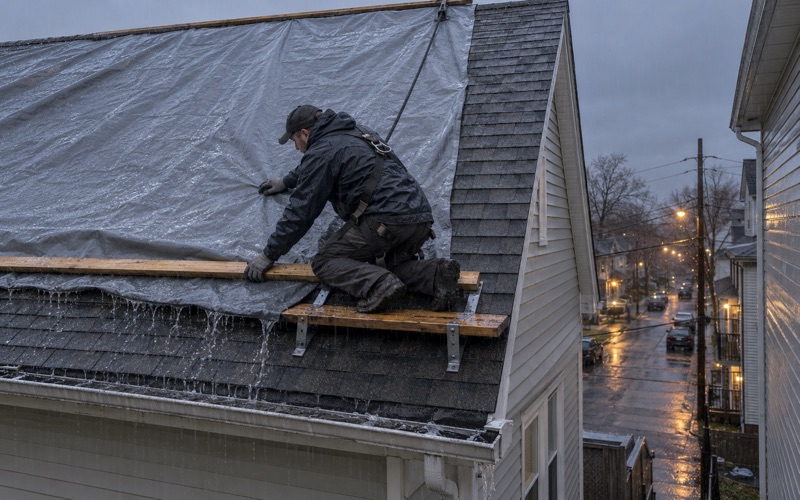
A tarp is not a substitute for underlayment on a freezing night. Wind works under it, frost forms beneath it, and a deck that spends the night that way is wetter in the morning than when the old shingles came off.
Decking found once the old roof is off
More than half of the housing units in the borough were built before 1960, and an older house has usually been through more than one roof cycle by now. That leaves the original board sheathing as the open question on a re-roof. When we find a damaged board or sheet, we photograph it and show you before it is replaced, at the per-sheet price written into the contract.
Layer count matters too. New Jersey’s rehabilitation subcode calls for a tear-off where a roof already carries two or more layers, so we check how many are there before we quote, and the quote says which way the job goes.
Flashing and the last hour of daylight
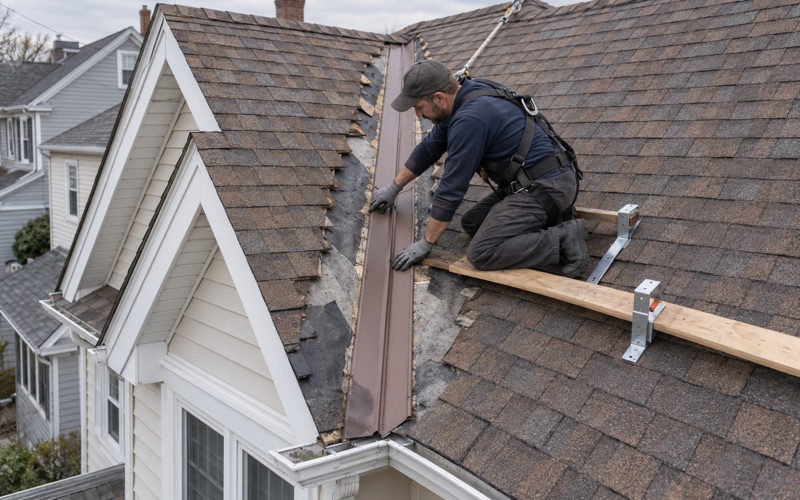
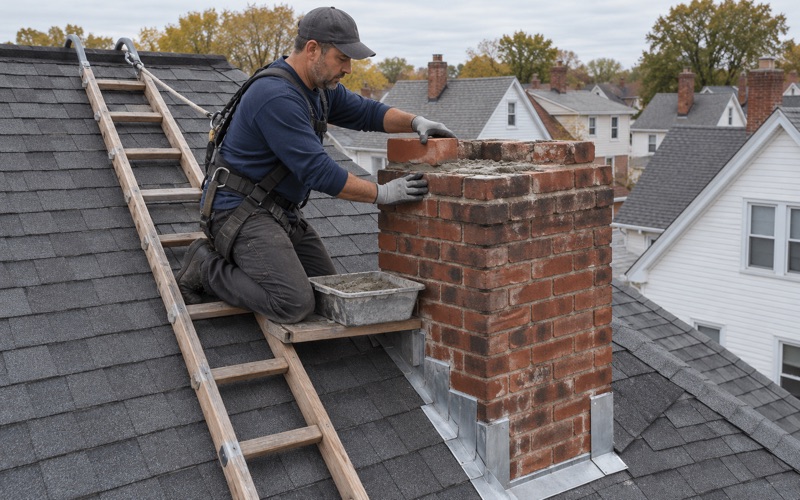
Step, counter and chimney flashing are replaced with the roof, not reused under new material. Flashing work is slow, so we schedule it early in the day. A chimney or wall left half-flashed at dusk is exactly the kind of open seam the overnight rule exists to prevent. Before we leave each evening, the yard, walk and gutters are cleaned and swept with a magnet for nails, whatever the season.
Choosing the Season for a Totowa Re-Roof, and What Follows
Spring and fall as the planned windows
For a full replacement with no active leak, we usually suggest spring or early fall. Overnight lows are kinder, the seal strips bond quickly, and there is more daylight for a full tear-off. A planned re-roof also lets us coordinate anything that has to come off the roof, including solar panels, whose removal and reinstall go into the schedule from the start.
Those windows fill quickly, so an owner who sees curling tabs or granule loss in late winter does well to call then. An inspection in February can become a scope and a start date in April, with the roof patched in the meantime if it needs it.
When winter work cannot wait
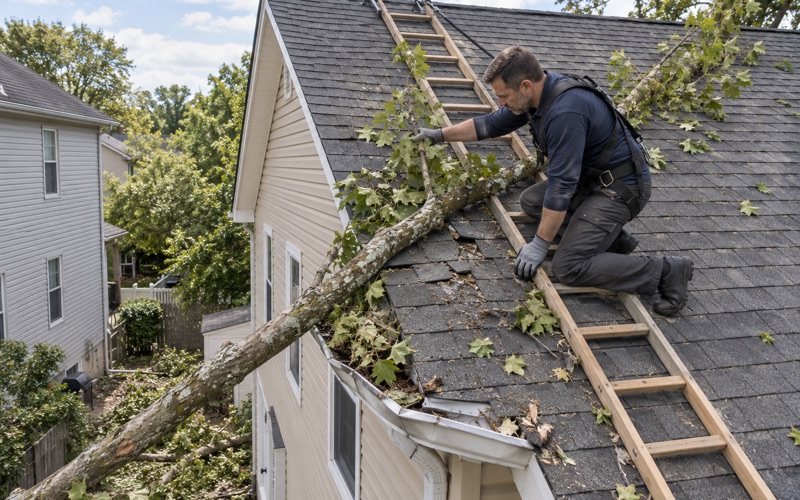
A failing roof does not always wait for spring. If a leak is getting worse or storm damage has opened the roof, we will work in the cold, with smaller sections and tighter daily cutoffs. We trace the leak from the attic or top-floor ceiling as well as from above, so the repair goes where the water actually gets in. Storm damage is photographed and written up for your own claim, and we will meet the adjuster on site when you ask.
Hand-sealing and the follow-up check
On a cold-season install, we hand-seal shingles with dabs of roofing cement in the most exposed areas, such as rakes, eaves and the ridge, so they are not relying on the strip alone. Then we come back once the weather has warmed to confirm the strips have bonded, look for lifted tabs, and check the flashing and pipe boots that went on in the cold.
If the job included a low-slope section, the follow-up also covers its drainage. Box gutters, scuppers and leaders are cleared and run with water to prove they carry it away, since a drain that froze shut in January can hide a problem until the first spring rain.
A covering replacement on a detached one- or two-family house is ordinary maintenance under N.J.A.C. 5:23-2.7. Structural repairs such as sheathing or rafter work are different, and they go through the Borough of Totowa Building Department at 537 Totowa Road with a permit or minor-work notice.
Contracts and two-family houses
Our contracts follow New Jersey’s home improvement rules, including the three-business-day cancellation notice. On a two-family house, we schedule with both units in mind, so the upstairs tenant knows when we arrive and where we need access.
- 20+ Years in Roofing
- Line-Item Written Estimates
- Daily Nail-Magnet Cleanup