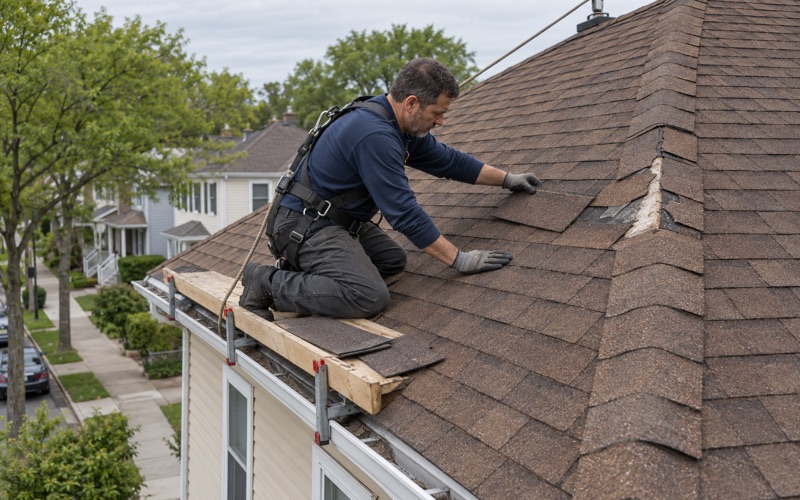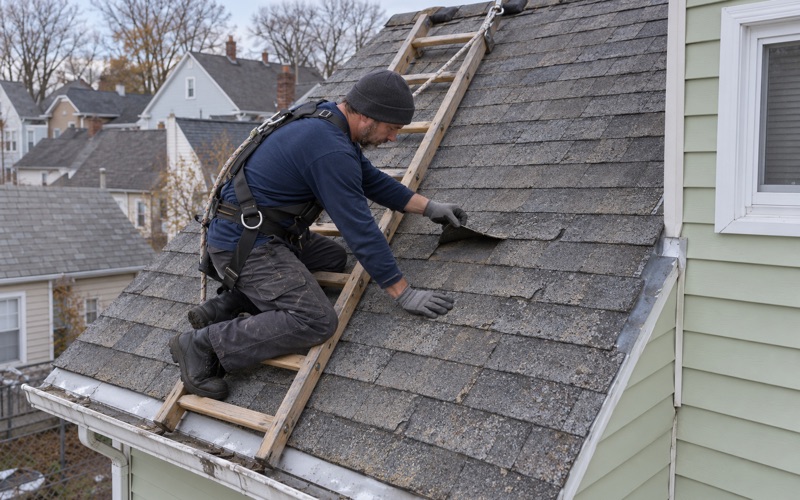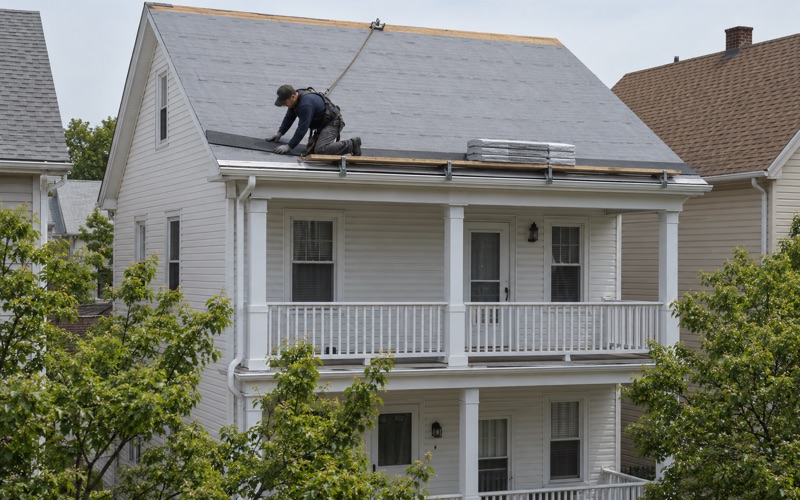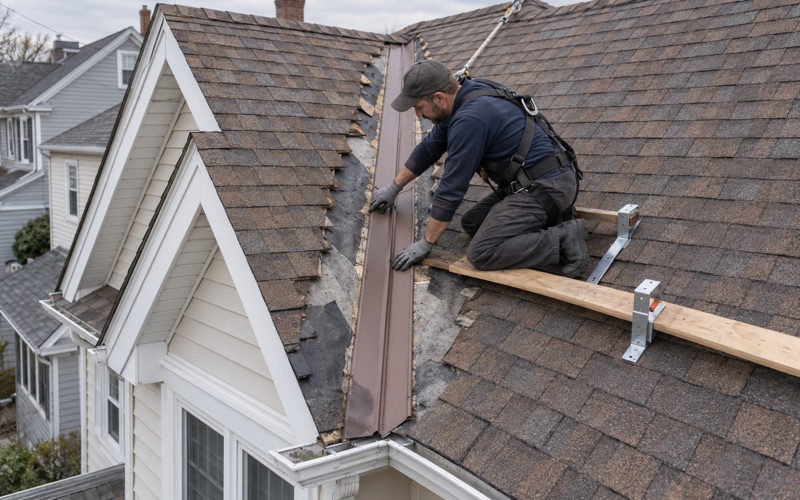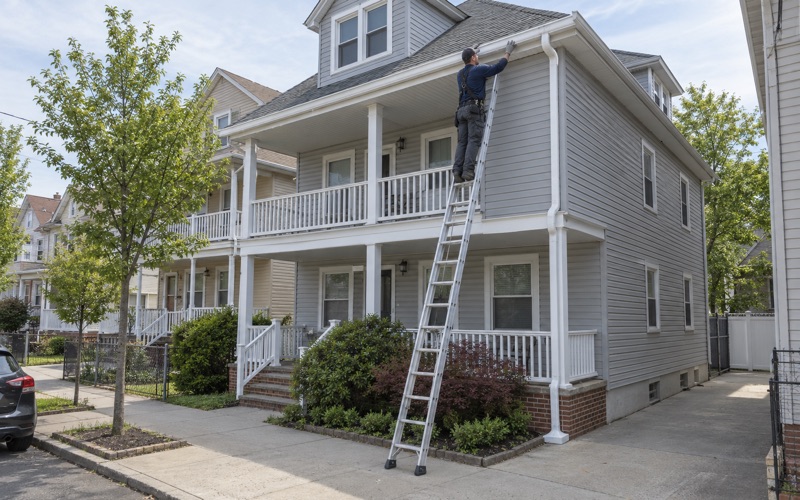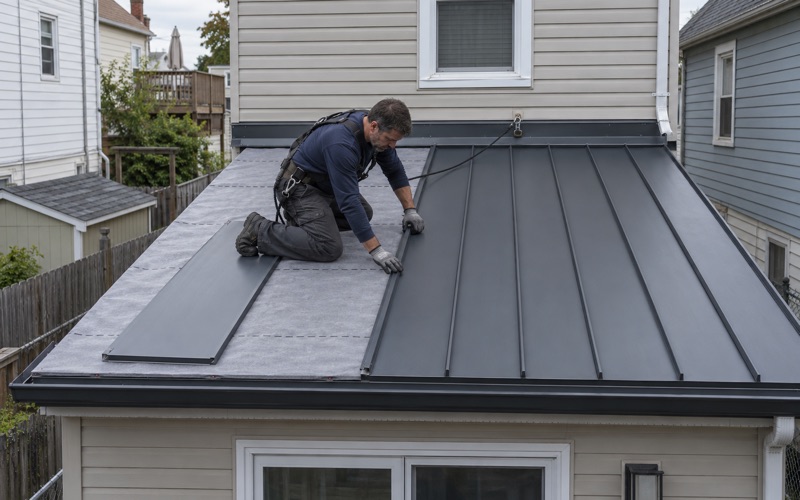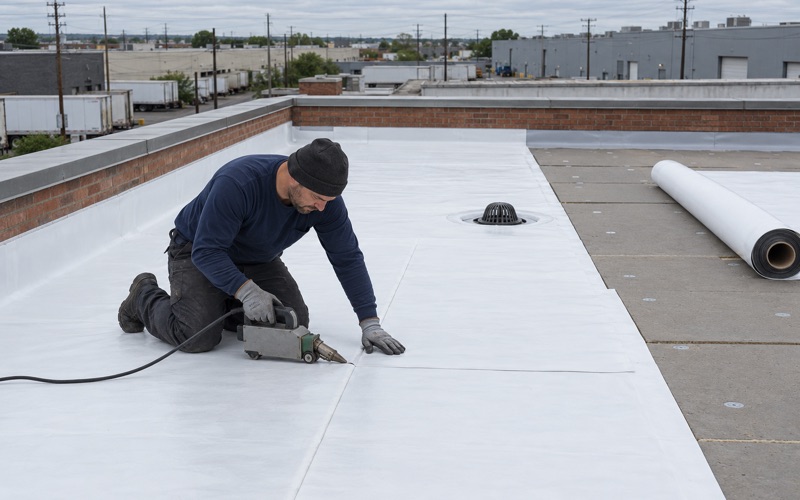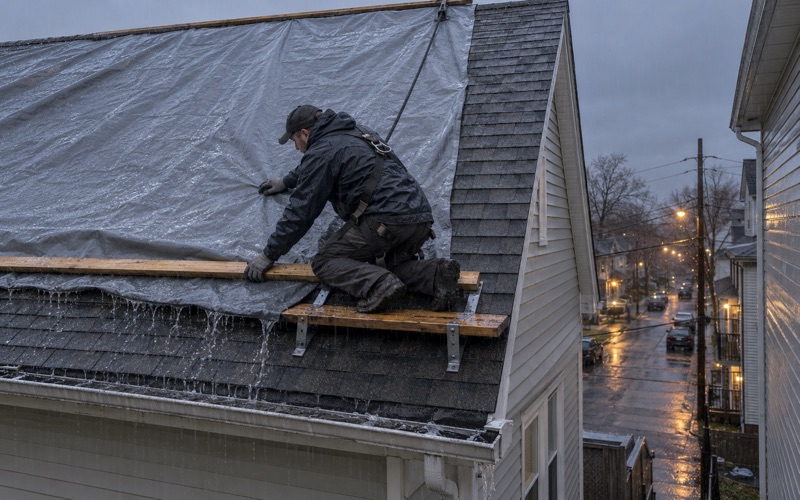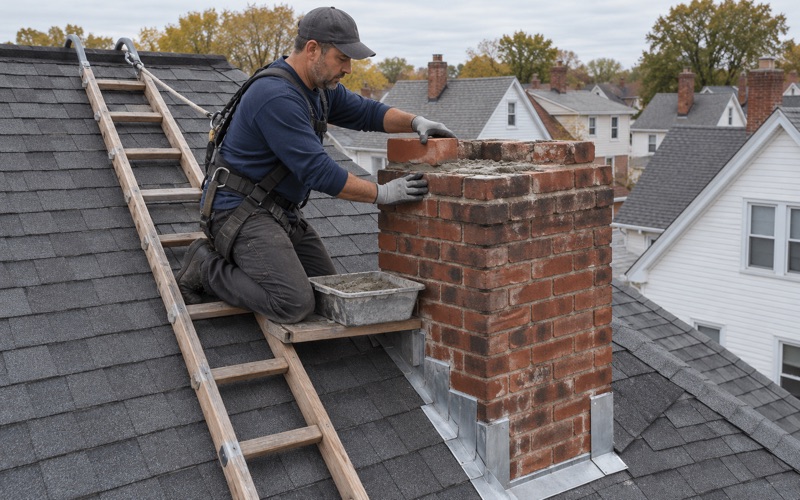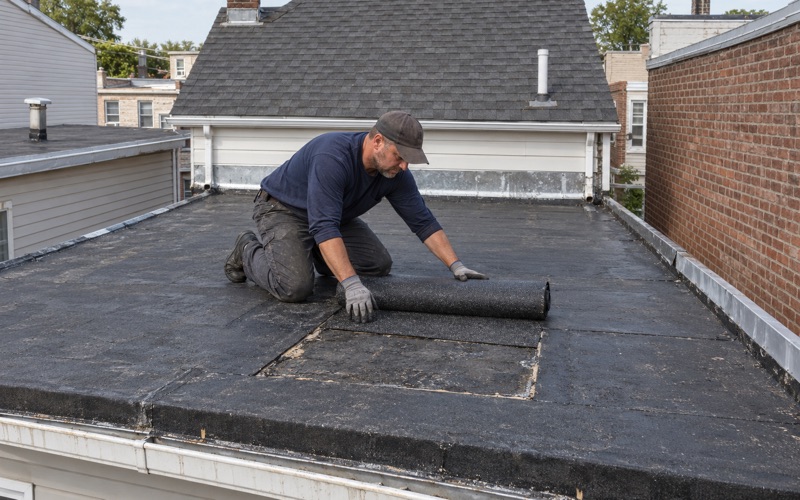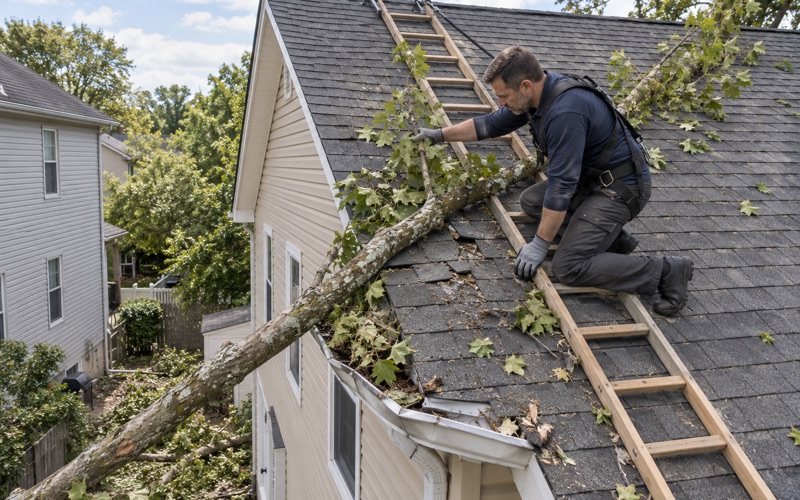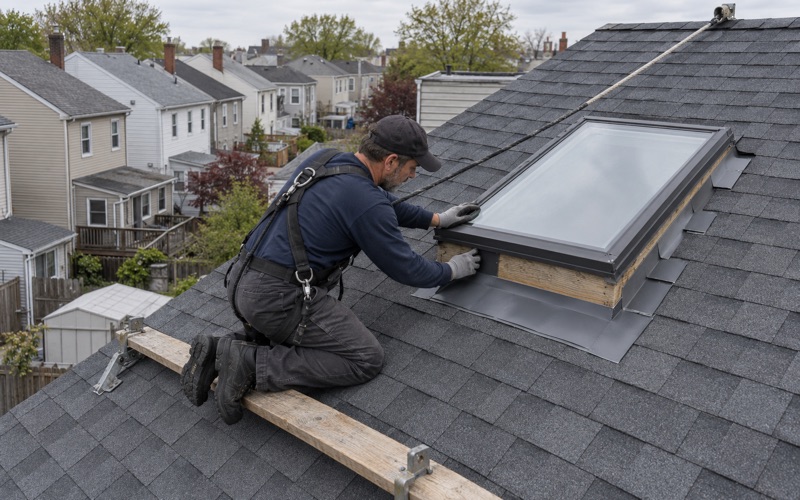
Bayonne Superior Roofing brings more than 20 years of experience to roofing in Wallington, and on most houses here the first question we work through is not about shingles. It is about the painted wood around them: the fascia, the soffits, the rake boards and the trim on a porch roof, all of which a tear-off can scrape, pry or cut.
A roof covering is not painted, so the roofing itself rarely raises a paint question. The edges do. When a re-roof disturbs enough painted surface on a house built before 1978, a federal rule governs how that part of the job is handled, and we would rather walk you through that line before the estimate than after the crew has started.
We also begin every leak call inside, in the attic or on the top-floor ceiling, before anything is priced. Where the water actually gets in decides how much edge work a repair needs, and how much painted trim it ends up touching.
Wallington’s Older Houses and the Painted Roof Edge
Wallington’s housing stock is old. In the Census Bureau’s 2024 five-year American Community Survey, 22.7 percent of the borough’s housing units were built in 1939 or earlier, 26.0 percent from 1940 to 1959 and another 25.8 percent in the 1960s. Only 1.6 percent date from 2010 or later, so nearly three-quarters of the homes here predate 1970.
That matters because of one date in federal law. Under the EPA’s lead rules, target housing is housing constructed before 1978, with stated exceptions such as housing for the elderly or persons with disabilities and dwellings with no bedroom (40 CFR 745.103). Age alone settles nothing about a roof job. What it does is place almost every house in the borough inside the group the Renovation, Repair and Painting rule was written for.
Where paint meets the roof
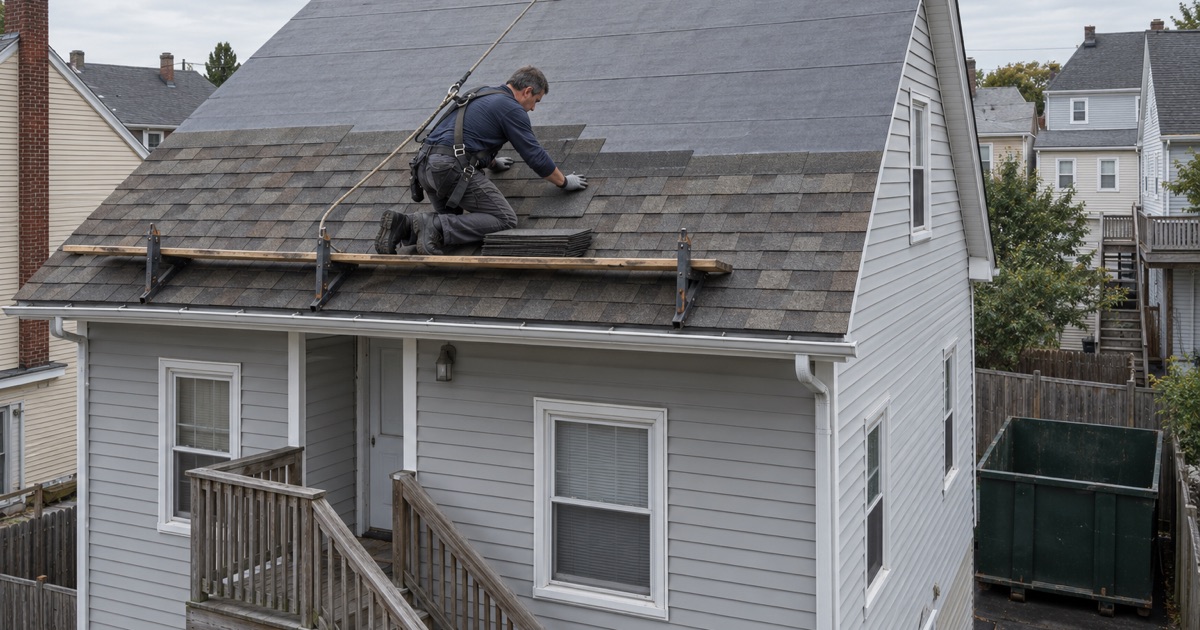
The shingles, the underlayment and the decking carry no paint. The paint sits on the wood that frames the roof: the fascia board the gutter hangs from, the soffit under the overhang, the rake boards along a gable and the trim on a front porch roof. On a house that has been repainted over decades, those boards can carry many coats.
A re-roof reaches all of them. New drip edge goes on at the eaves and rakes, gutters come down and go back up against the fascia, and a rotted fascia or soffit section gets cut out and replaced. Each of those steps disturbs a painted surface, even when nobody set out to touch the paint at all.
Two households under one roof
Wallington is largely a borough of two-family houses. The same survey puts 37.0 percent of housing units in two-unit buildings, against 21.0 percent in one-unit detached houses, and 62.5 percent of occupied units are rented. On many roofs here, the owner lives on one floor and a tenant lives on the other, and that arrangement shapes who has to be told what before the work begins.
Looking for roofing closer to Edgewater? See Roofing Services in Edgewater.
The 20-Square-Foot Line
The Renovation, Repair and Painting rule does not cover every brush with a painted board. In 40 CFR 745.83, a renovation is a modification of an existing structure that results in the disturbance of painted surfaces. The same definition excludes minor repair and maintenance that disrupts 20 square feet or less of painted surface for exterior activities, as long as the work does not involve window replacement or demolition of painted surface areas.
In plain terms, a small exterior repair can stay under the line and a larger one crosses it. Once a job disturbs more than 20 square feet of exterior paint on target housing, it is a renovation under the rule, and the rule’s requirements follow from that point.
How quickly roof edge work adds up
Twenty square feet sounds generous until it is measured along a roof edge. A long run of fascia, the rake boards on a gable and a stretch of soffit are counted together, and on a full re-roof they can add up faster than the size of any single board suggests.
That is why the painted trim a job will touch is worth measuring before the scope is written, not after. A repair at one corner of a porch roof may stay well under the line. A full tear-off with new drip edge, rehung gutters and replaced fascia is a different conversation, and it is better had at the kitchen table than on the ladder.
Reading the edge work on paper
Our written scopes list tear-off, decking, underlayment, flashing and drainage as separate lines, which makes the edge work visible. You can see where fascia, drip edge or gutters are being replaced, ask how much painted trim that involves, and compare the answer line by line against another estimate.
Put the same question to any roofer you are considering: how many square feet of painted fascia, soffit and trim will this job disturb? The answer tells you whether the federal rule is part of your project at all.
We also give a straight answer on whether a roof can be repaired before replacement is ever discussed. On an older house, a targeted repair that leaves most of the painted edge alone can be the right call on its own merits.
The EPA Pamphlet for the Owner and the Tenant
When a job on target housing is a renovation under the rule, the first requirement comes before any work starts. Under 40 CFR 745.84(a), the firm doing the renovation must give the owner of the unit the EPA pamphlet and obtain the owner’s written acknowledgment, or, if it is mailed, a certificate of mailing at least 7 days before the work.
That timing is worth building into the schedule from the first conversation. A start date picked before anyone has thought about the pamphlet is a start date that may have to move.
When the owner does not live there
If the owner does not occupy the unit, the rule adds a second person: an adult occupant of that unit must also be given the pamphlet. In a borough where most occupied units are rented, that is not an unusual case. A landlord who lives elsewhere still signs the contract as owner, and the tenant living under that roof is the occupant the rule names.
The same applies on a two-family house where the owner lives downstairs. The owner’s own unit and the rented unit upstairs are separate dwelling units, and a renovation that affects the rented one brings its adult occupant into the picture.
Common areas and written notice
For common areas of multi-unit target housing, 745.84(b) works differently. The owner receives the pamphlet, and each affected unit receives written notice of the renovation, or informational signs are posted instead. Whether a given piece of work counts as a dwelling unit or a common area is a question to settle with whoever performs that part of the job before the start date is fixed.
Our habit on a two-family house is the same whatever the rule requires: the household upstairs hears from us when the crew is arriving and where access is needed. A tenant who already expects the work is far easier to reach with a pamphlet or a notice than one who first learns about it from a ladder against the house.
Our contracts are also written to New Jersey’s home improvement rules, including the three-business-day cancellation notice. Between that notice and the pamphlet timing, the paperwork side of a start date deserves the same planning as the materials.
Containing and Cleaning Up Paint Chips
Paint chips are where an old roof edge shows up after the crew has gone: flakes from a scraped fascia board, splinters off a soffit panel, dust from a cut rake board. Wallington covers about 0.99 square miles of land, and on lots this compact that debris lands close to a neighbor’s driveway, a shared walk or a yard where children play.
Before the trim comes off
Containment starts before anything is pried loose. Ground covering laid out below the work area catches what drops from the eave, and deciding in advance where the dumpster, ladders and material drops go keeps the debris path away from the next lot. On narrow lots like these, that plan is made around the street and the neighbors’ driveways, not improvised on the morning of the job.
The Renovation, Repair and Painting rule sets its own work-practice and cleanup standards for jobs that count as renovations. Where your project crosses the 20-square-foot line, ask whoever handles the painted trim to show you the firm’s EPA certification before that work begins.
At the end of every work day
Our crews clean the sidewalk, the yard and the gutters at the end of each day and run a magnet sweep for roofing nails before leaving. On an older house, that daily pass also means picking up paint chips that fell from the trim rather than leaving them in the grass overnight.
Permits and the borough office
Paint rules and building permits are separate questions. In New Jersey, re-covering the roof of a detached one- or two-family house is ordinary maintenance under N.J.A.C. 5:23-2.7 and needs no permit. Attached homes and buildings with three or more units are handled differently, and for those the Borough of Wallington Building Department matters.
The department works out of the Municipal Building at 159-161 Maple Avenue, and its published office hours are Tuesday and Thursday from 7:30 a.m. to 9:30 a.m. With four public hours a week, any filing is something to plan ahead rather than walk in on.
Whatever the scope, we start the same way: a look at the roof and the attic, an honest read on whether repair will do, and a written estimate that shows how much of the painted edge the work will touch.
- 20+ Years in Roofing
- Line-Item Written Estimates
- Daily Nail-Magnet Cleanup