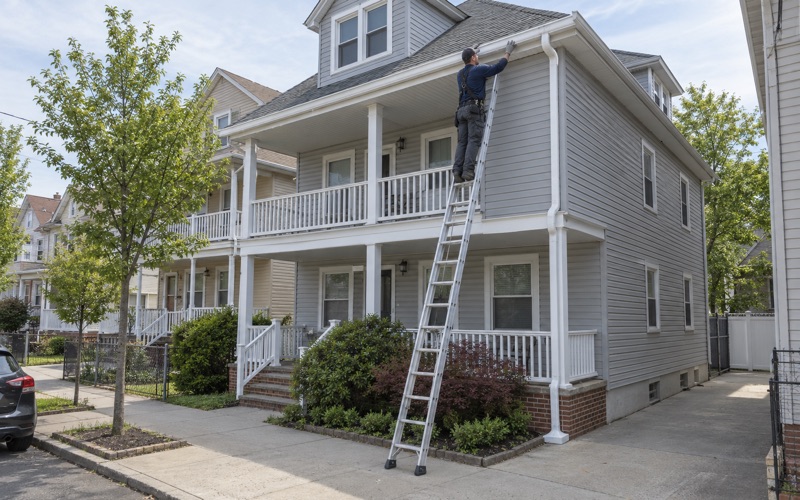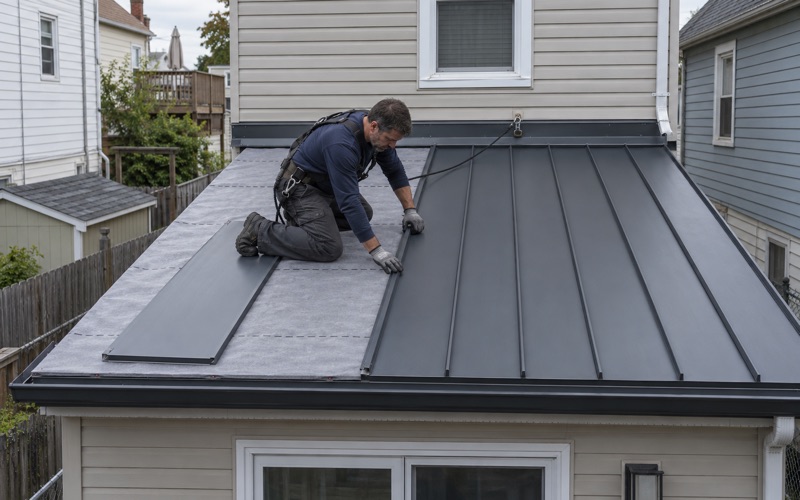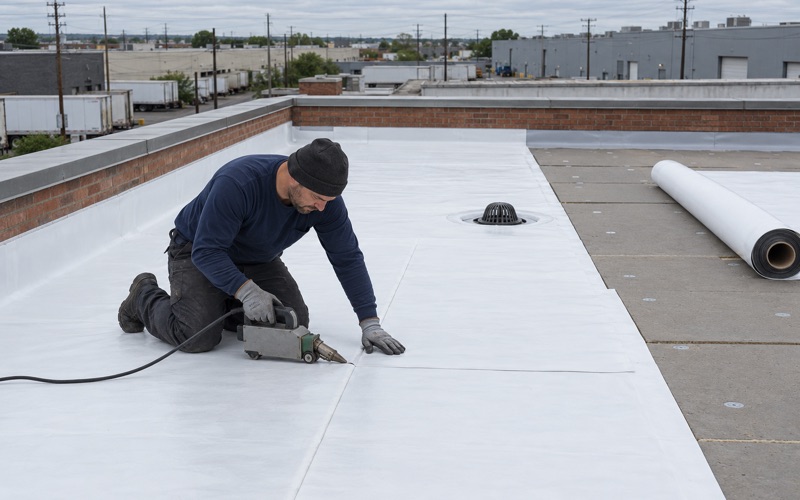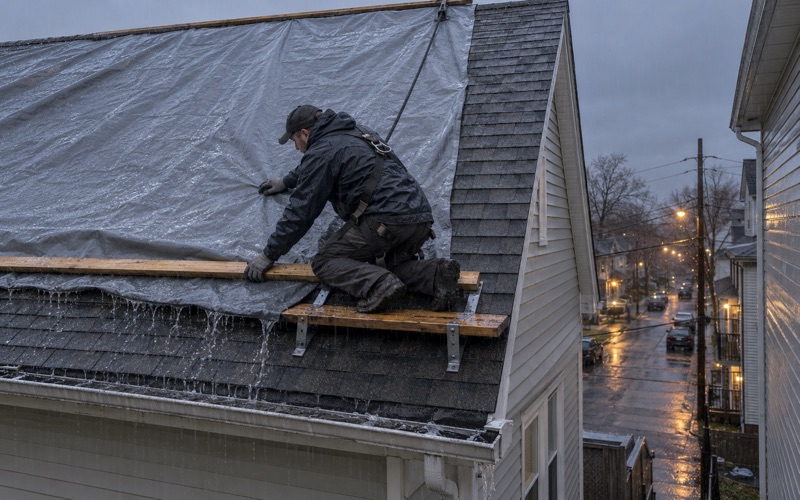
Bayonne Superior Roofing brings more than 20 years of work to roofing in Westwood, and the first thing we settle on a house here is not the shingle color. It is the condition of the deck underneath, because that answer decides whether the job stays routine or turns into permit work with an inspection.
Most owners assume the roof covering is what the borough cares about. On a one- or two-family house, swapping old shingles for new ones is generally treated as ordinary maintenance. What changes the picture is the plywood or plank sheathing those shingles are nailed to, and nobody knows its real condition until the old layers come off.
So we plan for that discovery before the crew shows up. Our estimate names a decking allowance, our crew photographs any bad sheets for you before replacing them, and the permit question is answered while there is still time to answer it calmly. Below is how that plays out on a Westwood roof, from the first attic visit to the morning an inspector climbs the ladder.
Where Westwood Draws the Residential Roofing Line
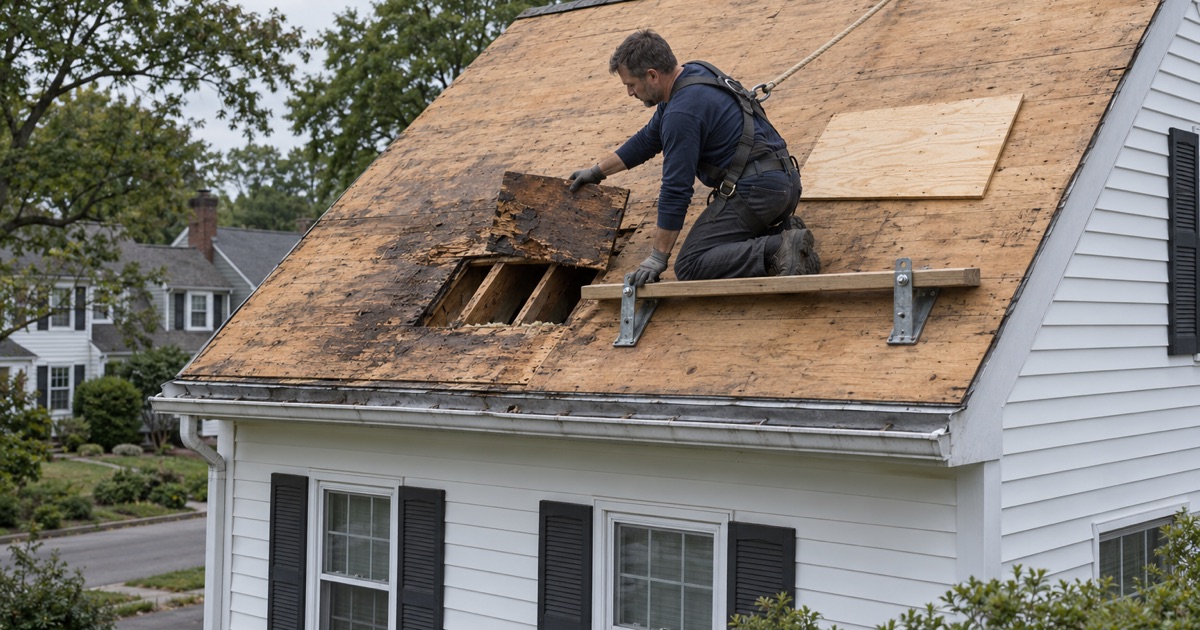
Westwood’s Construction and Building Department publishes a single page titled ‘When and Why Do I Need a Building Permit or Zoning Approval?’ The version revised on April 15, 2026 lists residential roof sheathing repair or replacement among the work that needs a building permit. The shingles on a house are not on that row. The deck is.
That distinction matters more than it first appears. On a detached one or two family house, replacing the shingles on a sound deck is routine work under the state’s ordinary maintenance rule, N.J.A.C. 5:23-2.7. Once the deck itself is repaired or replaced, the borough’s own sheet puts the job in permit territory.
In practice, that means two very different jobs can share the same street. One house gets new shingles over a solid deck in a day or two as ordinary maintenance. The house next door looks identical until the tear-off, then needs six sheets of plywood, and suddenly the paperwork changes.
The sheet is a summary, and the controlling text is the state Uniform Construction Code. For a specific house, the Construction Official, Armand Marini, and his office at 201-664-5900 are the people who give the answer. We tell owners that plainly rather than guessing on the borough’s behalf.
What else shares that list
The same sheet also names solar systems as permit work. That matters on a roof carrying panels, because the array comes off before a tear-off and goes back on afterward. We build the panel removal and reinstall into the schedule from the start, so a solar roof never turns into a surprise on the day the crew arrives.
Why the shingles alone stay ordinary maintenance
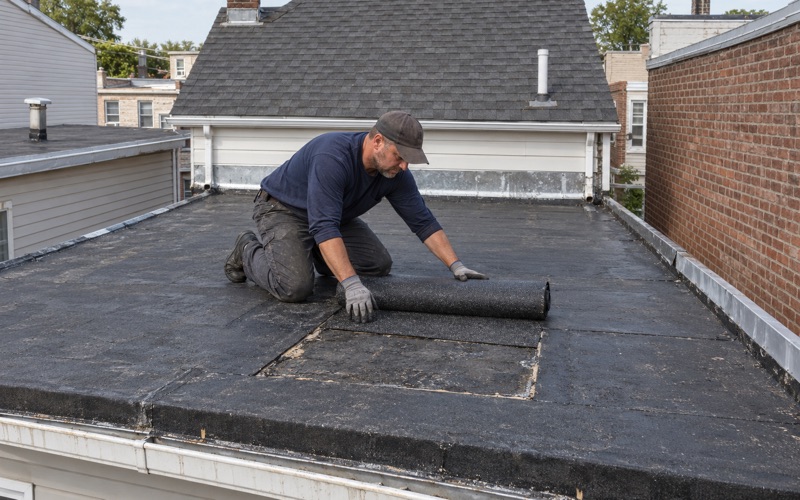
If the deck under your roof is solid, a full shingle replacement can go ahead as maintenance. A layer count still matters, though. The state rehabilitation subcode calls for tearing off rather than covering over when a roof already has two or more layers, or when the existing roof is slate, wood shake or tile.
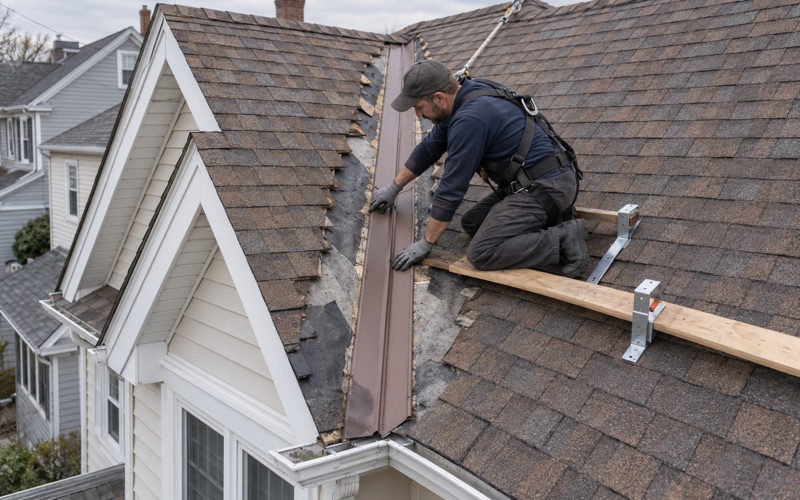
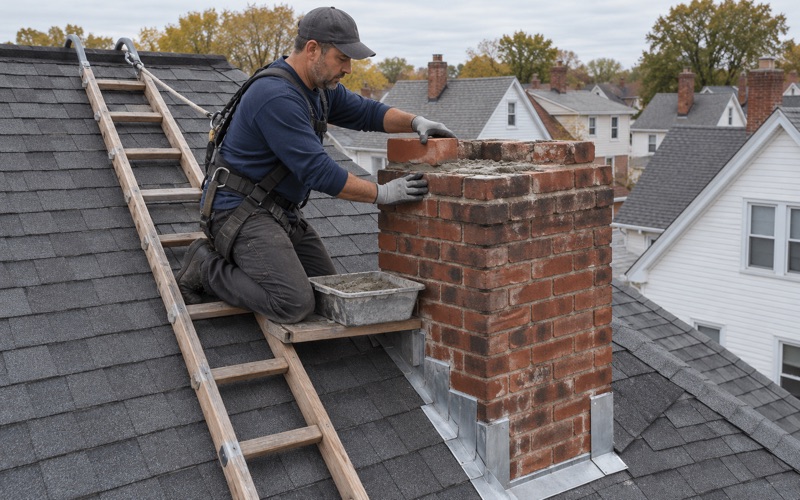
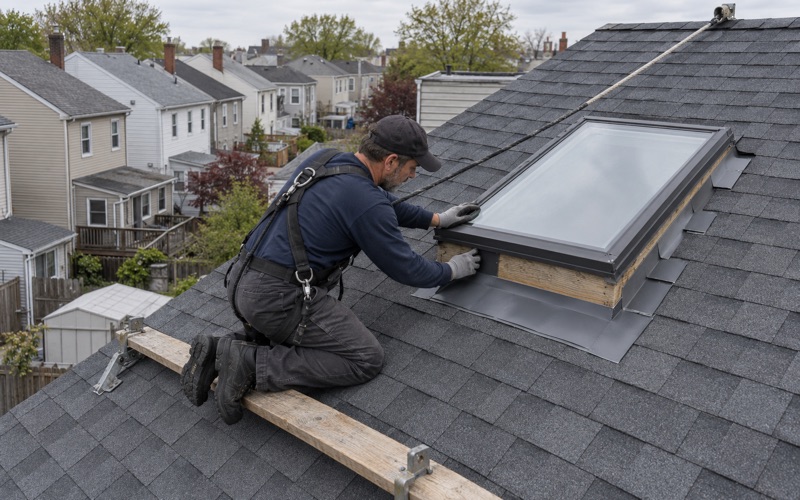
Either way, flashing is part of a proper job. We replace step, counter and chimney flashing with the new roof instead of reusing the old metal, because a fresh shingle field laid against tired flashing simply moves the leak a few feet.
Looking for roofing closer to Metuchen? See Roofing in Metuchen.
Sheathing Found Soft at Tear-Off
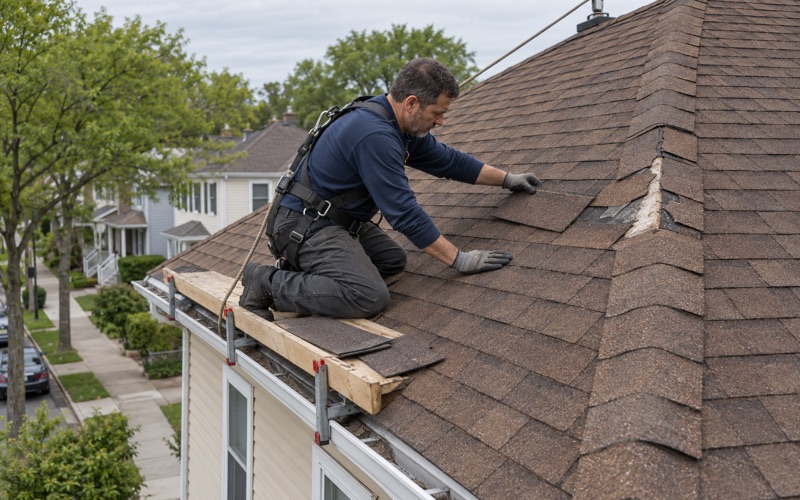
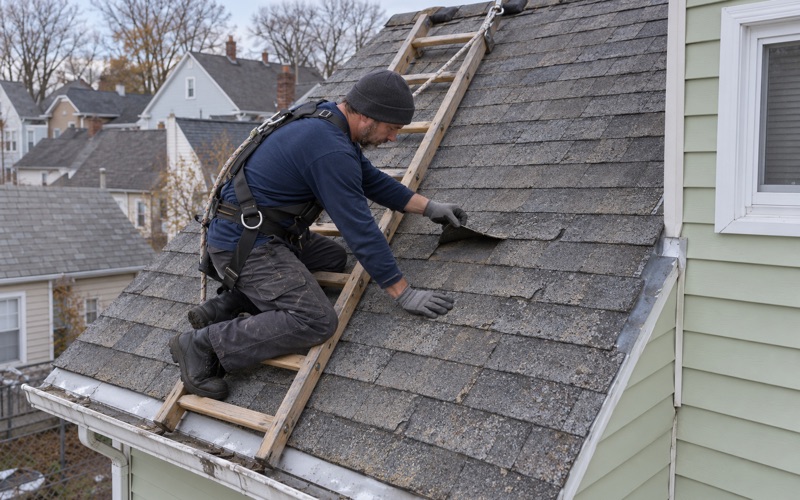
A tear-off is the only honest inspection of a deck. From the street or even from a ladder, a roof with soft sheathing can look ordinary. The give only shows once the shingles and underlayment are stripped and a roofer walks the bare boards, or when a nail pulls through plywood that has gone punky from years of slow leaks.
What we look for before the dumpster arrives
We start inside. When a leak is what brought us out, we look in the attic or at the top floor ceiling as well as on the roof, where water stains, darkened rafters and daylight around nail tips show roughly where the deck has suffered. That does not replace the tear-off, but it lets us warn you in writing which areas are likely to need new sheets.
On a Westwood house where sheathing work looks probable, the permit conversation happens at this stage, before materials are ordered. That keeps the job from stalling at midday with the roof open and a decision nobody planned for.
Older houses add a wrinkle. The Census Bureau counts 27.6 percent of Westwood’s housing units as built in 1939 or earlier, and prewar roofs were often decked in board sheathing rather than plywood. Gaps between old boards, or a board split along a nail line, can mean adding a plywood layer or replacing boards, and we price that as its own line.
When the boards come up bad
If we find damaged decking once the old roof is off, we photograph it and show you before a single sheet is replaced. You see the soft spot, the delamination or the rot for yourself, and the replacement is billed at the per sheet price already written into the contract, not a number invented on the roof.
Sheathing that fails is usually telling a story about the roof above it. Repeated leaks at a valley, a chimney with failed flashing, or an attic with poor airflow each leave their own pattern in the wood. Reading that pattern is how we decide whether the fix stops at the boards or reaches the ventilation and flashing too.
A ridge vent paired with soffit intake, sized by net free area, keeps moisture from condensing on the underside of new plywood. Putting fresh sheathing under a roof that still cannot breathe only restarts the clock on the same failure.
Pricing a Westwood Re-Roof With and Without New Decking
Two estimates for the same roof can differ widely and still both be fair, depending on what each assumes about the deck. One contractor quietly prices zero new sheathing and adds it later as an extra. Another pads the number for a full redeck the house may never need. Neither helps you compare.
Line items you can hold side by side
Our written scope breaks the job into separate lines for tear-off, decking, underlayment, flashing and drainage. If another roofer’s estimate lumps everything into one figure, you can still lay ours beside it and ask the right question about each piece, starting with how many sheets of plywood are assumed and at what price.
The decking line works as an allowance with a fixed unit rate. If the deck turns out sound, that line does not get spent. If twelve sheets come up rotten, you pay for twelve at the rate you already agreed to, and you have the photos showing why.
Owners sometimes ask us to skip the allowance and just quote the shingles. We can, but the honest version of that estimate still has to say what happens when bad boards turn up, and on a house whose deck has never been seen, that answer belongs in writing before work starts.
What the materials line should say
Above the deck, the underlayment matters as much as the shingle. We run ASTM D1970 self-adhering ice and water barrier at the eaves, valleys and around penetrations, with ASTM D8257 synthetic underlayment across the field. Drip edge goes on at the eaves and rakes so the new sheathing edges are not left to wick water.
For the shingle itself, an architectural laminated product such as GAF Timberline HDZ, Owens Corning Duration or CertainTeed Landmark is the usual choice, and the scope should name the wind rating, ASTM D3161 Class F or ASTM D7158 Class H, so you know what you are buying.
The contract follows New Jersey’s home improvement rules, including written notice of your right to cancel within three business days. We also give a straight answer on whether a roof can be repaired before replacement ever comes up, and sometimes a targeted deck and flashing repair is the right call.
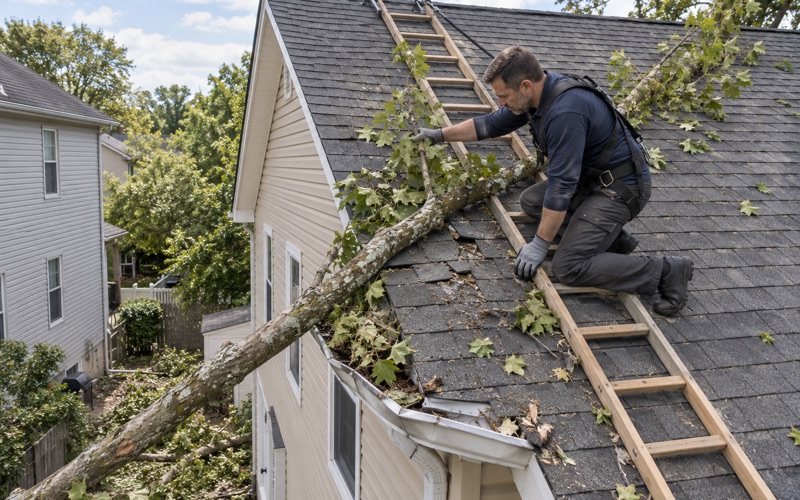
If storm damage is what opened the question, we photograph and write up what we find for your own insurance claim, and we will meet the adjuster on site if you ask. Rotted decking found during that work goes into the same photo record, so the claim and the contract describe the same roof.
The Permit Placard and the Morning Inspection Window
When sheathing work puts a Westwood job under a building permit, a few practical details follow from the borough’s sheet. Approved permits are picked up at the department Monday through Friday between 7:30 a.m. and 3:00 p.m., and the permit placard then has to be displayed in the front window of the house.
Working around the 8:00 to noon inspection slot
Building inspections in Westwood run Monday through Friday from 8:00 a.m. to 12:00 p.m. That window shapes the day. If the deck needs to be seen by an inspector before it is covered, the tear-off has to expose it early enough, and the new underlayment has to wait until the inspection is done.
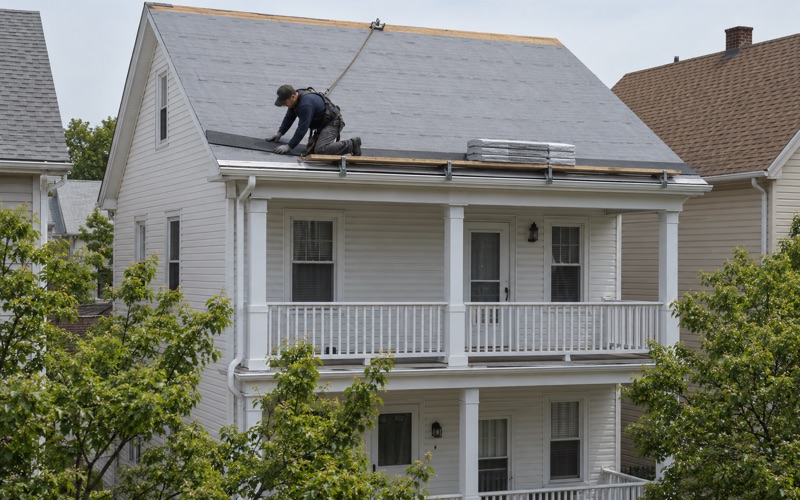
The sheet also states that no work is to begin before 7:00 a.m. or continue after sunset. Our crews work inside those hours, which in practice means stripping in sections so that no part of the roof is left open overnight while an inspection is still pending. We talk the timing through with you before the dumpster is booked.
Two family houses and the tenant upstairs
Westwood has plenty of rental housing alongside its single family streets, with renters making up 37.1 percent of occupied units in the Census Bureau’s 2024 five year estimates. On a two family house, we schedule with both units in mind, so the tenant upstairs knows when the crew arrives and where we need access, including the attic hatch if the deck needs checking from below.
Many Westwood residents commute into New York City, often by public transportation, and the Erie depot at Westwood station, rebuilt and dedicated in November 1932, is maintained by the borough today. A weekday tear-off can catch an owner who left early, so we agree on who will be home during the inspection window before the job goes on the calendar.
At the end of every work day, the sidewalk, yard and gutters are cleaned, and a magnet sweep picks up stray roofing nails. With a placard in the front window and an inspector possibly due the next morning, a clean site is part of a job that runs the way the borough expects.
- 20+ Years in Roofing
- Line-Item Written Estimates
- Daily Nail-Magnet Cleanup